


EU hits record 27.1 GWh of battery storage in 2025, driven by utility-scale projects
The European Union installed a record 27.1 GWh of new battery energy storage systems (BESS) in 2025, marking the 12th consecutive year of record growth, according to SolarPower Europe’s EU Battery Storage Market Review 2025. This represents a 45% increase over 2024, bringing the EU’s total operational battery capacity to 77.3 GWh.

Utility-Scale Batteries Drive the Market
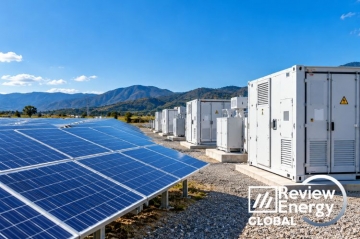
A major shift occurred in 2025, with utility-scale batteries emerging as the main growth engine, delivering 55% of all new capacity. Behind-the-meter systems, including residential and commercial installations, contributed less than half of the annual additions, reflecting continued barriers for distributed segments such as declining household installations and insufficient growth in the commercial and industrial (C&I) sector.

Germany, Italy, and Emerging Markets Lead
Germany and Italy maintained their leadership in the EU market, while Bulgaria experienced a breakthrough year, becoming the third-largest market due to strong incentives and large-scale deployment. The Netherlands and Spain completed the top five, with Spain officially recognizing storage as a strategic asset for the energy transition.

Collectively, these five countries accounted for 63% of EU installed capacity in 2025, down from nearly 80% in the previous year, indicating both market concentration and geographic diversification. Outside the EU, the UK deployed 5 GWh of new batteries, nearing a total of 16 GWh, supported by favorable policies and market conditions.
Manufacturing and Industry Outlook
Europe now hosts 252 GWh of nominal battery cell production capacity, primarily focused on electric vehicle (EV) nickel-based batteries. Despite significant midstream production capabilities, active materials such as cathodes and anodes remain limited, posing challenges for future stationary storage growth. The report notes that lithium iron phosphate (LFP) chemistries are expected to dominate as demand for stationary storage rises.
SolarPower Europe emphasizes that the EU must accelerate battery deployment and strengthen supply chains to meet its energy transition and flexibility goals. Key recommendations include streamlining permitting procedures, prioritizing grid-friendly assets, reforming tariffs, unlocking market access, de-risking investment, and enhancing cybersecurity, along with supporting domestic production and sustainable recycling.
"Europe’s battery storage market is growing fast and delivering the flexible capacity our energy system urgently needs. The strong uptake of utility-scale batteries in 2025 shows investors are ready, the technology is mature, and the system benefits are clear." said Walburga Hemetsberger, CEO of SolarPower Europe. "But we must now dramatically accelerate deployment. To support EU security and competitiveness, we need a battery fleet capable of supporting a fully flexible, renewable based energy system."


Comentarios
Sé el primero en comentar...