
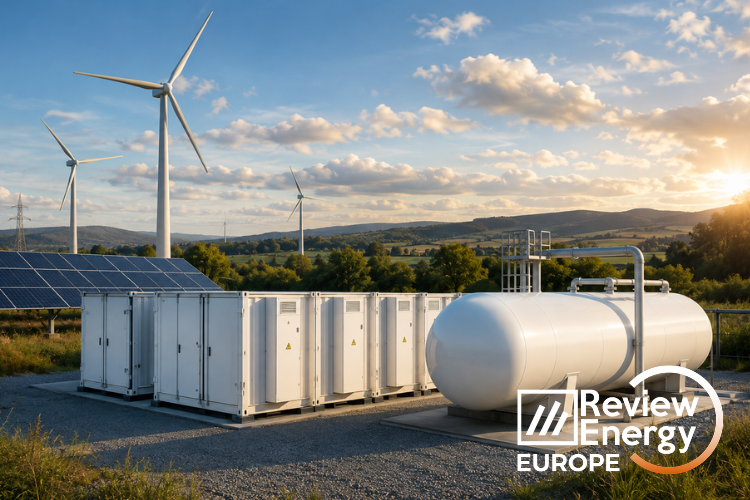


UK launches £28 million competition for ultra-long-duration energy storage
The UK government has launched the Ultra-Long Duration Energy Storage (Ultra-LDES) Challenge, a £28 million programme aimed at developing technologies capable of storing clean energy and supplying electricity for 100 hours or more, equivalent to more than four days.
Announced on 20 August and backed by government funding through UK Research and Innovation (UKRI), the initiative is seeking projects that can store surplus renewable generation and release it when wind and solar output is insufficient.
The programme will focus on two main technology areas: new electrochemical storage solutions and underground hydrogen storage systems.
For batteries, funding will support the development of technologies capable of delivering electricity for more than 100 hours. The government said these electrochemical technologies have yet to be commercialised at scale, presenting an opportunity for the UK to establish an early position in the emerging market.
The second area will support the development and testing of systems that store hydrogen underground and release it when required by the energy system.
According to government estimates, underground hydrogen storage could help reduce total UK energy system costs by between £14 billion and £50 billion from 2035 to 2050.
£3 million competition for new battery technologies
As part of the Ultra-LDES Challenge, UKRI has also launched a competition offering up to £3 million to fund project development studies into electrochemical ultra-long-duration energy storage technologies.
The competition is intended to advance new battery technologies capable of delivering cost-effective electricity to the UK grid for 100 hours or more and help move them towards commercial deployment.
Energy Minister Michael Shanks said increasing storage capacity would allow the country to make greater use of domestic clean electricity while reducing its reliance on gas-fired generation when renewable output is low.
“By backing new cutting-edge battery technology and hydrogen storage with this £28 million grant, we will store more clean power, reduce reliance on expensive gas generation and deliver a more secure energy system,” Shanks said.
Jenny Hill, UKRI’s Clean Energy Challenge Director, said developing technologies capable of storing energy efficiently will be an important part of the transition towards a cleaner and more secure energy system.
“This Challenge will help propel the UK to the forefront of the global energy storage market, creating skilled jobs and attracting private investment,” Hill said.
UK expands flexibility and energy storage programmes
The launch completes the rollout of the UK’s £102 million Clean Energy Challenges programme through 2030.
Alongside the £28 million Ultra-LDES Challenge, the government has allocated £74 million to the Consumer-led Flexibility Challenge, which will support technologies designed to shift electricity consumption to periods when power is cheaper and the system can operate more efficiently.
Both initiatives form part of the R&D Missions Accelerator Programme (R&D MAP), under which the UK government plans to invest at least £500 million by 2030 in research and development. Projects supported through the programme are expected to leverage an additional £1.5 billion in private investment by the end of the decade.
The Ultra-LDES Challenge also comes as Ofgem consults on plans to support 16 long-duration electricity storage projects, which could unlock investment in the UK's first new pumped-storage hydropower projects in more than 40 years.
Through these initiatives, the UK aims to expand its ability to store renewable electricity over extended periods, improve system flexibility and reduce reliance on gas-fired generation when wind and solar production is low.





Comentarios
Sé el primero en comentar...