




From regulation to ports: UK-backed studies set out measures to build Chile’s offshore wind sector
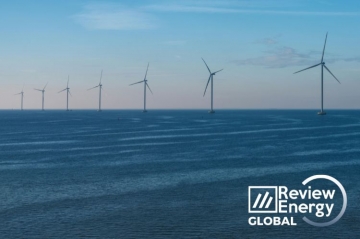
Chile has the potential to develop a competitive offshore wind industry, but strengthening regulation, planning, infrastructure and local capabilities will be essential to turn that potential into concrete projects, according to four studies developed by ORE Catapult as part of an initiative led by the British Embassy in Santiago.
The findings and recommendations will be presented on August 12 at the British Ambassador’s Residence in Santiago, where government authorities, industry representatives and academia will discuss the development of the sector and its next steps.
The event will be opened by British Ambassador to Chile David Concar and will feature a presentation of the main findings of the studies, followed by a panel discussion titled “Next Steps for Offshore Wind in Chile”. Representatives from Chile’s Ministry of Energy, InvestChile, Universidad Adolfo Ibáñez and the Centre for the Transition towards Resilient and Autonomous Electric Systems (CENTRA) will participate in the panel.
Recommendations to build the offshore wind sector
The studies identify a series of actions that could help Chile establish the foundations for a competitive, scalable and attractive offshore wind market for private investment.
One of the main recommendations is to strengthen regulatory and permitting frameworks. The reports also call for greater coordination among public institutions and timely planning of electricity transmission infrastructure, areas considered necessary to facilitate the development of future offshore wind projects.
The research further highlights the importance of developing local capabilities, a skilled workforce and domestic supply chains. Building these capabilities would support the development of the sector while creating the conditions needed for a domestic industrial base.
The recommendations also cover ports, electricity transmission, maritime planning, energy policy, workforce development, environmental considerations and supply chains.
Integrated planning and long-term certainty
The studies emphasise that Chile will need an integrated approach to offshore wind development, bringing together energy, port and spatial planning within a long-term strategy.
According to the research, this approach should provide greater certainty for investors and facilitate the delivery of future projects. Coordinating these different areas is presented as an important element in creating the conditions for the sector to scale.
The studies also identify offshore wind as a potential driver of regional economic growth. In particular, the research highlights opportunities to revitalise strategic ports, attract new industrial investment and create highly skilled jobs, especially in industrial regions such as Biobío.
Recommendations informed by UK experience
The recommendations draw on the United Kingdom’s experience in offshore wind, as well as site visits and consultations with stakeholders from both countries.
ORE Catapult, described by the British Embassy as the UK’s leading innovation centre for offshore renewable energy, developed the four studies as part of an initiative led by the British Embassy in Santiago.
The initiative was funded by the UK Department for Business, Innovation, Science and Trade.





Comentarios
Sé el primero en comentar...