


New WindSCORE framework aims to align offshore wind projects with EU energy goals
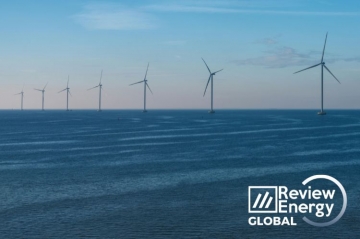
Europe’s offshore wind sector is facing increasing complexity as tender designs evolve, new technologies emerge and social acceptance becomes a decisive factor for project success.
Against this backdrop, the EU-funded WindSCORE project has been launched with the aim of developing a scientifically based 360-degree evaluation system for offshore wind energy projects.
According Fraunhofer Institute for Wind Energy Systems IWES, which is leading the initiative, the WindSCORE project officially began in December 2025 and will run for three years. Its objective is to create a comprehensive decision-support tool that integrates economic, technical, sustainability-related and social criteria, addressing a gap that currently exists in the offshore wind market.
Offshore wind plays a central role in Europe’s energy transition, and an increasing number of countries are moving away from tender schemes based solely on price. Instead, criteria such as sustainability, innovation and system benefits are becoming more prominent. At the same time, new offshore locations, including areas in the Atlantic, are gaining attention and require robust assessment frameworks. However, as Fraunhofer IWES notes, there is currently no holistic evaluation system capable of delivering a reliable risk analysis while also accounting for social acceptance and environmental impacts.
The WindSCORE project — short for Sustainable Criteria and Overall Renewable Evaluation for Offshore Wind Energy — aims to address this challenge by developing a 360-degree KPI-based toolbox. This system is designed to support investors, policymakers and other stakeholders throughout the entire project lifecycle, from tender design to implementation, while also improving transparency and comparability across offshore wind projects.
In addition to economic and technical aspects, WindSCORE will integrate criteria related to sustainability, technical innovation, including floating offshore wind turbines, grid and energy system integration, and operational and maintenance efficiency. Social impacts, such as regional value creation and local content, will also be assessed, reflecting the growing importance of social acceptance in offshore wind development.
The project consortium brings together several European partners. Alongside Fraunhofer IWES, participants include Fondation Open-C, SINTEF, Statnett, TÜV SÜD, Bio-Littoral and Equinor. The project is co-funded by PTJ/BMWE (Germany), RPL (France) and RCN (Norway) under the EU’s Clean Energy Transition Partnership (CETP) initiative.
Fraunhofer IWES is responsible for key technical tasks within the project, including site analysis, electricity generation cost modelling, and the evaluation of technical concepts. A cost model and life-cycle simulations will be used to assess both the technical and financial sustainability of offshore wind farms.
“The development of the offshore wind industry is a central pillar of the energy transition,” said Prof. Marcel Wiggert, responsible for project cooperation at Fraunhofer IWES. “To ensure long-term social, political and economic acceptance and minimise risks in the value chain, the WindSCORE project is developing a transparent, comprehensible 360° KPI-based evaluation system.”
From Norway, research institute SINTEF contributes expertise through its Centre for Environment-friendly Energy Research (FME) NorthWind. Dr. Gard Hopsdal Hansen, Centre Director at FME NorthWind, highlighted the need for holistic assessment tools. “To make sound decisions about offshore wind development, it is essential that both industry and public authorities have access to tools capable of untangling the complexity of offshore wind and providing the most holistic picture possible of the opportunities and challenges for nature and society,” he said.
Norwegian partners Statnett and Equinor bring operational experience related to power systems and offshore wind farms, respectively, contributing practical insights to support Norway’s renewable energy transition.
On the social sustainability side, French partner Fondation Open-C will assess value chain impacts and local content effects of offshore wind projects. “We will leverage our socio-economic expertise acquired through our work on the French Marine Energy Observatory to refine robust evaluation criteria and support the development of future projects across Europe,” said Stéven Curet, Executive Director of Fondation Open-C.
Another French partner, Bio-Littoral, will contribute by developing an ecological indicator to evaluate the impacts of wind turbines across different marine ecosystems.
Once completed, the WindSCORE toolbox and methodologies will be validated by Fraunhofer IWES and further developed to reach market readiness. TÜV SÜD is also aiming to use the project’s outcomes to help develop future industry standards. “Investing in research is essential to strengthen sustainability and develop international standards that ensure offshore wind continues to grow as a reliable and responsible source of energy,” said Karlheinz Russ, Senior Vice President Infrastructure and Sustainability at TÜV SÜD Energietechnik GmbH.
According to the project partners, WindSCORE’s 360-degree assessment framework is intended to lay the groundwork for the continued expansion of offshore wind in Europe, providing a reliable basis for evaluating future projects and locations while placing particular emphasis on environmental impact, sustainability and social acceptance.

Comentarios
Sé el primero en comentar...