






UK offshore wind development hinges on grid expansion, faster connections and market reforms
The UK's installed power capacity is projected to nearly double between 2025 and 2035, driven primarily by renewable energy expansion and the addition of new nuclear capacity. According to GlobalData, renewables are expected to account for 73% of total installed power capacity by 2035, with offshore wind, solar PV, and onshore wind leading the transformation.
These projections are outlined in GlobalData's latest report, UK Power Market Trends and Analysis by Capacity, Generation, Transmission, Distribution, Regulations, Key Players and Forecast to 2035, which highlights the country's transition towards a more infrastructure-intensive phase of its energy transformation. In this context, transmission and distribution network development, connection timelines, and regulatory reforms will be decisive in ensuring that planned projects become operational.
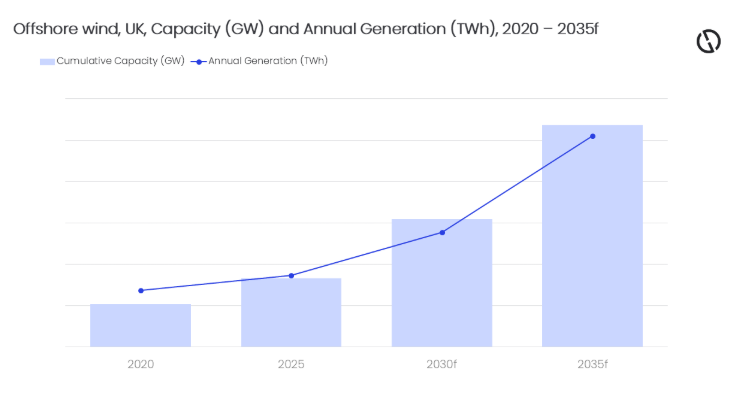
Source: GlobalData Power Intelllugence Center | Note: f: forecast
Offshore wind to lead renewable energy expansion
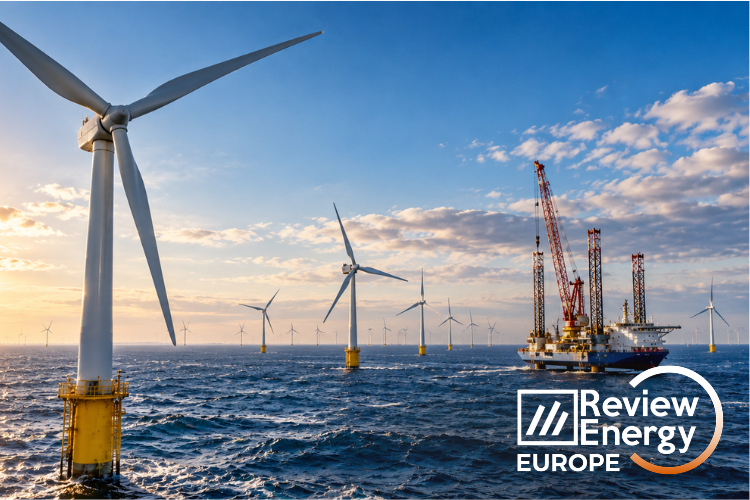
Offshore wind will play a central role in the UK's decarbonisation strategy, supported by an extensive pipeline of projects in the North Sea and developments associated with the ScotWind leasing round.
Annual Contracts for Difference (CfD) auctions will remain one of the main mechanisms supporting renewable energy deployment, providing long-term revenue certainty and encouraging investment in new generation capacity.
However, GlobalData warns that project awards alone will not guarantee delivery. Developers also require timely grid connections, sufficient supply-chain capacity, and an electricity market framework that reflects the value of power according to location and time of generation.
"Offshore wind is central to the UK's clean power strategy," said Attaurrahman Ojindaram Saibasan, Power Analyst at GlobalData, highlighting the importance of overcoming technical and commercial constraints affecting new projects.
Renewables to provide two-thirds of electricity generation by 2035
The report forecasts a recovery and subsequent increase in UK electricity demand over the coming years, driven by the electrification of transport, heating, and industrial processes.
Against this backdrop, renewables are expected to account for approximately two-thirds of gross electricity generation by 2035, while gas-fired power plants will continue to provide flexible balancing capacity and nuclear energy will contribute firm low-carbon generation.
Nevertheless, GlobalData warns that the expected retirement of older nuclear power stations before new projects become operational could create challenges for security of supply. Coordinating plant closures with the commissioning of replacement capacity will therefore be essential.
Grid connections emerge as the main challenge for new projects
One of the main obstacles identified by GlobalData is the ability of electricity networks to accommodate the growing volume of renewable generation.
A significant proportion of projects under development are seeking access to networks already facing connection queues. At the same time, new offshore wind capacity will require additional transmission infrastructure to transport electricity from coastal landing points to major demand centres.
To address these challenges, the National Energy System Operator (NESO), transmission network owners, and energy regulator Ofgem are pursuing reforms aimed at accelerating strategic network investment and improving grid connection procedures.
GlobalData argues that electricity network planning must become more anticipatory, rather than responding only after generation projects have advanced.
The consultancy also stresses that energy storage, demand response, and digital flexibility solutions must develop alongside renewable generation capacity to ensure the reliable operation of an increasingly variable electricity system.
Interconnectors and electricity market reforms
The UK operates electricity interconnectors with France, the Netherlands, Belgium, Norway, Denmark, and Ireland, helping strengthen security of supply and facilitating cross-border electricity trading.
These connections support the management of fluctuations in renewable generation, although they also increase the importance of coordinated market arrangements and resilient cross-border infrastructure.
Looking ahead, GlobalData expects investment to focus primarily on offshore wind, nuclear power, solar PV, onshore wind, electricity networks, and flexibility assets.
Meanwhile, CfDs will continue to provide long-term revenue support for renewable projects, while the Regulated Asset Base (RAB) model is designed to facilitate financing for new nuclear developments.
Electricity market reforms will also play an important role in determining how investors manage grid constraints and periods of high renewable generation.
According to GlobalData, the UK's main challenge is no longer simply setting clean energy ambitions, but converting its extensive project pipeline into operational assets. Achieving this will require closer coordination between renewable deployment, grid expansion, flexible capacity, and market reforms that maintain investor confidence in low-carbon generation.



Comentarios
Sé el primero en comentar...