
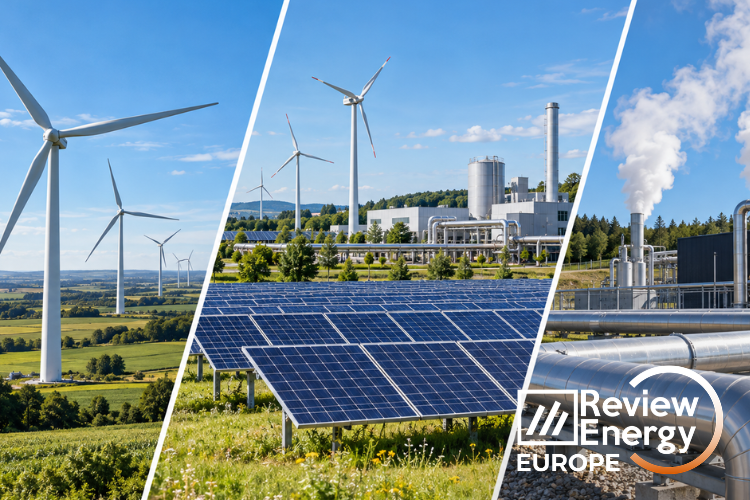


The European Commission adds three new projects to the CB RES list
The European Commission has granted Cross-Border Renewable Energy, or CB RES, status to three new projects: WIND, DEPLOY and ZEGA-LINNK, selected under the fifth call for projects seeking the designation.
Following these additions, and after the withdrawal of PONTIS, the number of projects currently holding CB RES status stands at 15.
The designation allows the projects to apply for financial support for studies and works under the Connecting Europe Facility (CEF) Energy Programme, while also providing greater visibility, increased investor certainty and stronger support from participating Member States.
The WIND project will deploy large-scale onshore wind capacity near Poltavska, Ukraine, as part of a cross-border initiative involving Romania.
The project is planned to reach 650 MW of installed capacity and is expected to generate around 2 TWh of electricity per year.
Wind and solar project linking Poland and Germany
The second project, DEPLOY, will be developed across Poland and Germany and aims to unlock Poland’s renewable energy potential for the benefit of consumers across the border.
It plans to develop an integrated power plant in Guben, Poland, combining a wind farm and photovoltaic installations with a total capacity of 180 MW.
The electricity generated will be converted into heat for industrial offtakers in Gubin, Germany, while also supporting the decarbonisation of district heating in Guben.
Geothermal energy and heat pumps between Austria and Germany
ZEGA-LINNK builds on the existing cross-border district heating network connecting Braunau, Austria, and Simbach, Germany, which has been operating since the early 2000s.
A geothermal borehole in Simbach currently provides baseload heat, while natural gas boilers are used to meet peak demand.
The project aims to reduce fossil-fuel-based peak generation through the installation of a 5 MW heat pump in Simbach and the development of a new 12–15 MW geothermal borehole in Braunau.
The cross-border heating network will enable renewable heat to be exchanged between both countries, reducing the need for large peak-load and backup systems.
A portfolio spanning wind, solar, hydrogen and storage
The three projects join a broader CB RES portfolio that includes offshore and onshore wind, solar, geothermal energy, renewable heating, hydrogen and energy storage.
Existing projects include Bornholm Energy Island, which plans two offshore wind farms and interconnections to Denmark and Germany; the Liivi Bay Offshore Wind Farm, expected to reach 1 GW in Estonian waters; and Medlink Renewable Generation (MedGen), which aims to install 10 GW of solar and wind capacity in Algeria and Tunisia alongside dedicated battery storage systems.
The list also includes CICERONE, which plans to produce renewable electricity in Spain and Germany for conversion, transport and use as green hydrogen in Germany and the Netherlands.
According to the Commission, the projects are expected to strengthen European energy security, deepen cross-border cooperation and accelerate the deployment of renewable energy technologies.
The next call for projects seeking CB RES status is expected to open in November or December 2026, followed by a virtual information day organised by CINEA for prospective applicants.

Comentarios
Sé el primero en comentar...