


Wind and solar lead Germany’s electricity mix in 2025
In 2025, the share of renewable energy fed into Germany’s public grid—which represents the total electricity mix actually supplied to consumers—remained at 55.9%, unchanged from the previous year. Wind power was the largest net electricity producer, followed by photovoltaics, which increased output by 21%, surpassing lignite for the first time. The share of electricity generated from fossil fuels stagnated, as the decline in lignite generation was offset by increased natural gas use. Imports in the electricity mix decreased compared to the previous year. This analysis is based on the energy-charts.info platform of the Fraunhofer Institute for Solar Energy Systems (ISE), which provides interactive charts on electricity generation across Europe.
Across the EU, photovoltaic generation surpassed coal-based electricity for the first time in 2025.
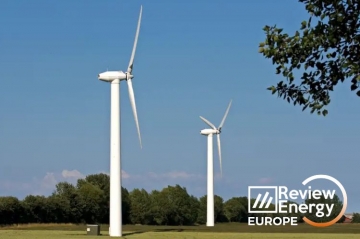
Wind power remained the largest net electricity producer, although output declined 3.2% year-on-year to 132 terawatt-hours (TWh) due to less favorable wind conditions. Onshore wind contributed approximately 106 TWh, while offshore wind generated around 26.1 TWh. New onshore capacity of 4.5 gigawatts (GW) was added, compared to just 0.29 GW offshore. This indicates that wind expansion remains well below Germany’s targets: 76.5 GW of installed capacity were planned by the end of 2025, but only 68.1 GW were realized.
Photovoltaic systems generated approximately 87 TWh of electricity in 2025. Of this, around 71 TWh were fed into the public grid and 16.9 TWh were consumed on-site. Total output increased by roughly 15 TWh, or 21%, compared to 2024, making solar the second-largest source of net public electricity generation. Installed solar capacity reached 116.8 GW of direct current (DC) by the end of 2025, with about 16.2 GW of net DC capacity added during the year (equivalent to 14.3 GW AC). To meet Germany’s climate targets, solar expansion must increase to 22 GW in 2026.
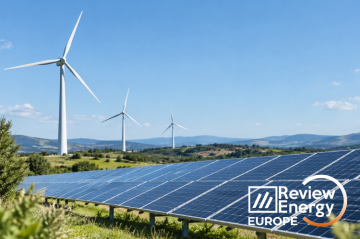
The strong growth in solar generation is a Europe-wide trend: in 2025, EU photovoltaic electricity generation reached 275 TWh, surpassing combined lignite and hard coal output (243 TWh) for the first time. Over the past decade, PV generation has tripled, while coal-based generation has declined by 60%.
In Germany, biomass produced approximately 41.1 TWh of electricity (2024: 37 TWh), of which 36 TWh were fed into the grid and 5.1 TWh consumed on-site. Hydropower generation was limited to 17.8 TWh (2024: 22.3 TWh) due to low rainfall: with 655 liters per square meter, precipitation was 27% below 2024 levels (902 l/m²) and 17% below the 1961–1990 reference period average (789 l/m²).
Overall, renewable sources—including solar, wind, hydro, biomass, and geothermal—produced roughly 278 TWh in 2025, of which 256 TWh were fed into the public grid and 22 TWh consumed on-site. Renewable generation increased by 6 TWh compared to 2024, yet net renewable electricity remained far below the 2025 target of 346 TWh. The main reason is the underdevelopment of onshore and offshore wind: due to differing full-load hours, underperformance in onshore wind has roughly double the impact, while offshore shortfalls have about 3.5 times the impact. Additionally, high PV self-consumption and increasingly suboptimal orientations (e.g., east-west) improve grid compatibility but reduce specific yields, contributing to this deficit.
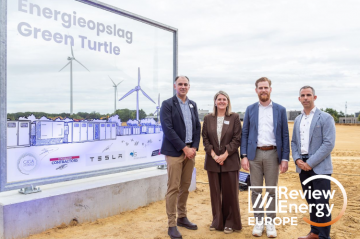
Battery storage systems are developing dynamically. High intraday electricity price fluctuations make operation attractive, while falling costs driven by the expansion of electric mobility encourage investment. Consequently, interest in grid-connected large-scale battery storage is growing, with several systems already operational and 11.5 GWh registered for commissioning. Installed large-scale battery capacity rose from 2.3 to 3.7 GWh (+60%) in 2025. Nearly 25 GWh of battery storage are now installed, most of which—almost 20 GWh—serve residential storage. Fraunhofer ISE models indicate a need for 100–170 GWh of storage by 2030, depending on the scenario. Leonhard Gandhi, project director of Energy-Charts at Fraunhofer ISE, noted: “The commissioning of large-scale battery storage is fundamentally changing the operation of Germany’s electricity system. While short-term flexibility effects are already visible, systemic impacts—for example on reserve power plants—can only be estimated at this stage. These developments require explicit consideration of battery storage in expansion planning, system planning, and electricity market design.”
Fossil-based generation remains steady, imports decline
Net electricity from lignite-fired power plants fell by 3.9 TWh to 67.2 TWh, returning to 1961 levels for gross generation. Net coal-fired electricity for public consumption increased slightly to 26.7 TWh (2024: 24.3 TWh), with gross coal generation remaining at 1952 levels. Natural gas power plants produced 52.4 TWh net for public supply and 26.1 TWh for industrial self-consumption, 3.7 TWh higher than the previous year.
Preliminary estimates put Germany’s total CO? emissions from electricity generation at 160 million tonnes in 2025, 58% lower than in 1990. Emissions from coal-based generation rose 4% year-on-year but remain 69% below 1990 levels.
Germany’s electricity trade recorded imports of 76.2 TWh versus exports of 54.3 TWh, resulting in a net import surplus of about 21.9 TWh, down 6.4 TWh from 2024. The decrease in imports was mainly due to low gas prices and higher wholesale electricity prices in Germany and neighboring countries, boosting domestic gas-fired generation. Most imports came from Denmark (12.4 TWh), France (11.2 TWh), the Netherlands (8.4 TWh), and Norway (7 TWh). Germany exported net electricity to Austria (12.2 TWh), the Czech Republic (4.2 TWh), Luxembourg (3.5 TWh), and Poland (3.4 TWh).
Electricity prices rise on the exchange
The public grid load was 466 TWh, unchanged from 2024. This figure includes grid consumption and losses but excludes pumped storage, self-consumption from conventional plants, and solar plants. Total load, including 16.9 TWh of self-consumed solar electricity and 26.1 TWh of industry-generated gas power, was 495 TWh, matching the previous year.
The volume-weighted average day-ahead electricity price was €86.55/MWh (8.65 €c/kWh), up 10.9% from €78.01/MWh in 2024. The volume-weighted average intraday hourly price was €89.38/MWh (8.94 €c/kWh), compared to €82.25/MWh in 2024.
Data sources
The first 2025 annual report, dated January 1, 2026, incorporates all EEX Leipzig electricity market data through December 31, 2025. Quarterly EEX and ENTSO-E values were adjusted using monthly data from the Federal Statistical Office (Destatis) on electricity generation through September 2025, and monthly electricity import/export data through October 2025. For the remaining months, adjustment factors were estimated based on previous years’ data. Extrapolated values are subject to higher tolerances.


Comentarios
Sé el primero en comentar...