


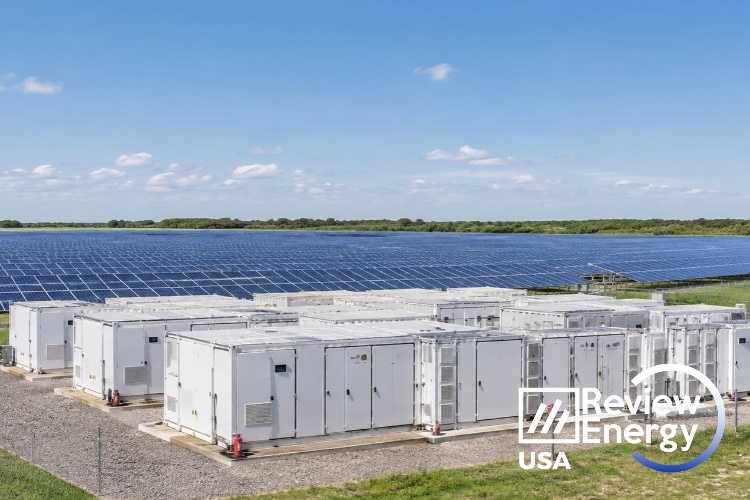


Battery integration in US solar projects set to surpass 30% in 2027–2028
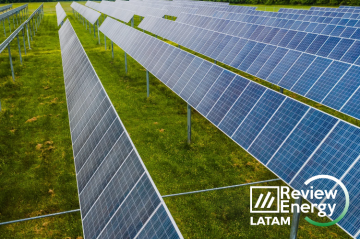
According to the latest data from the US Energy Information Administration (EIA), more than 16% of new utility-scale solar capacity added in the country between January and September 2026 was co-located with operational battery storage. This represents a substantial increase from the 2% recorded in 2017, highlighting how rapidly the combination of solar and batteries is gaining ground.
The trend is expected to accelerate. Based on projects scheduled to enter commercial operation during the final three months of 2026, the EIA estimates that the proportion of new solar capacity paired with battery storage could reach 19% for the full year. Project plans submitted for 2027 and 2028 point to an even stronger increase, with the share expected to exceed 30%.
The growing integration of battery storage reflects a changing economic environment for solar generation. In electricity markets with a high penetration of solar power, wholesale prices tend to fall during periods of strong solar output and rise as generation declines.
Co-located battery systems allow operators to manage when electricity is delivered to the grid. Instead of exporting all their solar generation immediately, plants can store part of their output and release it later, when market prices are more favourable.
This flexibility can help developers maximise the economic value of their combined generation and storage assets, while making solar power more adaptable to changing market conditions.
The US Southwest leads the trend
The deployment of co-located solar and battery capacity is particularly significant in southwestern states, where solar power accounts for a larger share of total electricity generation capacity than the national average.
As of September 2026, solar photovoltaic installations represented 13% of total utility-scale generating capacity in the United States. Of that solar capacity, 18% was co-located with battery storage.
California, Arizona, New Mexico and Nevada stand out: the proportion of solar capacity paired with batteries in these states is more than twice the national average.
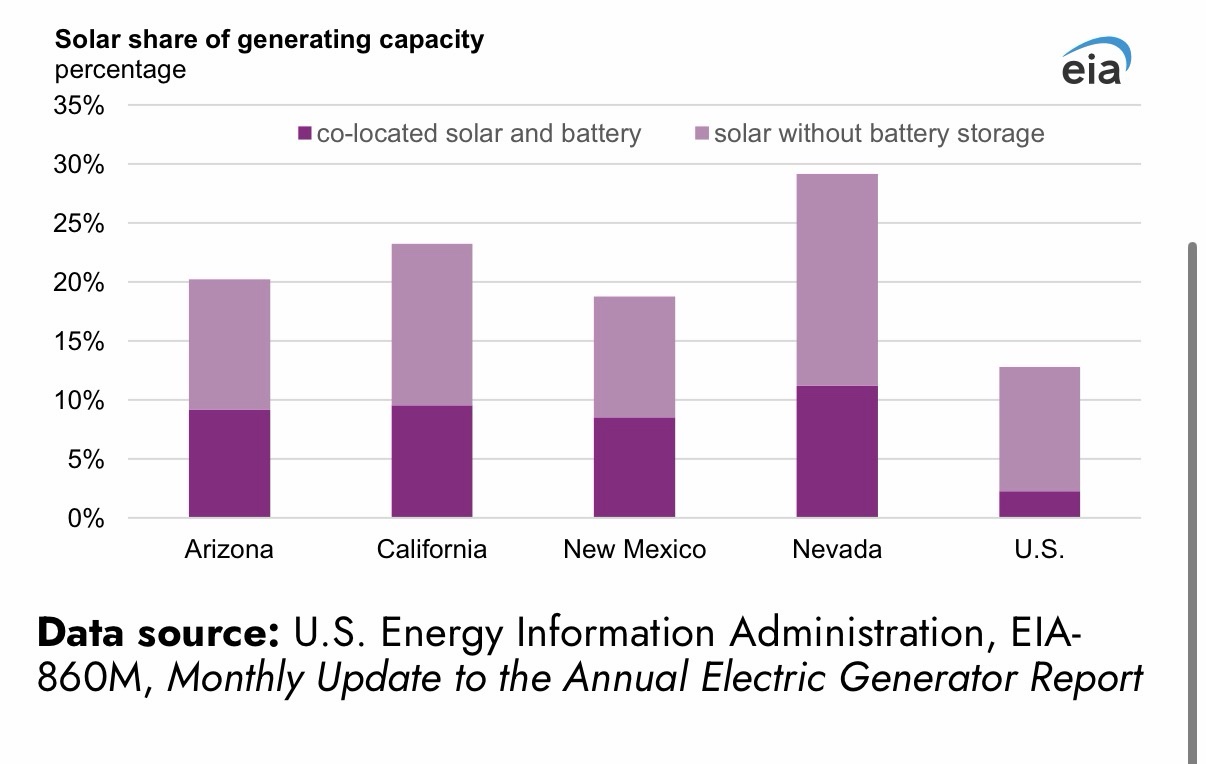
These figures underline the importance of regions with high solar penetration in driving the integration of storage technologies into the US electricity system.
The EIA monitors these developments through its EIA-860 and EIA-860M data collection programmes, which provide information on utility-scale power plants, including their technical characteristics and operational status.
Although solar and battery installations at the same site do not always enter commercial operation simultaneously, the agency’s monthly data allows it to track the development of both technologies and identify projects that combine them.
The figures point to a structural shift in the US solar market: battery storage is increasingly becoming part of the development strategy for new utility-scale photovoltaic capacity, rather than a separate addition to the power system.


Comentarios
Sé el primero en comentar...