



EU backs Slovenia's €59 million battery storage investment plan
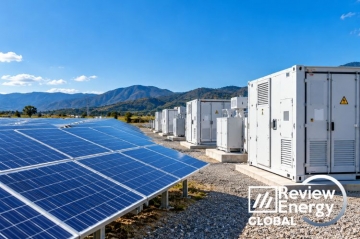
The European Commission has approved a €59 million Slovenian state aid scheme to support the deployment of battery energy storage systems (BESS), backing the installation of at least 370 MWh of new storage capacity under the EU's Clean Industrial Deal.
The measure was approved under the Clean Industrial Deal State Aid Framework (CISAF), adopted by the Commission on 25 June 2025, which allows EU member states to provide targeted support for technologies that accelerate the transition to a net-zero economy.
According to the Commission, the scheme aims to increase the integration of renewable energy into Slovenia's electricity system through the deployment of stand-alone battery energy storage systems, improving grid stability, reliability and efficiency.
The programme will be financed through the Just Transition Fund and the ETS Modernisation Fund. Support will be provided as direct grants for the construction of new stand-alone battery storage facilities, with the amount of aid determined by Slovenia based on the investment costs of each project.
The Commission concluded that the measure complies with the conditions set out in the CISAF. It noted that the aid will be granted through a scheme with a defined budget and estimated deployment volume, that funding will be based on the investment cost of each supported project, and that all aid must be awarded before 31 December 2030.
Brussels said the scheme is necessary, appropriate and proportionate to accelerate the transition towards a net-zero economy and to facilitate the development of economic activities that support the objectives of the Clean Industrial Deal, in line with Article 107(3)(c) of the Treaty on the Functioning of the European Union.
The CISAF, adopted in June 2025, provides the framework for member states to support investments in renewable energy, energy storage, industrial decarbonisation, clean technology manufacturing, energy infrastructure and circular economy projects through the end of the decade.

Comentarios
Sé el primero en comentar...