
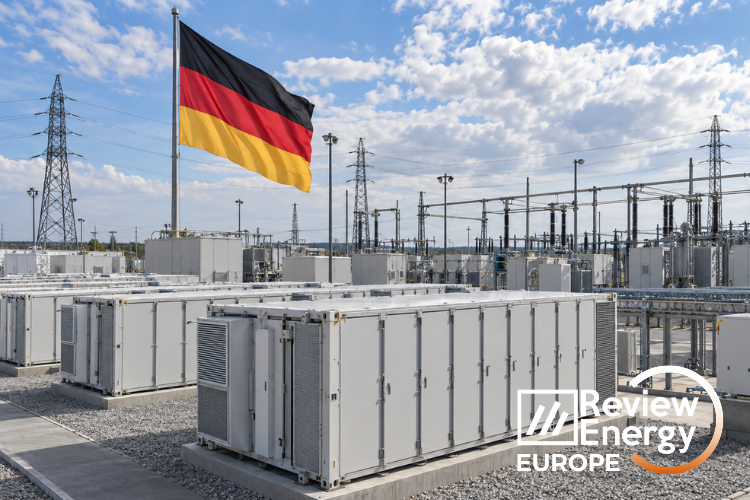


Germany approves new rules to integrate batteries and bidirectional charging into the electricity market
The Bundesnetzagentur (BNetzA) has approved the MiSpeL framework, short for Market Integration of Storage Systems and Charging Points, changing the conditions for integrating storage systems and bidirectional charging points into the German electricity market.
Until now, storage systems seeking to retain EEG support had to keep locally generated renewable electricity strictly separate from electricity drawn from the grid. In practice, mixed operation could lead to the loss of that support, while bidirectional charging points were excluded from the existing framework.
Under MiSpeL, storage systems and bidirectional charging points will be able to operate more flexibly and combine electricity from renewable installations and the grid while retaining support for eligible renewable electricity under defined conditions.
The BNetzA says this will allow batteries and charging points to be used both for demand-side flexibility, by consuming electricity when market prices are low, and for shifting injections to periods when prices are higher.
Two options for separating electricity flows
The regulation establishes two mechanisms to determine which electricity volumes are eligible for EEG support and which can benefit from reductions in levies and grid charges.
The Abgrenzungsoption will be available to installations of all types and sizes. In general, it uses separate metering to identify every 15 minutes how much electricity comes from the renewable installation, how much comes from the grid and how it is distributed between consumption, storage and injection. In some specific cases, a single meter will be sufficient.
The Pauschaloption is designed as a simplified alternative for solar installations of up to 30 kWp, particularly for households and small businesses. It aims to reduce metering requirements and, in certain cases, allow the use of a single meter with 15-minute measurements.
The simplified option still requires State aid approval of the underlying legal framework by the European Commission.
Support for bidirectional charging
One of the main changes concerns electric mobility. MiSpeL largely aligns bidirectional charging points with storage systems and allows electric vehicle batteries to be used both to consume electricity and feed it back into the grid.
The Bundesnetzagentur states that vehicle-to-home (V2H) and vehicle-to-grid (V2G) configurations will be possible without necessarily requiring a second meter.
EEG support for solar electricity can also be preserved even if the EV battery has also stored electricity from the grid. For grid electricity that is temporarily stored and later fed back into the system, MiSpeL also provides for reductions in certain levies and grid charges on the re-injected volumes.
Transition period until September 2027
The regulation includes a transition period until September 30, 2027, giving grid operators and metering operators time to adapt their IT and billing processes.
During that period, the MiSpeL options may be used if the grid operator and metering operator agree. The Pauschaloption will additionally depend on State aid approval by the European Commission.
According to the Bundesnetzagentur, the framework is intended to expand the participation of batteries, households, businesses and electric vehicles in the electricity market while supporting greater integration of renewable energy into the German power system.

Comentarios
Sé el primero en comentar...