
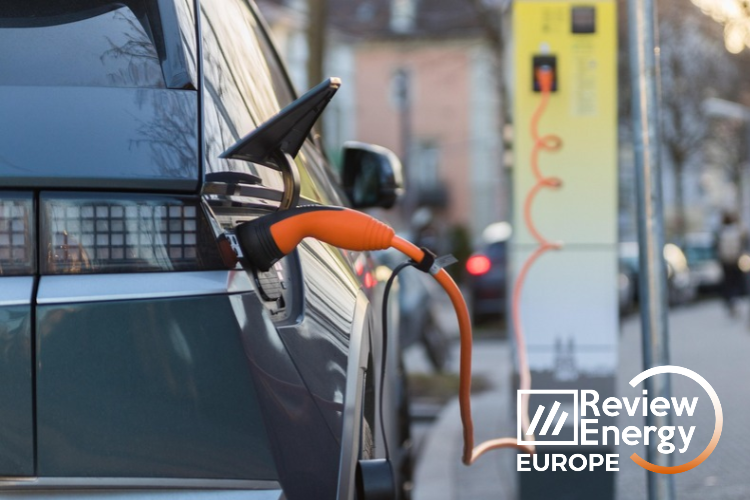


Europe accelerates EV adoption as grid readiness and industrial competitiveness lag behind
Europe's transition towards zero-emission mobility continued to advance in the third quarter of 2026, with higher electric vehicle uptake, a growing range of more affordable models and further expansion of public charging infrastructure. However, progress remains uneven across Member States and key structural challenges could undermine the European Union's ability to meet its 2030 targets.
This is one of the main conclusions of the latest Monitoring the Shift to Zero-Emission Vehicles in Europe report, published by Transport & Mobility Leuven (TML), which assesses the transition through indicators covering electricity grid readiness, consumer adoption, charging and refuelling infrastructure, and manufacturing competitiveness.
According to the report, zero-emission vehicles (ZEVs) represented 23% of new passenger car registrations in the EU-27 during the first nine months of 2026, compared with 16% over the same period in 2025. Nevertheless, differences between national markets remain substantial: four European countries — Norway, Denmark, Finland and Iceland — have already reached ZEV shares of at least 50%, while adoption in several other markets remains considerably lower.
The light-commercial vehicle (LCV) segment is progressing at a slower pace. ZEVs accounted for 12% of new LCV registrations in the first nine months of 2026, compared with 8% in the corresponding period of 2025. The Netherlands, Norway and Denmark lead adoption in this category, followed by Sweden, Iceland and Portugal, while progress remains limited in many other countries.
The report also identifies improvements in vehicle availability and affordability. In October 2026, 29 electric car models priced at up to €30,000 were available on European markets, compared with 16 in September 2025. Meanwhile, the share of battery-electric vehicles (BEVs) in the European second-hand car market increased from 6.6% in the third quarter of 2025 to 8.3% in September 2026.
Grid readiness remains a bottleneck for electrification
Despite progress in vehicle adoption, the report highlights that electricity grid preparedness remains a critical condition for scaling zero-emission mobility.
Installed solar capacity reached approximately 1.19 kW per light-duty vehicle in the third quarter of 2026, up from 0.98 kW a year earlier, although it remains below the report's target of 3.2 kW per vehicle. The share of available battery-electric passenger car models supporting vehicle-to-grid (V2G) technology also increased, from 15% to 21% over the same period.
Smart meter penetration rose from 61% in the third quarter of 2025 to 66% in the third quarter of 2026. However, the development of enabling regulatory frameworks remains uneven. Dynamic electricity pricing and time-of-use tariffs, for example, remained at 17% in the report's indicator, while barriers related to the double taxation of electricity storage persist in several markets.
Grid expansion is another challenge. Although the length of Europe's transmission network increased from 416,000 km to 428,000 km, 18 of the 23 countries assessed still face gaps against their network targets. The report also warns that renewable energy deployment, particularly wind and solar, is not advancing quickly enough in most countries to meet their 2030 capacity objectives.
Charging infrastructure expands, but deployment remains uneven
Public charging infrastructure continued to grow during the reporting period. By September 2026, total public charging capacity in the EU-27 had reached 42.9 GW, representing a 24% increase compared with the third quarter of 2025.
The number of public charging stations also rose by 15% year-on-year, reaching 196,092 in September 2026. According to TML, 12 countries now have more charging stations than fuel stations, although this is not yet the case in 15 other Member States.
Despite this expansion, the EU's approximately 1.2 million public charging points remain well below the European Commission's target of 3.5 million by 2030. The report also warns that current capacity may not be sufficient to accommodate the expected increase in electric vehicles on European roads.
If charging capacity does not continue to expand, the ratio between available and required infrastructure could fall from 2.6 in 2026 to 0.9 by 2030. Under an alternative indicator proposed by the European Automobile Manufacturers' Association (ACEA), the ratio could decline to 0.4, suggesting an even wider gap between infrastructure supply and future demand.
The composition of the charging network is also evolving. Direct current (DC) chargers accounted for 21% of public charging points in the third quarter of 2026, up from 19% in 2025. However, this share remains below the levels reported in China and the United States, at 52% and 30%, respectively.
Hydrogen refuelling infrastructure, meanwhile, remains limited. The number of stations in the reporting area fell from 176 in the second quarter of 2026 to 166 in the third quarter, with only four countries meeting the AFIR target of one hydrogen refuelling station every 200 km along the TEN-T road network.
Industrial competitiveness faces pressure from energy costs
The report identifies manufacturing competitiveness as another factor that could influence the pace of Europe's transition. By mid-2026, the continent had 262 GWh per year of operational battery production capacity. Including facilities under construction, this figure reached 542 GWh per year, still below the European target of 1,136 GWh per year.
Energy costs remain a significant disadvantage for European manufacturers. Industrial electricity prices in Europe were approximately 76% higher than in China and 108% higher than in the United States, according to the report's third-quarter indicators.
These differences add pressure to the competitiveness of Europe's battery and automotive supply chains, at a time when investment in domestic manufacturing capacity remains essential to strengthening the region's industrial position.
The cost competitiveness of electric vehicles is also improving, although it varies across segments and national markets. TML's total cost of ownership (TCO) analysis shows that BEVs are already less expensive than comparable internal combustion engine vehicles across the four passenger car segments modelled in Germany and Spain.
For light-commercial vehicles, electric models are generally approaching cost parity with diesel alternatives, although the economic case still depends on the vehicle segment, national taxation frameworks and available incentives.
Battery prices have also continued to decline, falling from €106/kWh in 2024 to €92/kWh in December 2025, the latest available observation in the report. This represents a reduction of 77% compared with the €400/kWh level recorded in 2015.
Accelerating progress towards the 2030 targets
The third-quarter findings show that Europe's transition to zero-emission mobility is advancing, but that progress in vehicle registrations alone will not be sufficient to deliver the region's ambitions.
The report highlights the need to accelerate investment in public charging infrastructure, strengthen electricity grid capacity, expand renewable energy deployment and improve the regulatory conditions for smart charging and energy storage.
At the same time, more competitive manufacturing conditions and policies that support consumer adoption will be necessary to ensure that the transition develops across all vehicle segments and European markets.
For Europe, the challenge is no longer limited to increasing the number of zero-emission vehicles on the road. It also involves ensuring that the electricity system, charging network and industrial base can support their deployment at the scale required by 2030.





Comentarios
Sé el primero en comentar...