




Germany, Spain and Portugal rank among top opportunities for long-duration energy storage expansion
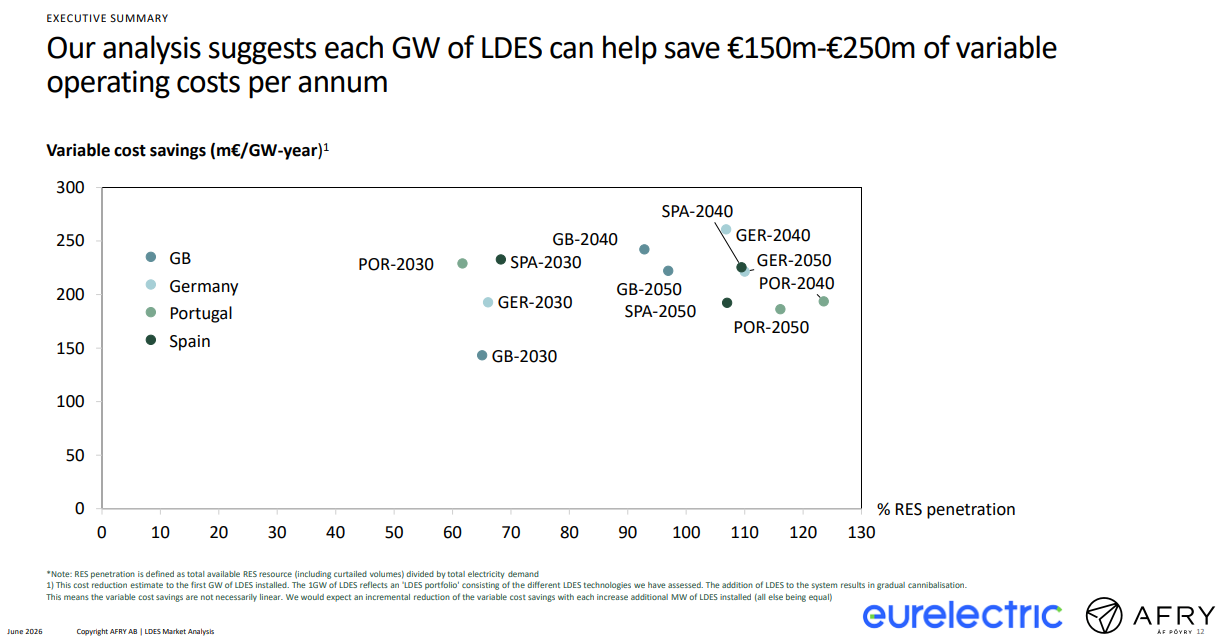
Innovative long-duration energy storage (LDES) technologies are emerging as a viable flexibility solution for Europe's power system, according to a new report released by Eurelectric and consulting firm AFRY. The study estimates that every GW of LDES capacity could generate between €150 million and €250 million per year in variable operating cost savings across the electricity system.
The analysis highlights the growing role of long-duration storage in reducing renewable energy curtailment, alleviating grid congestion, and providing flexibility over extended periods as renewable generation continues to expand across Europe.
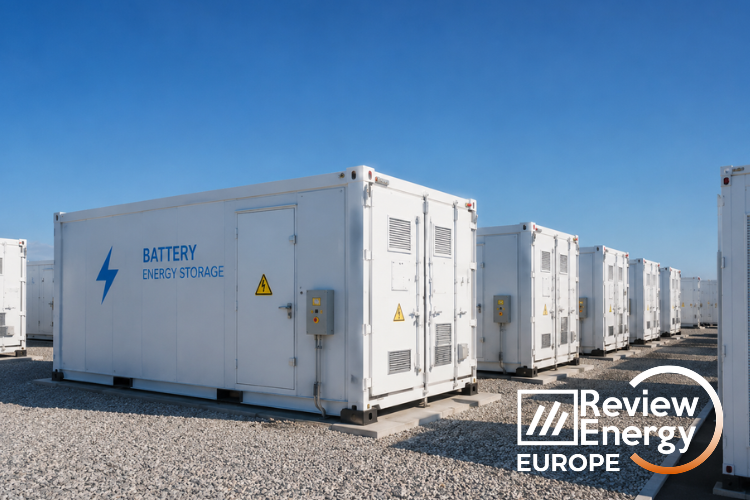
While pumped-storage hydropower remains the backbone of long-term flexibility in Europe today, the report identifies emerging opportunities for innovative technologies such as iron-air batteries, compressed air energy storage (CAES), and liquid air energy storage (LAES). These solutions can provide electricity for periods exceeding eight hours, making them well suited to addressing long-duration flexibility needs in increasingly renewable-based power systems.
Spain and Portugal show strong potential for 8-12 hour storage
According to the report, the value of flexibility is expected to increase significantly across European electricity markets.
In wind-rich markets such as Germany and Great Britain, storage technologies with durations exceeding 24 hours could reach commercial viability after 2040. Meanwhile, Spain and Portugal stand out as particularly attractive markets for storage technologies offering between eight and twelve hours of duration, driven by high solar penetration and the growing need to manage renewable energy surpluses.
These trends suggest that a commercial business case is beginning to emerge for a range of innovative LDES solutions across Europe.
Reducing renewable curtailment and grid congestion
Beyond lowering operating costs, the report highlights the potential of LDES technologies to reduce renewable energy curtailment.
In Germany, where much of the country's wind generation is concentrated in the north while demand is centered in the south, long-duration storage can absorb excess renewable electricity during periods of grid congestion and release it when renewable generation declines.
Across the markets analyzed, each MW of installed LDES capacity could prevent between 2.2 MWh and 4.5 MWh of renewable energy curtailment annually, with the highest benefits observed in Spain and Portugal.
Investment challenges remain
Despite the growing opportunities, the report notes that investment conditions remain uncertain in several markets. High upfront capital costs and insufficient revenues from existing energy and ancillary services markets continue to create financing challenges for many projects.
Finland is highlighted as an example, where the availability of pumped-storage hydropower and relatively low electricity price volatility limit revenue opportunities for new LDES assets.
“Europe's energy transition needs technologies that can cover the increasing need for flexibility in the power system. It is encouraging that a business case is beginning to emerge for innovative long-duration energy storage with substantial system benefits: less curtailment, lower operating costs, reduced congestion and greater security of supply,” said Kristian Ruby.
The report concludes that as renewable generation continues to grow across Europe, the value of long-duration flexibility will increase, positioning innovative storage technologies as a key pillar of a secure, affordable, and decarbonized electricity system.

Comentarios
Sé el primero en comentar...