





BP and TotalEnergies win 7GW of German offshore auction worth 12.6 billion
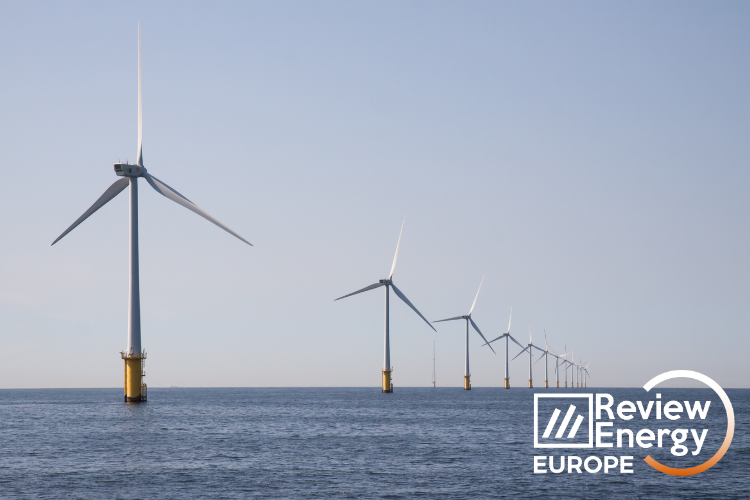
The German government announced the results of its 7 GW offshore wind auction for non-centrally pre-investigated sites, which closed for bids on 1 June 2023. A dynamic bidding procedure was conducted for each of the four sites up for auction; it was the first time such a procedure had been carried out. The proceeds from the auctions came to €12.6bn.
The auction consisted of three sites of 2 GW located in the North Sea (N-11.1, N-12.1, N-12.2) and one site of 1 GW located in the Baltic Sea (O-2.2). The winners were bp for two sites in the North Sea and Total Energies for one site in the North Sea and the site in the Baltic Sea.
The results confirm the attractiveness of investing in offshore wind energy in Germany," said Klaus Müller, President of the Bundesnetzagentur. "Competition in offshore wind power has never been so high. The results are a key step towards achieving the offshore expansion target of 30 gigawatts by 2030."
According to the government, the successful bidders now have a right to a planning approval procedure for constructing and operating offshore wind installations on their site and to grid connection and the necessary capacity.
WindEurope explains that for each of the four sites more than one company pledged to build without any state support, triggering an additional “dynamic bidding procedure”. The procedure required developers to enter a second round of uncapped negative bidding. Bids were awarded on the basis of price only.
"Negative bidding creates additional costs for offshore wind developers. These costs must be passed on. Either to the supply chain which is already struggling with inflation and surging input costs. Or to the consumers who already face higher electricity prices and costs of living," WindEurope added. "Crucially the European Union wants to strengthen its energy security with competitive and home-grown renewables. The EU needs as much new wind energy capacity as it can get, as fast as it can get it. All the money paid in negative bidding is money our companies cannot invest in other wind energy projects. European Governments should therefore not follow the German example of negative bidding".
As a result, offshore wind developers will have to pay a total of €12.6bn to the German Government. 90% of the money will go towards funding the grid connection costs, 5% will be used to protect maritime biodiversity, another 5% to support environmentally-friendly fishing.
The four projects are scheduled for commissioning by 2030. "For a timely delivery of these projects Germany needs to expand its offshore wind supply chain, for example the industrial capacity for the construction of wind turbines, foundations and the installation vessels. But investments are also needed in grids, ports and skilled workers. Negative bidding is unhelpful here. Companies along the wind energy supply chain will have to work with even tighter margins, as developers pass on the extra costs of negative bidding to them," WindEurope concluded.

Comentarios
Sé el primero en comentar...