




Central Europe could reduce electricity prices by 29% by accelerating the deployment of renewable energy by 2030: WindEurope
Recent regulatory changes for wind energy development in Central European countries are promising: Hungary is simplifying repowering conditions. In Slovenia first steps to boost permitting will come into force in July. And recently amended legislation in Czechia aligns the position of wind energy development with other public interests and simplifies permitting processes. Governments in Central Europe must use the National Energy Climate Plans (NECPs) submission to translate these recent improvements into higher targets for wind energy.
According to WindEurope, Central European countries can only meet their required share of the EU’s new renewables target by deploying more wind energy. Landlocked countries like Czechia, Hungary, Slovakia and Slovenia rely on onshore wind. Governments, therefore, need to use the upcoming deadline to submit draft NECPs as an opportunity to increase their wind energy targets. This will allow them to provide clean, secure and cheap energy and ensure their economies stay competitive. For example, consumers can expect electricity prices to be reduced by 29% by 2030 if countries in the region deploy more renewable energy.
Renewable energy associations and climate think tanks have asked governments to use the revision of NECPs to raise their wind energy targets. Thus, Czechia should increase its wind target to between 1,000 MW and 1,600 MW by 2030; Hungary from 329 MW to 4,000 MW; Slovakia from 500 MW to 667 MW; and Slovenia from 500 MW to between 600 and 700 MW. Improved permitting can help wind capacity surge threefold to eightfold by 2030
By December 2022 Czechia, Hungary, Slovakia and Slovenia had 0.675 GW total installed wind energy capacity. They could reach between 2 and 5.4 GW by 2030. To turn this potential into reality, unblocking and speeding up the construction of wind farms is a must. Missing goals for the development of renewables, state regulation that restricts wind energy development and overly complicated permitting processes have been the main obstacles to wind energy development so far. This has led to a decade of stagnation of the sector in most Central European countries.
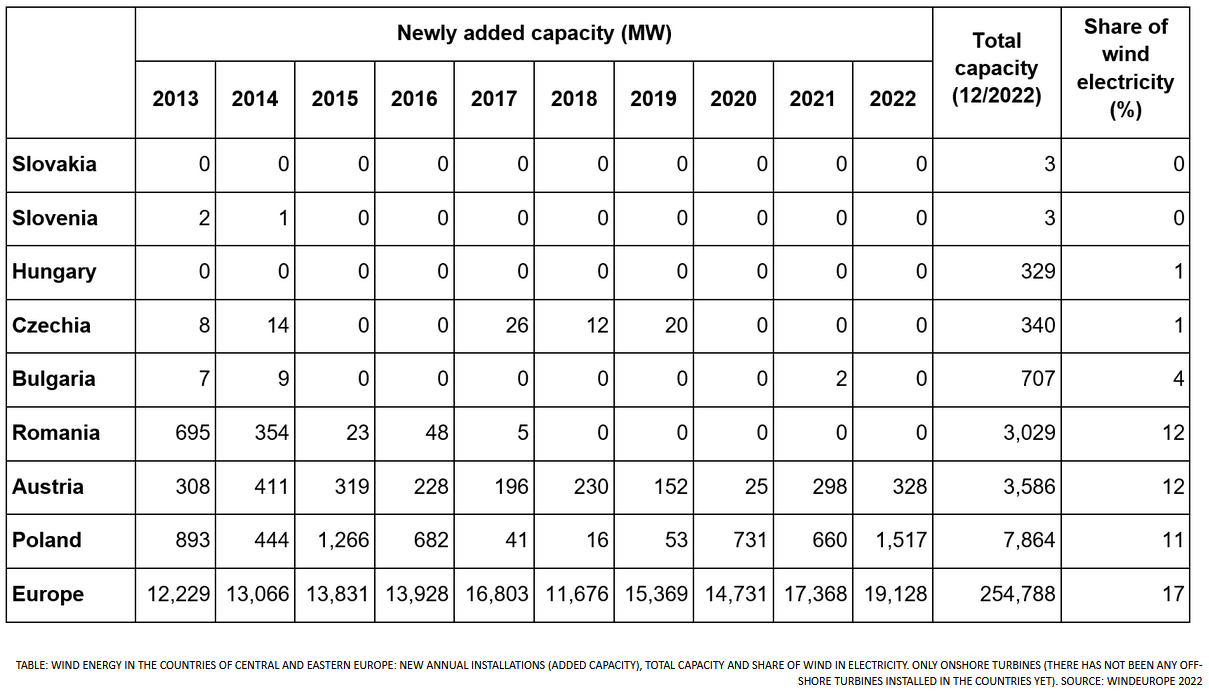
“Wind is 17% of all the electricity consumed in Europe today. The EU want it to be 43% by 2030. This requires a huge expansion in capacity. The whole of Europe is going to have to contribute. So it is encouraging to see the growing number of new wind farm projects now under development in Central Europe. And the number of Governments in the region that are now planning or legislating for CfD auctions for new wind farms. Every EU Government now has to update its National Energy & Climate Plan (NECP). This is a great opportunity for Governments to nail new targets and spell out the policies e.g. on permitting and grid expansion that will help deliver them. Ambitious NECPs will attract investments”, said Giles Dickson, CEO WindEurope.


Comentarios
Sé el primero en comentar...