





German wind industry calls for clear rules to maintain investment momentum
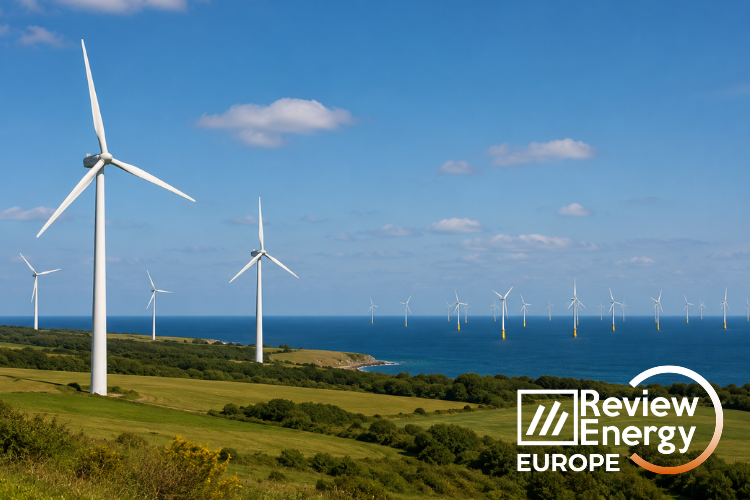
The German Wind Energy Association (BWE) has called on the federal government to provide stable and reliable regulatory conditions to safeguard investment in new wind projects, both onshore and offshore, warning that the legislative changes currently under consideration could create uncertainty and hamper further development of the sector.
The statement coincide with the Wirtschaftsforum Offshore Wind, focuses particularly on the reform of Germany’s Offshore Wind Energy Act (WindSeeG), as well as the upcoming amendment to the Renewable Energy Sources Act (EEG) and the grid connection package.
“The wind energy industry lacks investment certainty. The federal government must finally demonstrate that it is serious about the energy transition and create a robust legal framework for the continued expansion of wind energy,” said Bärbel Heidebroek, President of BWE.
Industry calls for changes to offshore wind reform
One of BWE’s main concerns relates to the proposed new framework for offshore wind. Germany’s Federal Ministry for Economic Affairs and Energy presented a draft reform of the WindSeeG on 10 August, aimed at changing investment conditions and the system for awarding new offshore projects.
The proposal includes, among other measures, a two-stage auction model, designed by the government to prioritise market-based mechanisms while providing support when investment risks become too high. However, BWE argues that the proposed system does not sufficiently address the industry’s needs and requires further changes before final approval.
The legislation is still under consideration and could therefore undergo further amendments during the process.
For BWE, maintaining a reliable project pipeline is also essential to ensure that investments already made in infrastructure supporting offshore wind can be fully utilised. Heidebroek pointed to the expansion of the Port of Cuxhaven, which is intended to provide additional capacity for the construction and maintenance of offshore wind installations.
“This infrastructure must now be used economically. To achieve this, we need a reliable project pipeline and must not hinder offshore projects through uncertain legislation,” Heidebroek said.
Concerns extend to onshore wind
BWE’s warnings are not limited to offshore development. The association argues that the EEG reform and the grid connection package must also provide conditions that allow new onshore wind farms to secure financing, while avoiding measures that could reduce expected project revenues.
The association had already warned on 21 August that some financial institutions were reassessing, postponing or withdrawing financing for approved or awarded wind projects amid uncertainty surrounding the proposed regulatory changes.
The debate comes as Germany’s onshore wind sector is expanding. Around 2,363 MW of new onshore wind capacity entered operation during the first half of 2026, 7% more than in the same period a year earlier, bringing the country’s total installed onshore capacity to 69,952 MW. Around 9.1 GW of new projects were also approved during the six-month period.
According to BWE, maintaining this momentum requires predictable rules that allow developers, manufacturers and financial institutions to make long-term investment decisions.
BWE urges government to revise legislative proposals
BWE considers both onshore and offshore wind to be key pillars of Germany’s energy independence, climate objectives and efforts to maintain affordable electricity supplies. The association is therefore calling for the WindSeeG, EEG reform and grid connection rules to be designed in a way that enables investment rather than creating additional barriers.
The organisation also highlighted public support for the energy transition. According to the KfW Energy Transition Barometer 2026, cited by BWE, 84% of German households support the energy transition, while willingness among citizens to contribute directly to the transformation is also increasing.
“The continued expansion of wind energy is crucial for the success of Germany as a business location and for achieving its climate targets. The industry can deliver — onshore and offshore. Now policymakers must create the necessary conditions and correct their legislative proposals,” Heidebroek concluded.


Comentarios
Sé el primero en comentar...