
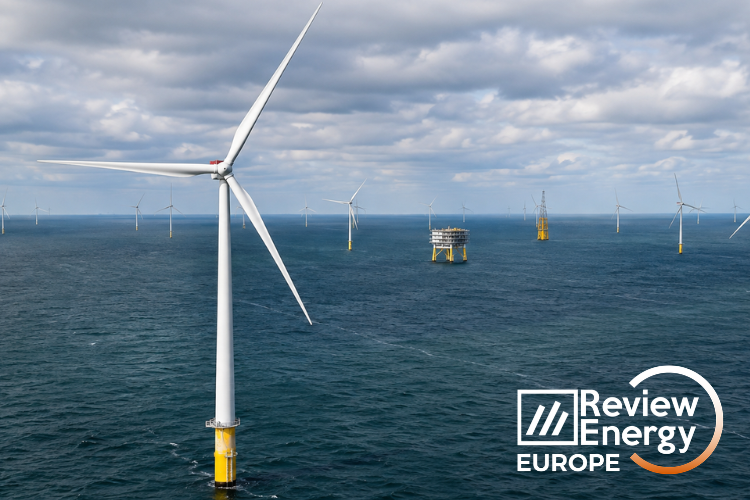


Germany reforms offshore wind rules to improve project delivery and cost efficiency
The German government has approved a reform of its offshore wind regulations aimed at ensuring that awarded projects are actually built. The proposal seeks to improve cost efficiency, strengthen investor certainty and align new generation capacity more closely with grid development.
Federal Minister for Economic Affairs and Energy Katherina Reiche said the existing rules had encouraged risky bids without providing sufficient guarantees that the selected offshore wind farms would be completed.
“The previous rules led to high-risk bids without adequately ensuring that awarded projects would actually be built,” Reiche said. The reform, she added, would create more realistic auctions, greater investment certainty and better use of grid connections.
A more predictable expansion path
Germany will retain its statutory offshore wind targets while stabilising deployment at an average of three gigawatts per year. According to the government, a more consistent expansion path will help prevent costly overcapacity and provide long-term certainty for domestic industries.
The measure is expected to support investment in steel production, cable manufacturing, ports, maritime logistics, supply chains, skilled labour, and wind-farm operation and maintenance.
Future offshore wind auctions will follow a two-stage model that prioritises market-based allocation while providing protection when project risks become too high. In those cases, developers may receive support through contracts for difference, which provide a reference revenue level for the electricity generated.
Better use of offshore grid connections
The reform will allow generation capacity connected to offshore transmission infrastructure to exceed the nominal connection capacity by as much as 20%. The government expects this measure to improve utilisation of existing links, offset fluctuations in wind generation and reduce the cost of electricity.
It will also seek to limit wake effects between turbines, increasing the amount of electricity produced within each development area. Standard project terms will be extended from 25 to 35 years, improving commercial viability and spreading infrastructure costs over a longer operating period.
The legislation also includes measures to strengthen the resilience of Europe’s offshore wind industry and critical infrastructure in the North Sea. It implements Article 26 of the EU Net-Zero Industry Act while seeking to minimise the administrative burden on developers.
More than €5.500 billion a year to reduce grid costs
Alongside the offshore wind reform, the cabinet approved €5.525 billion in annual subsidies for electricity transmission costs through 2029.
The funding, which is expected to come from Germany’s Climate and Transformation Fund, is intended to lower grid charges for households and businesses at a time when the country is making major investments in its electricity infrastructure.
Both bills will now be submitted to the Bundestag and Bundesrat for consideration.



Comentarios
Sé el primero en comentar...