




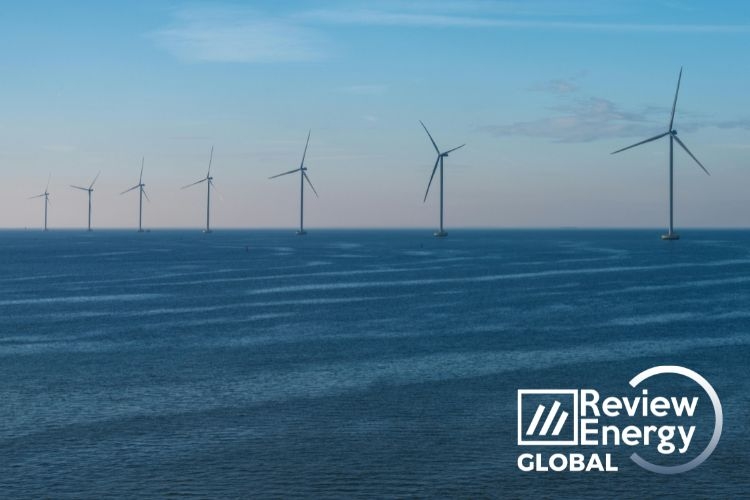


Germany’s offshore wind industry warns of investment risks amid auction uncertainty
Germany’s proposed reform of the Offshore Wind Energy Act (Windenergie-auf-See-Gesetz, WindSeeG) seeks to improve the economic viability of offshore wind projects, but the industry argues that the planned tendering framework may not be enough to unlock investment. The German Offshore Wind Energy Association (Bundesverband Windenergie Offshore, BWO) is calling for a Contracts for Difference (CfD)-only model, indexation and a mechanism to return and retender projects at risk of not being built.
The German Bundestag held the first reading of the government’s draft law on optimising and securing the expansion of offshore wind energy (Entwurf eines Gesetzes zur Optimierung und Absicherung des Ausbaus der Windenergie auf See, Bundestag document 21/8238) on October 8. The draft introduces a two-stage tendering model in which CfDs would serve as a backstop when market conditions make projects too risky. It also includes measures to improve the use of offshore grid connections and extends the regulatory project lifetime from 25 to 35 years.
However, the industry’s concerns go beyond the design of the tendering system. According to the BWO, no offshore wind tender in Germany has been successfully completed since June 2025, raising concerns about the continuity of investment across the supply chain. Manufacturers, ports, installation companies and maritime service providers need predictable project pipelines to commit capital to factories, vessels and infrastructure.
The BWO argues that a single-stage tendering system based exclusively on CfDs would provide greater revenue certainty and improve project financing. It is also calling for indexation to account for cost changes between the award of a contract and project commissioning, helping to reduce the risk premiums developers may include in their bids.
Another key demand is a mechanism allowing projects awarded in 2023–2025 that are at risk of not being built to be returned and retendered. The association also proposes capping security deposits for CfD contracts at €100 million per gigawatt and considering limits on the number of awards allocated to individual bidders.
The debate has implications for Germany’s industrial base as well as its offshore wind deployment targets. The BWO estimates that the sector supports around 49,000 jobs and warns that uncertainty over future orders could affect investment decisions in manufacturing, ports and installation capacity. Its position is supported by the German Association of Energy and Water Industries (Bundesverband der Energie- und Wasserwirtschaft, BDEW), IG Metall’s Coastal Union and the Central Association of German Seaport Operators (Zentralverband der deutschen Seehafenbetriebe, ZDS).
The central question is whether the reform can bridge the gap between auction awards and projects reaching final investment decisions. While the government’s proposal seeks to preserve a market-based tendering approach with CfDs as a fallback, the BWO wants revenue protection to be built into the system from the outset.
The draft will now proceed through parliamentary committee scrutiny, with an expert hearing expected in November. The outcome will help determine whether Germany’s revised framework can restore investor confidence and provide the long-term visibility needed to sustain its offshore wind supply chain.

Comentarios
Sé el primero en comentar...