




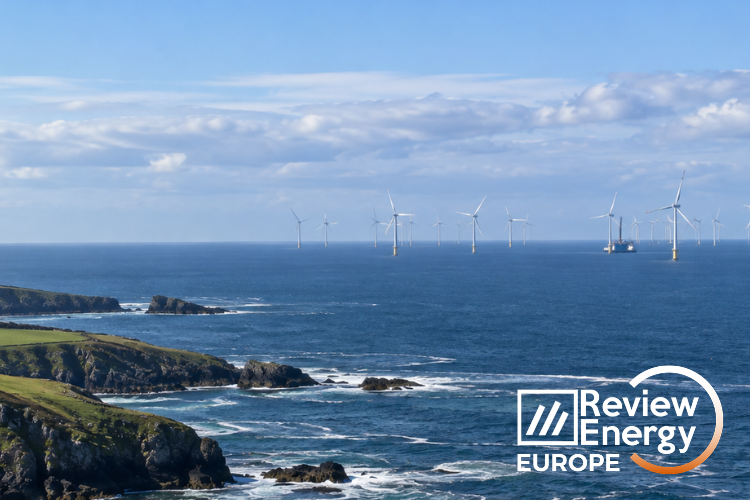


Ireland plans grid connections for up to 900 MW of offshore wind off its south coast
Ireland’s electricity transmission system operator, EirGrid, has launched a new phase in the development of the infrastructure needed to integrate offshore wind generation on the country’s south coast, opening a public consultation on connection options for Tonn Nua, which is expected to bring around 900 MW of additional renewable capacity onto the electricity system.
The consultation, corresponding to Step 4a of Powering Up Offshore – South Coast, opened on 15 September and will run until 8 December 2026. At this stage, EirGrid is presenting its Emerging Best Performing Options to determine where the infrastructure required to transport electricity generated offshore to the national grid could be located.
Tonn Nua is the first area to be connected to the grid under the Powering Up Offshore – South Coast programme. EirGrid estimates that its development could add around 900 MW of electricity, enough, according to the transmission system operator, to supply almost one million homes.
Two grid connections to integrate 900 MW
Connecting Tonn Nua will require both offshore and onshore electricity infrastructure. EirGrid plans to develop two offshore substation platforms, together with subsea transmission cables to carry electricity from these facilities to the coast.
The project will also require new onshore substations and underground cables to connect the landfall points to the existing transmission network.
The need for two grid connections was identified during earlier stages of the project. EirGrid determined that electricity from Tonn Nua would need to enter the system at two separate locations, as the existing network does not have sufficient capacity to accommodate all of the generation through a single connection point.
The new consultation specifically covers potential landfall points, offshore substation zones, subsea cable corridors, grid connection subzones and potential underground onshore cable corridors.
These options have been developed on the basis of studies carried out to date and feedback received during the previous public consultation. However, they do not represent final locations and will continue to be assessed before the preferred options move forward to the planning stage.
Infrastructure in Cork and Wexford
The current phase considers different infrastructure options in Counties Cork and Wexford, covering both transmission corridors and onshore grid connections.
EirGrid is currently at Step 4 of its six-step grid development process, which focuses on identifying where the infrastructure should be built.
During the previous stage, the transmission system operator assessed different cable landfall areas and potential grid connection locations. Subsequent marine and coastal studies, together with feedback gathered during consultation, allowed EirGrid to refine the alternatives that are now being presented for further public input.
First development under the south coast plan
Tonn Nua forms part of Ireland’s approach to planning offshore renewable energy through Designated Maritime Area Plans (DMAPs).
The area is located off Ireland’s south coast and will be the first to be developed under this framework in the region. Under Powering Up Offshore – South Coast, EirGrid will not develop the wind farms themselves, but rather the transmission infrastructure required to connect offshore generation to Ireland’s national electricity system.
The development also forms part of Ireland’s broader plans to significantly expand offshore wind generation. The country has a target of 5 GW of offshore wind capacity, although that figure represents the national target rather than the capacity of Tonn Nua, which is expected to reach approximately 900 MW.
Once the consultation closes on 8 December, EirGrid will assess feedback from communities and stakeholders alongside its technical studies to further refine the routes and locations before selecting the preferred options and moving the project towards the planning stage.



Comentarios
Sé el primero en comentar...