
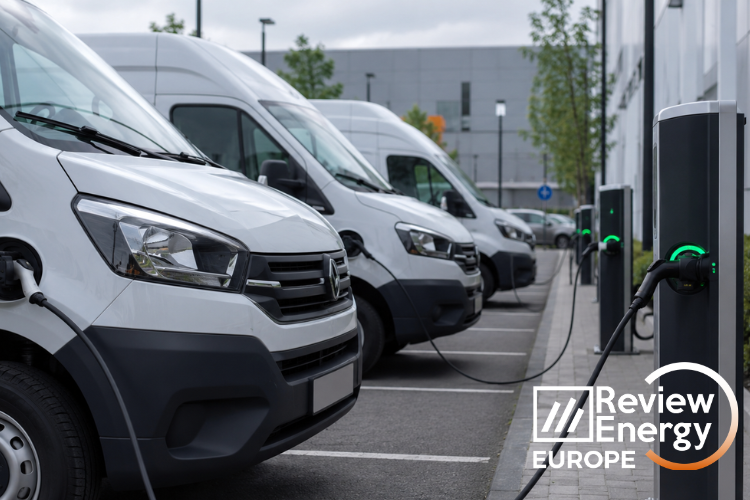


EU electric vans lag in transition despite logistics demand
Europe’s passenger car electrification is accelerating, but light commercial vehicles are being left behind. Electric vans account for barely 10% of the market, highlighting what the European Automobile Manufacturers’ Association (ACEA) describes as a structural blind spot in Europe’s decarbonisation strategy.
Despite this gap, vans remain strategically important. In 2025, more than 1.8 million units were produced, representing 13% of EU vehicle production and 15.4% of global van output.
Not a supply problem, but a demand issue
The industry stresses that supply is not the constraint: more than 70 battery-electric van models are already available across the EU, covering a wide range of professional applications.
The real challenge lies in demand and in a persistent policy mismatch: vans are not passenger cars, but working tools essential for last-mile logistics and Europe’s SMEs, which underpin nearly €1 trillion in economic activity.
Infrastructure, payload and cost barriers
Charging infrastructure remains the most immediate bottleneck. Operators require fast, affordable daytime charging, reliable overnight options, and dedicated depot infrastructure tailored to commercial operations.
Payload constraints also slow adoption, as larger batteries reduce cargo capacity or push vehicles into heavier regulatory categories with additional compliance costs.
Cost sensitivity is another key barrier. Businesses evaluate total cost of ownership, while fiscal incentives remain weaker and less consistent than those available for passenger cars.
Call for more flexible regulation
ACEA calls for a more realistic regulatory pathway, including a gradual CO? reduction target of 35% by 2030 and 80% by 2035.
It also proposes five-year averaging periods to smooth market volatility, alongside adjustments to weight regulations that currently disadvantage electric vans.
Finally, the industry urges targeted investment in commercial charging infrastructure and financial incentives aligned with operational realities.
A critical blind spot in Europe’s transition
The sector warns that without policy adjustments, vans risk becoming the weakest link in Europe’s decarbonisation strategy. The challenge, it argues, is not technological but structural: policies must reflect how commercial vehicles actually operate.





Comentarios
Sé el primero en comentar...