
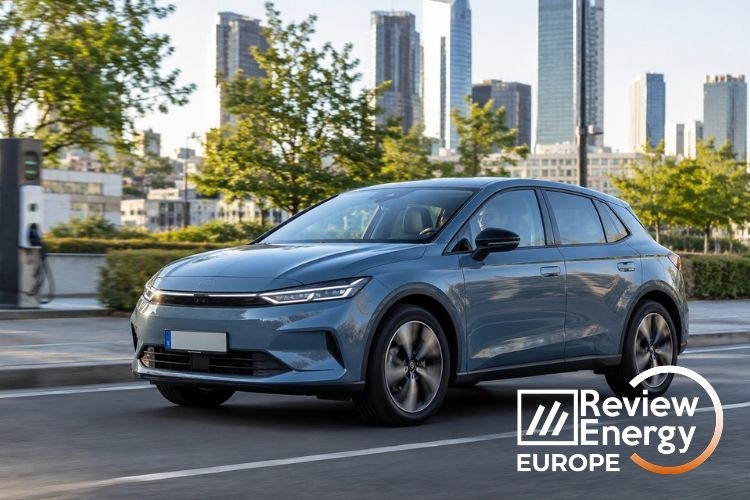


Europe’s battery build-out may not be enough to meet future localisation demand
Europe’s battery production capacity is unlikely to meet the demand generated by the localisation requirements proposed under the Industrial Accelerator Act (IAA), even as European battery cell production is expected to reach 306 GWh by 2032, according to a new study by Mobility Global commissioned by the European Automobile Manufacturers’ Association (ACEA).
Under the proposed IAA, battery localisation requirements would be introduced in two phases. Around 2027-2028, six months after the text enters into force, batteries would have to contain three EU-origin components, including battery cells. Around 2030-2031, three years after adoption, this requirement would rise to five EU-origin components, including battery cells, the battery management system (BMS) and cathode active materials (CAM).
The study assesses the impact of these requirements under three demand scenarios for European-made batteries: a full-market scenario, covering the electric light-vehicle market including private buyers receiving purchase incentives; a public-led scenario, covering electric light vehicles excluding private buyers and including corporate cars, rentals, fleets, dealers and public procurement; and a public-core scenario, focused on corporate cars and public procurement.
In all three scenarios, the analysis finds that European supply would remain below demand. If the IAA enters into force in 2028, around 3 million cars could be unable to qualify for the associated incentives because of insufficient European battery supply, according to the study.
The supply challenge is even greater for medium- and heavy-duty commercial vehicles. By 2032, the gap between demand and available European supply is expected to reach 23 GWh, with demand estimated at around four times the available European supply.
Challenges extend beyond battery capacity
The study also identifies structural challenges across Europe’s battery supply chain. Most planned European gigafactories are geared towards NMC battery chemistry, while demand is increasingly shifting towards lower-cost LFP batteries, a segment in which the supply chain is dominated by China.
At the same time, European-made battery cells remain significantly more expensive than imported cells. The analysis also warns that announced production capacity should not be equated with operational capacity, as projects continue to face financing, permitting and implementation risks.
Further upstream, Europe also faces persistent shortages of cathode and anode active materials (CAM/AAM). According to the study, this deficit could remain until 2038-2040, even under a lower-demand scenario.
The findings point to the need for a realistic and economically viable approach to battery localisation. According to the analysis, the effectiveness of the IAA will depend not only on the ambition of its localisation requirements, but also on Europe’s ability to develop upstream capacity, competitive operating conditions and an investment framework capable of delivering the production capacity needed to meet future demand.




Comentarios
Sé el primero en comentar...