
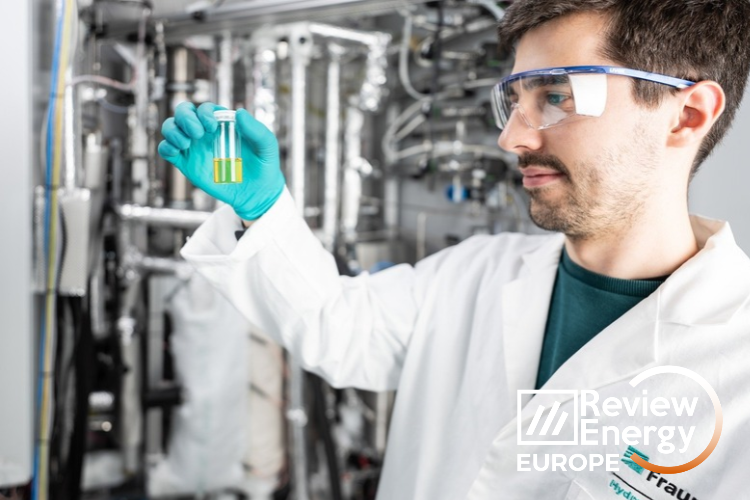


German-Australian project targets hydrogen and sustainable fuels for lower-carbon aviation
Germany and Australia have launched a joint research and development project to advance technologies for climate-friendly aviation, with a focus on renewable hydrogen, sustainable aviation fuels (SAF) and fuel cells. The initiative, called the Sustainable Aviation Hub Australia (SAvHAus), is coordinated by the Fraunhofer Institute for Solar Energy Systems ISE and brings together research institutes and industry partners from both countries, according to Fraunhofer ISE.
The project aims to establish a joint German-Australian research and development centre to develop solutions across three key areas: SAF production from synthesis gas and ethanol, efficient hydrogen supply, and fuel cell systems. Its research includes innovative multi-reforming processes to produce synthesis gas, ether-based SAF production, robust anion exchange membrane (AEM) electrolysis cells with new catalyst layers, and lightweight fuel cell stack designs.
The partners are seeking to improve carbon and hydrogen efficiency while reducing water consumption and ensuring efficient synthesis gas production with varying feedstock compositions. Other objectives include reducing the use of precious metals in membrane electrode assemblies, developing fuel cells with high power density and extending the service life of electrolysers.
The project addresses different requirements across aviation segments. While liquid hydrogen and fuel cell propulsion concepts are being investigated for short- and medium-haul flights, long-haul aviation is expected to continue relying on liquid hydrocarbon-based fuels for the foreseeable future. In this context, SAF produced using renewable hydrogen and bio-based feedstocks is considered a potential alternative to fossil-based kerosene.
The German partners include the German Aerospace Center (DLR), Fraunhofer IKTS, the Centre for Applied Aeronautical Research (ZAL), the University of Freiburg and several associated companies: Airbus Aerostack, Clariant Produkte (Deutschland), CHEMRA, FEV Europe, INM Deutschland and Schaeffler Technologies. The Australian contribution is part of the Future Energy Exports Cooperative Research Centre (FEnEx-CRC) and is coordinated by Professor Jonathan Love of CQUniversity Australia. CQUniversity’s Hydrogen and Renewable Energy Centre in Brisbane will provide expertise complementary to the German research activities.
The initiative also seeks to support the development of local renewable fuel production and new value and supply chains between Australia and Germany. It targets airlines, aircraft and engine manufacturers, SAF and hydrogen producers and suppliers, as well as energy and technology companies in both countries. Brisbane was selected for its access to local industrial and port infrastructure in Gladstone and its natural resources.
The project has a budget of €9.5 million and will run until the end of August 2030. Fraunhofer ISE Hydrogen Technologies Division head Dr Elias Frei, who coordinates SAvHAus, said the partners’ work aims to lay the foundations for local renewable fuel production and carbon-neutral flights across short-, medium- and long-haul routes.


Comentarios
Sé el primero en comentar...