


Switching to green aluminium could make electric cars cleaner than ever by 2040
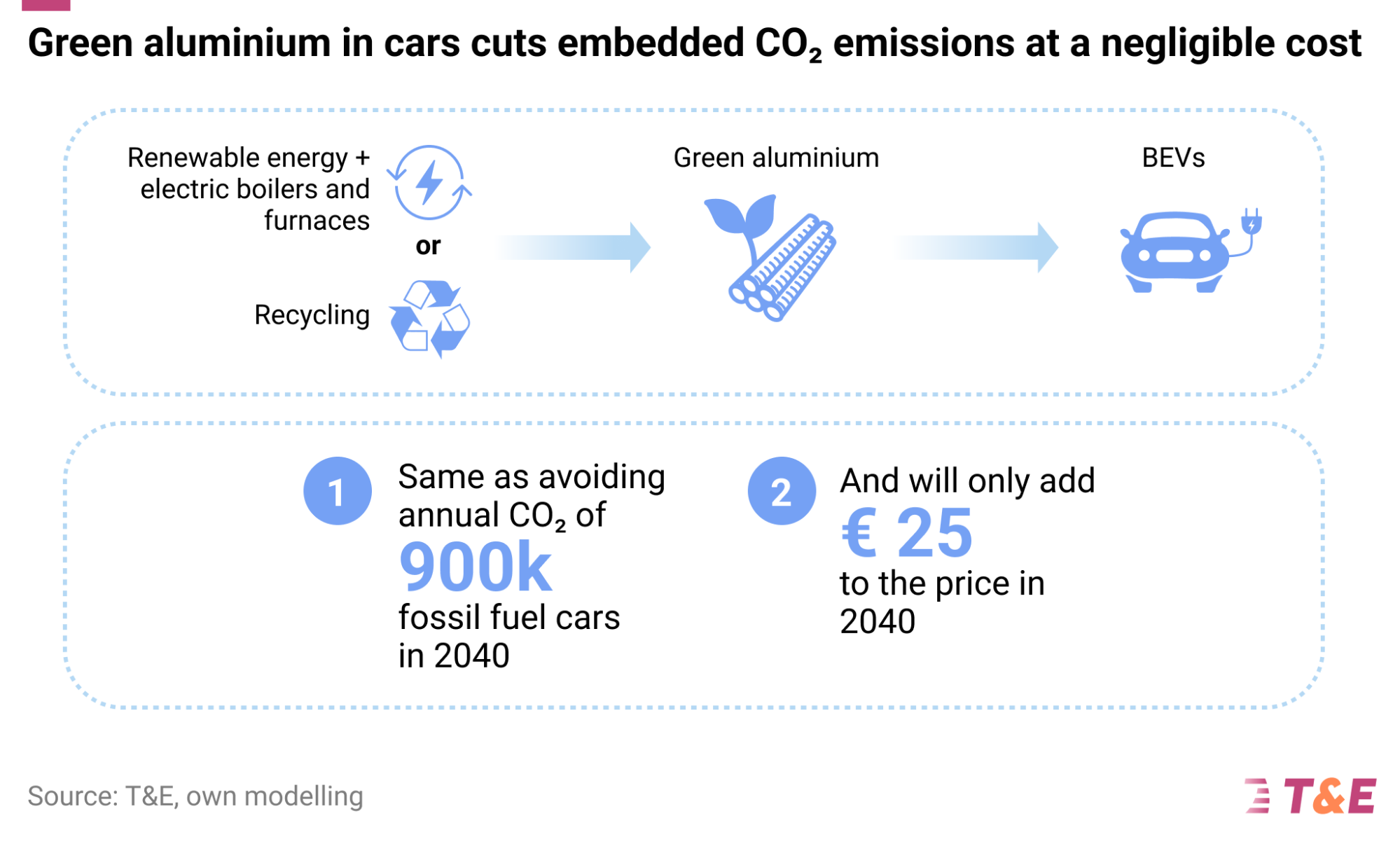
A new study by Transport & Environment (T&E) shows that using green aluminium in European electric vehicles could cut as much CO2 annually as removing 900,000 fossil fuel cars from the road. The research highlights that switching to low-carbon or recycled aluminium could cost as little as €25 per vehicle by 2040.
As tailpipe emissions decline with the rise of electric vehicles, production emissions—currently accounting for 60% of an EV’s climate impact—are coming under increasing scrutiny. Aluminium, used for chassis, batteries, and other components, represents around one-fifth of these production emissions.
Aluminium production is highly energy-intensive, with one tonne of aluminium requiring roughly ten times the electricity consumed by an average EU household in a year. Europe’s comparatively clean electricity grid gives it a competitive advantage in producing low-carbon aluminium, making it a potential leader in the global green materials market. Green aluminium includes both recycled aluminium and primary aluminium produced using electrified heating and innovative low-emission technologies.
The automotive sector consumes over one-third of Europe’s aluminium. According to the study, introducing green aluminium across EU car manufacturing could achieve content targets of 60% by 2035 and 85% by 2040. These measures would help scale the technology, reduce emissions, and add only a minimal cost—around €25—to each car by 2040.
Michael Carron, battery and materials researcher at T&E, said: “Electric vehicles are far better for the planet than combustion engines. Thanks to green aluminium, that advantage is only going to grow. Europe’s comparatively clean power grid means it's poised to lead the world in this technology, but it won’t happen without mobilising one of the biggest consumers of aluminium, the auto industry. Smart targets and local content requirements can help unleash this potential.”
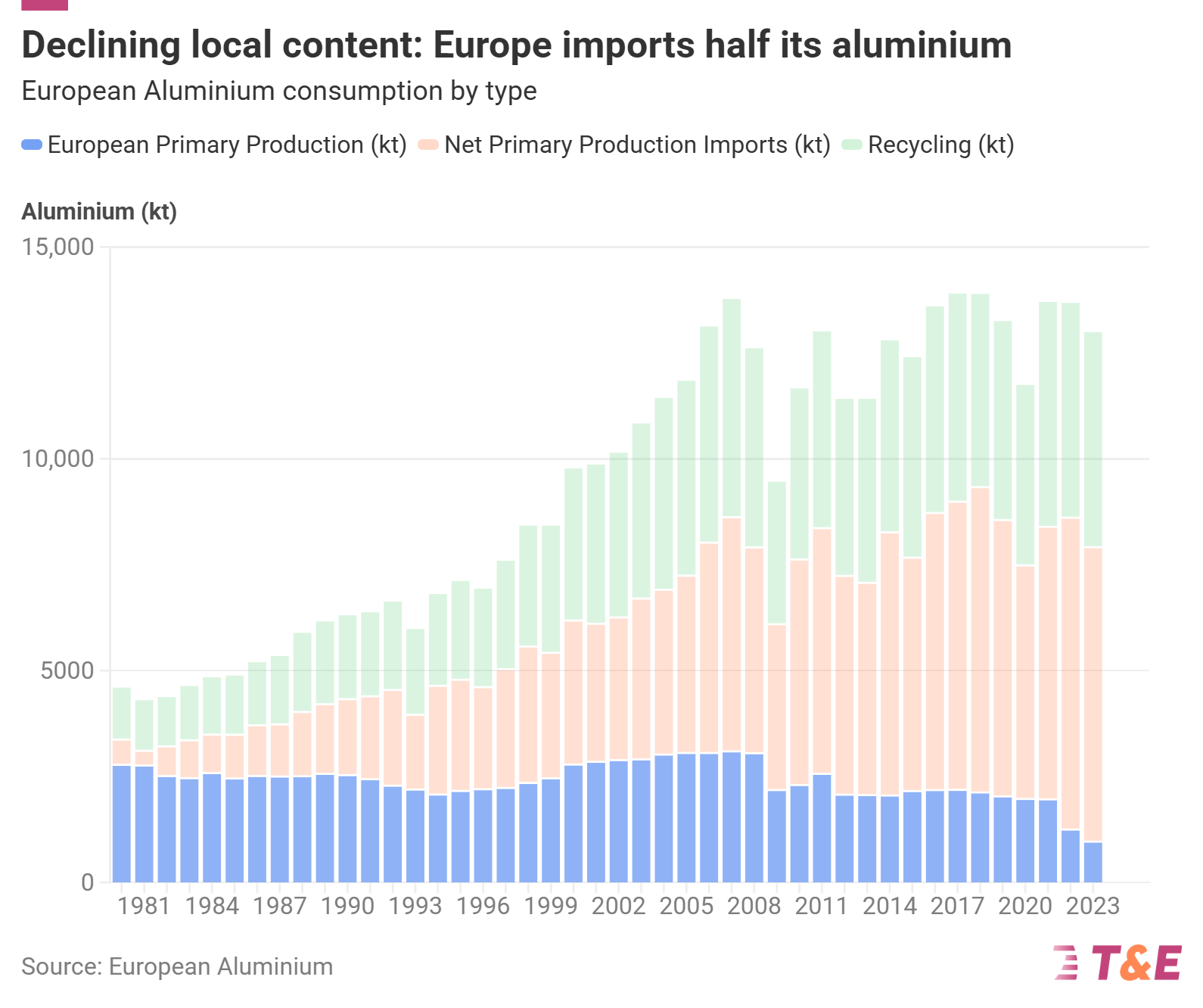
Europe currently imports more than half of its primary aluminium, and dependency is expected to grow as EV production increases, while the number of EU smelters has halved over the past decade. T&E recommends that green aluminium content targets require production within Europe and call for stronger recycling rules using locally sourced scrap. Limiting aluminium scrap exports could also help strengthen the European industry.
T&E urges the EU Commission to set green aluminium content targets for carmakers under the upcoming Industrial Accelerator Act and include recycling targets in the Circular Economy Act, with specific amendments to the End-of-Life Vehicles Regulation. These measures, the study concludes, would reduce emissions, support local industry, and position Europe as a global leader in sustainable automotive materials.




Comentarios
Sé el primero en comentar...