
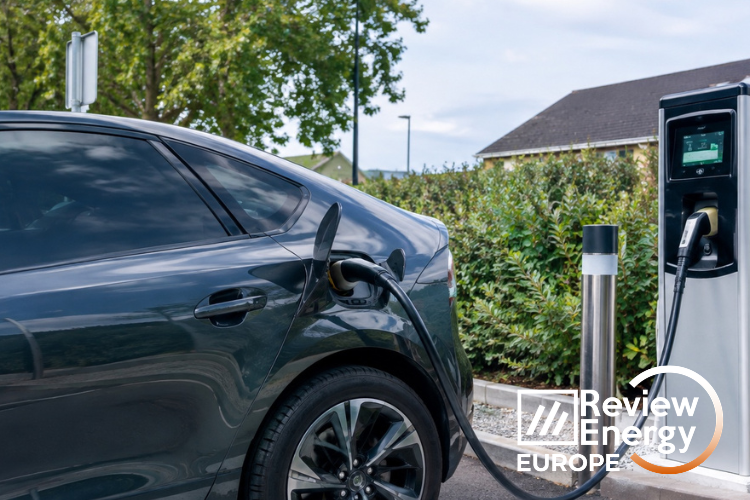


T&E urges EU to improve price transparency for public EV charging
Transport & Environment (T&E) has called for stricter price transparency requirements in the EU’s public electric vehicle (EV) charging network as part of the upcoming revision of the Alternative Fuels Infrastructure Regulation (AFIR). Its recommendations include standardising charging tariffs, displaying all price components before charging begins and enabling subscription-free card payments at public chargers.
In its position paper, T&E argues that, as the EU’s public charging network expands, the regulatory focus should shift from infrastructure deployment towards service quality, particularly price transparency, accessibility and comparability. The organisation reports that the EU had 1.1 million public chargers at the end of 2025.
The proposals aim to help drivers understand the total cost of a charging session in advance and compare prices across operators and mobility service providers. T&E recommends limiting public charging tariffs to three components: the price per kilowatt-hour, a standardised idle or overstay fee applied after charging ends, and any roaming or other commercial fees charged by mobility service providers.
The organisation also calls for all price components and conditions, including pre-authorisation and overstay fees, to be displayed in a standardised format before charging starts. It proposes clearly indicating ad-hoc prices and enabling standard card payments without a subscription at all physical public chargers. The final price charged by mobility service providers should be shown alongside the base ad-hoc price to make additional costs, such as roaming mark-ups, visible.
T&E further recommends centralising public charging data through the Common European Access Point (CEAP) to support harmonised, EU-wide open data collection. It also proposes EU-level indicators and regular monitoring of prices charged by charging point operators (CPOs) and mobility service providers (MSPs), allowing national authorities to identify price differences that may require closer scrutiny.
The recommendations draw on an analytical study conducted for T&E and the European Consumer Organisation (BEUC) ahead of the AFIR review. The study identifies challenges including complex tariffs, fragmented or outdated price information and differences in the final price depending on the payment method or service provider used.


Comentarios
Sé el primero en comentar...