
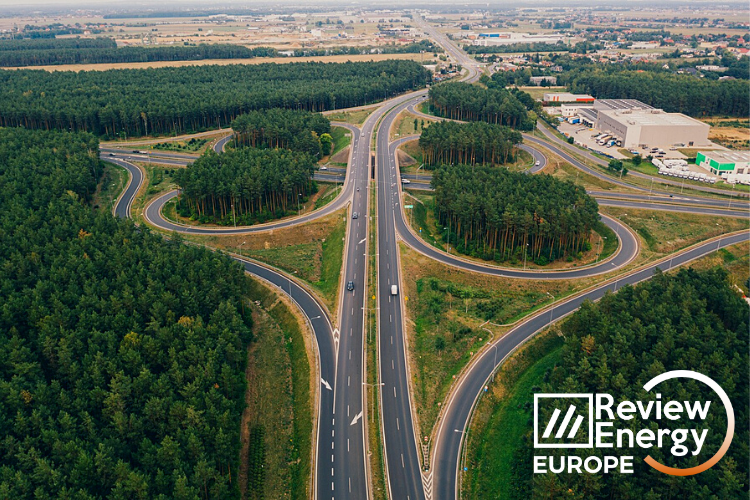


What is the industry's view on the new Euro 7 car emission standards?
The Council of the European Union adopted its position (‘general approach’) on the proposed regulation for the type-approval of motor vehicles and engines, and of systems, components and separate technical units intended for such vehicles, with respect to their emissions and battery durability, better known as Euro 7. The new regulation, which for the first time covers cars, vans and heavy-duty vehicles in a single legal act, aims to set more adequate rules for vehicle emissions and to further lower air pollutant emissions from road transport.
The general approach keeps the existing emission limits and test conditions for light-duty vehicles. In the case of heavy-duty vehicles, emission limits are lower and test conditions slightly adjusted. Euro 7 also contains a special provision on urban buses to ensure coherence with the newly proposed 2030 zero-emissions target for these vehicles.
Euro 7 sets limits for non-exhaust emissions such as particles from brakes and tyres. It additionally covers minimum performance requirements for battery durability in electric cars, and imposes stricter vehicle lifetime requirements. The regulation also provides for the use of advanced technologies and emission-monitoring tools.
The Council suggests a number of pragmatic changes to the Commission proposal while also keeping in mind environmental and health objectives. Among other things: the Council position keeps existing test conditions and emissions limits (as established in Euro 6) for M1 and N1 vehicles (private passenger cars and vans); in the case of M2 and M3 vehicles (buses and coaches), and N2 and N3 vehicles (heavy commercial vehicles), emission limits are lower and test conditions slightly adjusted, in comparison with Euro 6/VI.
In addition, the Council text strengthens the alignment of brake particle emission limits and tyre abrasion rate limits with international standards adopted by the United Nations Economic Commission for Europe; it takes into account the newly proposed 2030 zero-CO2 emissions target for urban buses; and it also sets clear deadlines for the adoption of implementing acts (by the Commission) in order to provide economic operators with clarity and legal certainty.
“Our position is to continue the path of leading the mobility of the future and adopting realistic emissions levels for the vehicles of the next decade while helping our industry make the definitive leap towards clean cars in 2035. The Spanish presidency has been sensitive to the different demands and requests of the member states and we believe that, with this proposal, we achieved broad support, a balance in the investment costs of the manufacturing brands and we improve the environmental benefits derived from the regulation,” said Héctor Gómez Hernández, acting Minister for Industry, Trade and Tourism.
How has the industry reacted to Euro 7?
Opinions in the European mobility sector are mixed. The general view is that further changes are needed so that cost pressures are not so high and competitiveness can be maintained.
“The member states’ position is an improvement on the European Commission’s Euro 7 proposal – which was entirely disproportionate, driving high costs for industry and customers, with limited environmental benefits,” stated the European Automobile Manufacturers’ Association (ACEA) Director General, Sigrid de Vries.
“Our industry is fully committed to tackling air pollution and climate change,” de Vries added. “We now call on member states, the European Parliament, and the Commission to work towards a Euro 7 regulation that will enable us to focus on these dual objectives while keeping vehicles affordable and our sector competitive.”
From ACEA, it was stated that the industry is fully committed to tackling air pollution and climate change. “We now call on member states and the EU institutions to work towards a Euro 7 regulation that will enable us to focus on these objectives while keeping vehicles affordable and our sector competitive”, de Vries concluded.
For their part, T&E are more critical of the Council's further action. T&E said that the severely weakened proposals agreed by ministers will do nothing to improve air quality and the health of European citizens. Instead it will allow the automotive industry to greenwash cars as ‘clean Euro 7’ while still running on highly polluting Euro 6 technology.
“The Council position on Euro 7 is a disaster for air quality putting carmakers record profits ahead of people’s health. Instead of reducing pollution it will greenwash today’s polluting Euro 6 cars as ‘clean’ Euro 7 vehicles. Policymakers in the Parliament have the final opportunity to set a meaningful Euro 7 regulation. They should not squander it for the sake of everyone’s health,” said Anna Krajinska, vehicle emissions and air quality manager at Transport & Environment.




Comentarios
Sé el primero en comentar...