
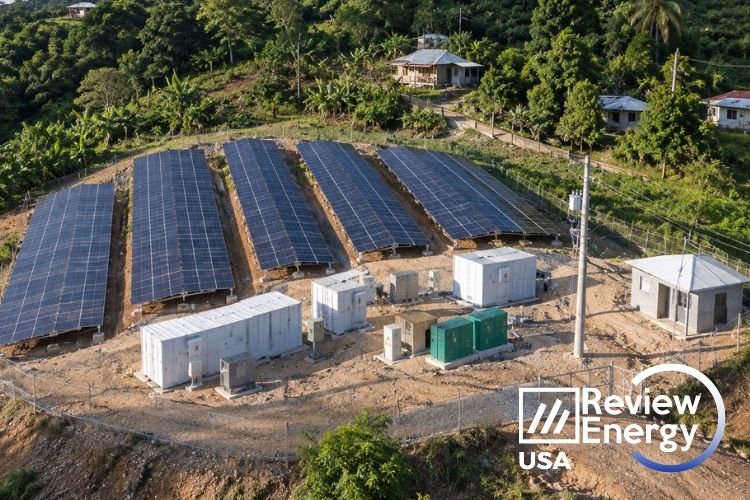


Americas poised to lead global microgrid growth through 2030
The Americas are expected to lead global microgrid market growth through 2030, driven primarily by the US, as governments, utilities, businesses and communities increase investment in resilient and decentralized power systems, according to GlobalData.
GlobalData’s latest report, Microgrids Market Size, Share and Trends Analysis by Technology, Installed Capacity, Generation, Key Players and Forecast to 2030, identifies federal funding, resilience programmes, clean energy policies and growing demand for localized power as key drivers of microgrid deployment in the Americas.
The US is expected to lead regional growth, supported by the need for power systems that can maintain operations during grid outages. Rising concerns over grid reliability and extreme weather events are also contributing to demand for microgrids across critical infrastructure and other applications.
Canada is also supporting the region’s expansion, particularly as remote and off-grid communities adopt microgrids to improve power reliability, reduce dependence on diesel and integrate renewable energy resources.
“Microgrids are becoming an important part of modern power system planning as utilities, businesses, and communities look for more reliable, flexible, and low-carbon energy solutions,” said Bhavana Sri Pullagura, Senior Power Analyst at GlobalData. She added that rising electricity demand and increasing risks of grid disruption are accelerating investment in systems combining solar PV, battery energy storage and advanced controls.
APAC and EMEA also set for growth
The Asia-Pacific (APAC) region is expected to see steady microgrid market expansion through 2030, supported by rising electricity demand, renewable energy integration and growing interest in distributed energy systems.
Japan, China and India are increasing their focus on local power resilience, clean energy access and grid flexibility, creating opportunities for hybrid microgrid systems across urban, industrial and remote applications, according to GlobalData.
The Europe, Middle East and Africa (EMEA) region is also expected to grow, although at a more gradual pace. In Europe, microgrid deployment is being supported by decarbonization and energy security goals, while countries in the Middle East and Africa are using the technology to support electrification, reliability and renewable energy integration.
Demand in EMEA is particularly relevant in remote areas, critical facilities and markets where grid access and power quality remain challenges.
Solar, storage and digital controls support deployment
GlobalData also points to growing adoption of hybrid microgrids that combine solar PV, battery energy storage, dispatchable generation and advanced controls.
The company says technology innovation, policy support, funding programmes, resilience planning and electrification initiatives are helping accelerate deployment across critical infrastructure, commercial facilities, campuses, military sites and remote communities.
Technology providers and engineering firms are increasingly focusing on digitally optimized solutions, while the integration of distributed energy resources, storage and advanced energy management systems is expected to play a growing role in microgrid development.
“Microgrid adoption will increasingly depend on the integration of distributed energy resources, storage, and advanced energy management systems,” Pullagura said. As hybrid designs and digital controls mature, she added, microgrids are expected to support cleaner local energy supplies, improve grid flexibility and strengthen power reliability across different applications.




Comentarios
Sé el primero en comentar...