
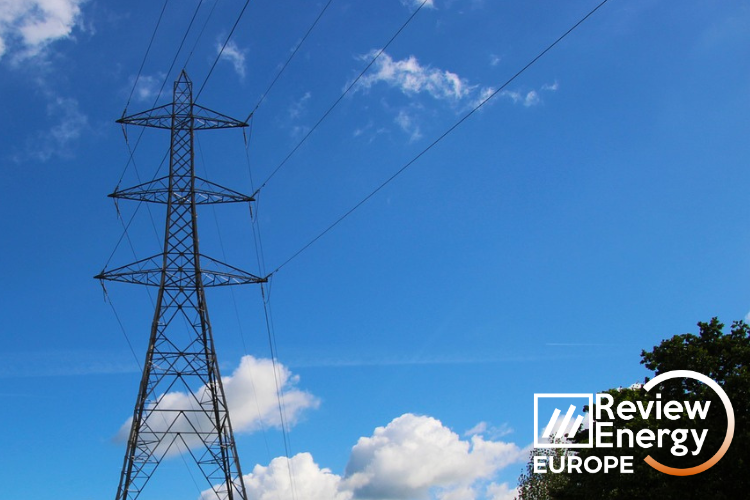


Britain needs to close the gap between renewable generation and grid capacity to achieve Net Zero by 2050
According to a new analysis by Aurora Energy Research, Britain's renewable power generation, which more than tripled between 2012 and 2022, allowing renewable power plants to account for 41% of total electricity generation in 2022, could be affected because of its electricity transmission system.
Aurora researchers note that Britain’s electricity transmission system has not expanded at the same pace as the country’s renewable power generation capacity, meaning that at certain times, available renewable power supply exceeds the capacity of some transmission assets. In these situations, renewable generators must reduce their output to avoid grid malfunction, and other generators—often gas-fired power stations—have to increase their output to meet demand. This process, known as “curtailment”, is on the rise as the gap between power generation and grid capacity widens. Wind curtailment more than tripled between 2016 and 2022, with the volume of curtailed wind power in 2022 equalling 1% of Britain’s total electricity consumption. Managing these imbalances cost British electricity consumers £2bn in 2022 alone.
Closing the gap between renewable power generation and grid capacity is crucial to reaching Net Zero by 2050. Expanding renewables capacity alone is not enough. Aurora forecasts that Britain needs to deploy 40 GW of offshore wind by 2030 to be on track to reaching Net Zero by 2050, but calculates that if Britain were to install that offshore wind power without adequate transmission system upgrades, power sector emissions in 2023-2050 would surpass the total required to reach Net Zero by 55%.
By contrast, delivering all of the grid upgrades currently planned by energy market regulator Ofgem and transmission system operator National Grid would cause power sector emissions in 2023-2050 to fall 9% below the level required to reach Net Zero by 2050. Curtailment due to insufficient grid capacity accounts for 11% of total renewable generation in 2030 under Aurora’s scenario without adequate grid upgrades, more than triple the volume of curtailment in 2030 if Ofgem and National Grid’s plans are delivered.
Costs should not deter action to expand the grid. The buildout envisaged by Ofgem and National Grid would cost an additional £49bn compared to Aurora’s “inadequate upgrades” scenario, but the increase would be offset by lower grid management costs, as a result of reduced curtailment. Total power system costs, ultimately borne by consumers, under both scenarios are roughly equal—the “upgrades delivered” scenario costs just under 1% less.
Deploying the necessary grid infrastructure to reach Net Zero will not be straightforward. Delivering all of the planned upgrades would cause cumulative steel demand for the transmission system to rise by 450% between 2025 and 2035. Britain will face strong competition globally to meet this demand—Aurora expects Germany and Spain each to deploy more than three times as much additional grid infrastructure by 2050 as Britain, for example, likely straining global supply chains. Expansion projects in Britain also face the challenge of securing planning permission, with projects typically taking 6-8 years to obtain all of the required permits to begin construction. Growing backlash from local residents poses a key obstacle to streamlining the process.
Richard Howard, Global Research Director of Aurora Energy Research, said that “Great Britain has made great strides in building wind and solar projects over the past decade and has ambitious targets to deploy more renewable power generation. This is necessary but not sufficient to deliver our Net Zero targets: we also need to accelerate investment in grid capacity to link these projects to our cities and towns. Britain already faces a growing problem of having to turn off significant amounts of renewable power when the grid is constrained, and this will increase sharply unless we deliver the required grid upgrades in time.”
For his part, Ashutosh Padelkar, GB Research Associate of Aurora Energy Research, added that “delivering the grid upgrades planned by Ofgem and National Grid would require nearly 10,000 km of additional transmission lines: a very tall order. Long-duration energy storage (LDES) technologies could provide a useful complementary solution to rising curtailment alongside grid expansion, but the lack of a route to market for these technologies is a barrier to investment. The government has a key role to play: introducing mechanisms like revenue cap and floor could help de-risk investment and support the deployment of LDES at a low cost to consumers.”



Comentarios
Sé el primero en comentar...