



Eastern Europe’s energy crossroads: Investment, regulation and electrification in the spotlight
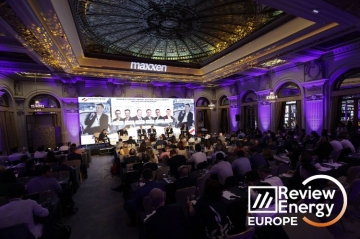
The second edition of Energyear Eastern Europe brought together over 300 experts at a time when uncertainty caused by geopolitical conflicts has put a spotlight on the security of Europe’s energy systems. The opening panel, titled “Geopolitics and Energy Security: The Role of Renewables in the Future of Eastern Europe,” made it clear that the debate about the region’s energy future cannot be delayed.
Moderated by Radu Dudau, president of the Energy Policy Group, the panel featured key industry figures: Alexandru Chirita, CEO of Electrica; Alastair Hammond, CEO of Rezolv Energy; Miguel Antonio Jiménez, CEO of AJ Brand; and Adrian Dugulan, CEO of PPC Renewables Romania. Together, they tackled the challenge of combining energy security, investment, electrification, and renewables in a complex but opportunity-filled context.
Electrification and interconnection as strategic pillars
Radu Dudau opened the discussion by noting that recent conflicts — from Ukraine to the Middle East — have strained energy security across Europe, with Romania playing a key geographic and strategic role. “Electrification is definitely something that member states have to do,” he stated, emphasizing that due to the continent’s lack of fossil fuel resources, “we need to keep electrifying our economies, and build modern, reliable, clean grids.”
Dudau also pointed out the diverging transatlantic views on energy development but stressed that the EU is heavily investing in electrification “not just as a pillar of the clean energy transition, but also because of its energy security benefits.”
Smart investments and regulatory predictability
From Electrica, Alexandru Chirita was clear: “We are making the investments, 100% and even beyond.” However, he warned that going further will require better cooperation with regulators. “No business line will work if the grids don’t work,” he said, citing the recent blackout in southwestern Europe as an example. While such an event is unlikely in Romania, he acknowledged that “as more prosumers and green energy enter the grid, risks increase.”
Chirita argued that the cost of not investing today will be much higher in the future. He also highlighted the role of artificial intelligence: “We are already implementing predictive models for maintenance, weather, and operations. We’re not lagging behind, and that’s the most important thing.” He also emphasized the need to prepare workers: “This isn’t about replacing jobs, it’s about becoming more efficient.”
Renewables, storage and a local value chain
Alastair Hammond of Rezolv Energy brought a pragmatic view. “I’m not only advocating for renewables. We need a balanced mix, where gas and nuclear also have a role,” he said. Nevertheless, he insisted that “wind and solar renewables have a very large part to play.” He justified his investment in Romania based on the country’s excellent wind and solar resources, advocating to “build solar assets where it’s sunny, and wind assets where it’s windy.”
He rejected the idea that renewables are expensive: “I promise you they’re not, if we can do it at scale.” He added that “the EU has doubled down on green energy,” making access to renewables crucial for industrial investment: “I know of cases in the Czech Republic where major investments were cancelled due to lack of access to green energy.”
Hammond also stressed the importance of battery storage and Romania’s industrial base: “We’re falling behind in battery systems. We need to invest more in that.”
Network stability as a key priority
Miguel Antonio Jiménez from AJ Brand focused on system stability: “We need to consider stability. It’s a major issue in this country.” Drawing on lessons from Spain’s past renewable energy boom, he stressed the need for better planning: “Now, with cheaper and more mature technologies, we can do it better.”
Jiménez called for more regulatory clarity: “In the past, we noticed rule changes that affected project development. I think we’re on the right track, but we have to protect the regulatory framework for future investment.”
He also warned about the country’s rapid growth and the arrival of energy-hungry consumers such as data centers: “We’re building a smart, AI-powered data center. That’s a major consumer. We have to consider that in generation planning.”
Consumers setting the pace of change
Adrian Dugulan of PPC Renewables Romania concluded the panel by reminding that “electrification is not something we decide — it’s something consumers are naturally pushing.” In his view, renewable investments must be ongoing: “Renewables have to be a constant investment, not a bubble.”
He also pointed out that, for the first time, demand may outpace generation capacity: “Today, we are facing consumers — like data centers — who are developing faster than we can build new power plants. We will have to follow that trend and adapt.”
This panel made it clear that the path to a secure, clean, and resilient power system in Eastern Europe depends on increased investment, clear regulation, long-term planning, and a determined shift toward renewables and digitalization. As Radu Dudau concluded: “We have to be well interconnected and well integrated at the continental level.”

Comentarios
Sé el primero en comentar...