
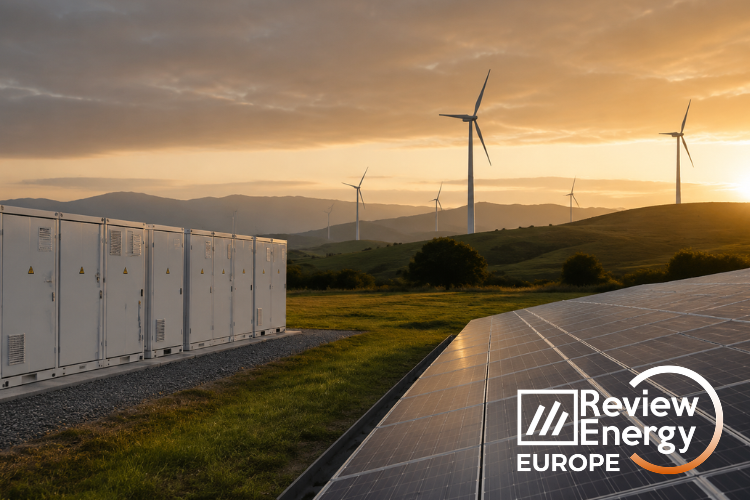


ERSE maps Portugal's flexibility needs to support the energy transition
Portugal's energy regulator, ERSE (Entidade Reguladora dos Serviços Energéticos), has published a report assessing the flexibility needs of the country's electricity system over the next decade, concluding that greater flexibility will be essential to support renewable energy integration while ensuring a secure, reliable and balanced power system.
The assessment, prepared in line with Regulation (EU) 2019/943, evaluates Portugal's flexibility requirements for 2030 and 2035 as the country advances its decarbonisation goals under the National Energy and Climate Plan (PNEC 2030). The report will be updated every two years, as required by European legislation.
ERSE identifies two main categories of flexibility needs. The first relates to system flexibility, including the integration of renewable generation, the ability to respond to generation ramps and short-term balancing requirements. The second focuses on network flexibility, covering both transmission and distribution systems to prevent congestion and maintain voltage stability.
According to the regulator, flexibility will become increasingly important as higher shares of variable renewable energy are connected to the grid. The report notes that different flexibility resources will be needed depending on the time horizon, ranging from short-term storage solutions that shift surplus solar generation to periods of peak demand, to longer-duration solutions capable of addressing seasonal variations in electricity production and consumption.
The study also highlights that flexibility should be considered from a technology-neutral perspective, meaning that multiple solutions—including, but not limited to, electrochemical batteries and pumped hydro storage—can contribute to meeting future system needs.
ERSE coordinated the preparation of the report in collaboration with REN, Portugal's transmission system operator, E-REDES, the country's distribution network operator, and the Directorate-General for Energy and Geology (DGEG), which oversees national energy policy and the implementation of PNEC 2030.
Beyond quantifying future flexibility requirements, the regulator also assessed potential barriers to integrating flexibility resources into the electricity system and examined the role that digitalisation could play in enabling their deployment.
According to ERSE, the findings underline that expanding flexibility solutions will be critical to maintaining the security of electricity supply while supporting Portugal's transition towards a carbon-neutral power system.


Comentarios
Sé el primero en comentar...