
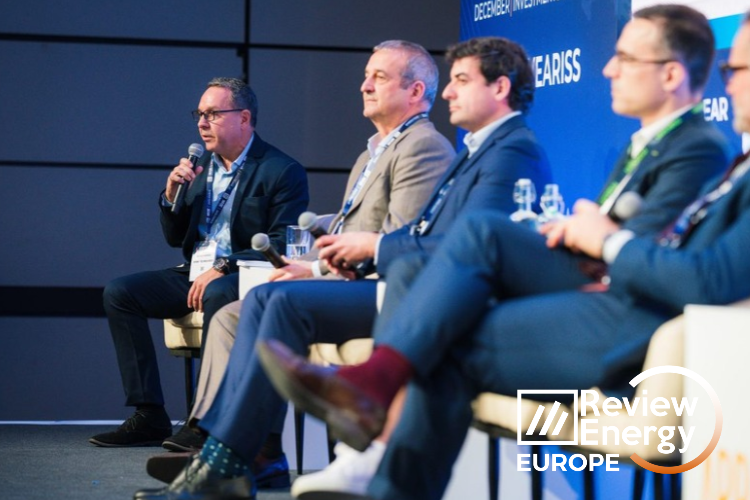


Europe faces the challenge of financing its energy transition
Europe’s energy transition requires growing volumes of capital to be mobilised, but the challenge is no longer limited to attracting finance: it also involves ensuring that projects can be developed and connected to the grid. The European Commission estimates that the European Union’s energy sector will need around €660 billion annually between 2026 and 2030 for generation, energy efficiency and grid infrastructure.
Against this backdrop, the ability to turn decarbonisation targets into concrete investment opportunities will be one of the main topics of discussion at Energyear Investments, RE & Storage 2026, which will bring together executives, investors, developers and financial institutions at the Leonardo Royal Hotel London City on 1 and 2 December.
Investor interest in renewable assets is already reflected in the volume of financing mobilised by the sector. According to WindEurope, new European wind projects attracted €45 billion in 2025 to finance 20.9 GW of new capacity to be installed in the coming years. However, the amount of committed investment alone does not guarantee that projects will be delivered.
Grid capacity constraints and permitting delays continue to affect development, placing infrastructure availability, regulatory certainty and connection timescales among the factors that will determine where future investment goes.
Private capital and projects capable of attracting finance
Mobilising private capital will depend largely on projects offering risk and return profiles that can attract finance. The clean energy investment strategy presented by the European Commission in March 2026 aims precisely to connect investors with viable projects and reduce the risks associated with these transactions.
In the United Kingdom, Clean Power 2030 estimates average investment needs of around £40 billion annually between 2025 and 2030 in generation and transmission grids, a scale that places financing and infrastructure development among the sector’s main challenges.
In this context, project bankability, revenue visibility and exposure to electricity prices will be among the event’s key themes. The agenda will examine which technologies and assets will attract the most interest from banks and investors in 2027, how mergers and acquisitions are evolving, and which strategies can improve the performance of operating renewable assets.
An agenda on investment, markets and the transformation of Europe’s energy sector
The programme will open on 1 December with an inaugural address by Mete Coban, Deputy Mayor of London, followed by an analysis of where capital will flow in the European electricity market in 2027. The first day will focus on the United Kingdom’s investment outlook and its Clean Power 2030 target, business models, manufacturing and supply chains, as well as opportunities in the Iberian Peninsula and the Italian market.
The agenda will also address the conditions that make a renewable project attractive and financeable from the perspective of independent power producers (IPPs) and investors. Other discussions will examine renewable asset profitability as electricity prices evolve, mergers and acquisitions (M&A), investment opportunities in Northern Europe and strategies to maximise the value of operating asset portfolios.
The second day will broaden the analysis to new drivers of electricity demand, with a session dedicated to the growth of data centres and artificial intelligence and their implications for round-the-clock clean electricity supply. It will also examine capital flows, debt and equity financing alternatives, and the evolution of battery energy storage systems (BESS) as assets in Europe’s energy business.
The agenda will also include dedicated sessions on investment opportunities in Eastern and Central Europe, the financial viability of storage projects, and their revenue models, risks and returns. Grid access, land availability, permits, margins and market competitiveness will complete the main topics of discussion.
With more than 70 speakers, over 30 partners and 21 panels planned, Energyear Investments, RE & Storage 2026 will bring together institutional, financial, technological and business perspectives to analyse the conditions that will shape European energy project development in 2027.
Confirmed organisations include EDP, Repsol, ContourGlobal, BW ESS, Atlántica, Galp, Nuveen Infrastructure, Foresight Group, Maxxen, Axial Structural Solutions, JinkoSolar, Low Carbon and Sonnedix, among others. One-to-one meetings, lunches and networking receptions will help investors and companies connect to explore new opportunities and projects.


Comentarios
Sé el primero en comentar...