


Europe on track for 267GW of renewables by 2030, but energy storage will be critical
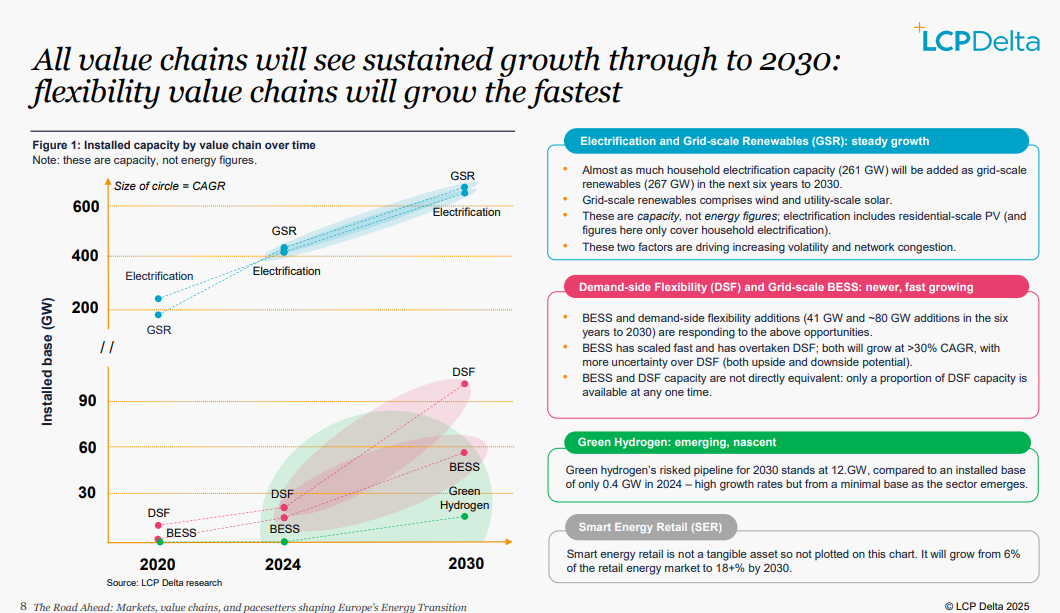
A new report from LCP Deltaby 2030, Europe is set to add approximately 267 gigawatts (GW) of wind and solar renewable energy capacity at the grid scale. This ambitious renewable energy expansion is part of Europe’s strategy to meet its climate goals and reduce reliance on fossil fuels. However, this transition will not come without its challenges, particularly in energy storage and the electrification of homes across major European economies.
A surge in electrification and renewables capacity
The report highlights that the growth in renewable energy generation will be accompanied by an increase in the electrification of households in key European nations. As governments across the continent continue to push for cleaner energy, this shift toward renewable sources like wind and solar is expected to generate a higher level of volatility in power markets and congestion in the distribution network.
By 2030, Europe will witness high levels of renewable energy generation, which could potentially account for up to 60% of annual electricity demand in markets such as Great Britain, Germany, France, and Spain. However, the report notes that mismatches between renewable energy generation and consumer demand will likely result in a lower percentage of actual consumption being met by renewables.
The need for grid-scale energy storage
One of the key findings of the report is the need for significant investments in energy storage systems to ensure that the renewable energy generated can be effectively utilized. With wind and solar energy subject to natural fluctuations, storing energy at grid scale will be essential to maintaining a stable power supply when demand peaks or when renewable generation falls short.
The report also forecasts a substantial increase in energy flexibility solutions, such as grid-scale batteries and demand-side flexibility (shifting demand to match supply). By 2030, the report projects that 41GW of new grid-scale battery storage capacity will be installed, along with a five-fold increase in demand-side flexibility across seven major European markets.
 Source: LCP Delta research
Market dynamics and regional differences
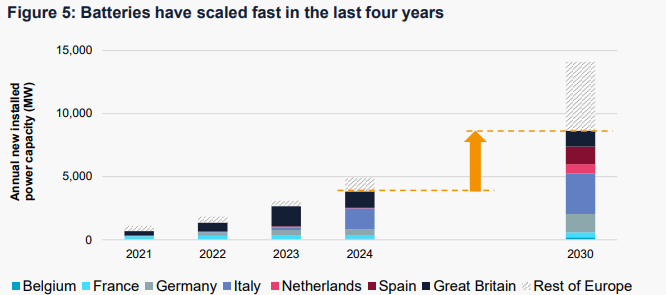
Germany is now considered the most attractive market for grid-scale batteries, overtaking Great Britain, according to the analysis. In contrast, Spain's track record has been the least attractive region for both grid-scale battery storage and demand-side flexibility, mainly due to a lower level of market maturity and infrastructure development, although according to the report, by 2030, the picture could change with Spain ranking second only to Great Britain.
Source: LCP Delta research
Despite the overall growth in renewable energy, the report identifies several challenges that need to be addressed in the transition. These include engaging with customers on electrification, managing congestion in the distribution networks, and addressing power market volatility. These challenges are particularly pronounced in the seven European markets assessed in the report: Great Britain, Spain, France, Germany, Italy, Belgium, and the Netherlands.
Surplus renewable energy and electrolysis developments
The report also highlights an anticipated increase in surplus renewable energy, with Great Britain and Germany expected to experience periods of excess renewable and nuclear generation in 56% and 46% of hours by 2030, respectively, compared to just 6% and 17% in 2024. This surplus energy could pose both opportunities and challenges for grid management and storage systems.
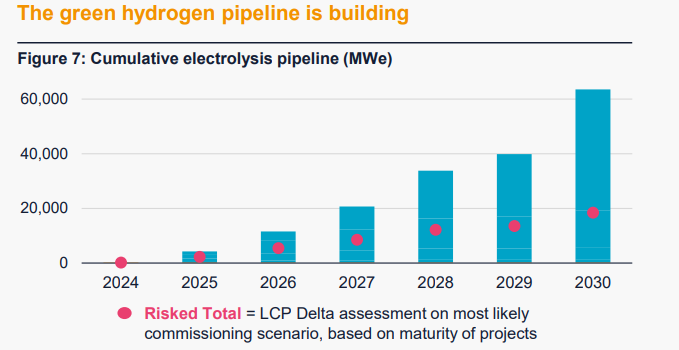
Furthermore, Europe’s electrolysis pipeline, which is crucial for hydrogen production, is expected to grow to 63GW by 2030, although only a small portion of this will be at advanced stages of development. The United Kingdom’s electrolysis pipeline, for example, will grow to 8.7GW, with only 5% at advanced stages by the end of the decade.
Source: LCP Delta research
Embracing a new energy landscape
Jon Slowe, a partner at LCP Delta, notes that Europe is currently undergoing a fundamental disruption in its traditional energy value chains. He emphasizes that the focus has largely been on developing the infrastructure required to support the renewable energy transition, but the next phase will require a stronger emphasis on flexibility and customer engagement.
He added, "The opportunities for companies that can bring flexibility to market and can simplify customers’ electrification journeys are enormous. Our report suggests that in this new world, only holistic approaches that overcome traditional siloed thinking will succeed."
As Europe moves closer to its renewable energy targets for 2030, the combination of rapid growth in renewable generation and the deployment of flexibility solutions such as energy storage will be crucial to achieving a successful and sustainable energy transition. The future of Europe’s energy landscape will require innovative approaches, strong collaboration, and a strategic focus on flexibility to ensure a resilient, low-carbon grid.



Comentarios
Sé el primero en comentar...