
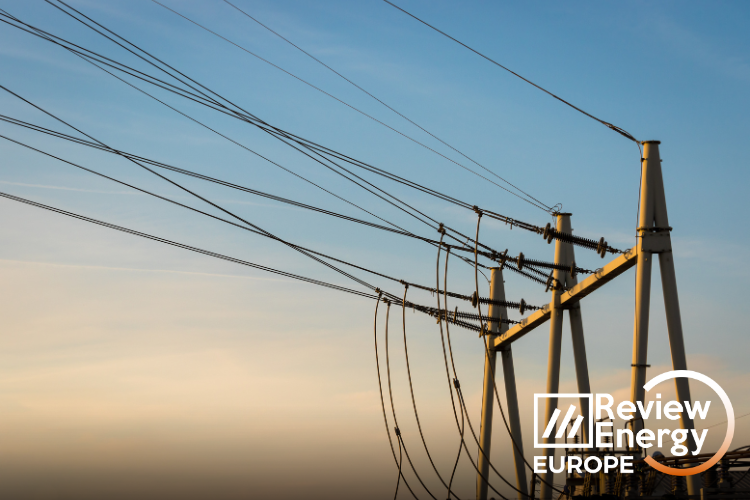


German energy regulators call for a faster, less bureaucratic grid
The Federal Network Agency (German: Bundesnetzagentur or BNetzA,) has published a key elements paper on the future of cost and incentive regulation in the electricity and gas grid sectors.In the sector, the ability to adapt quickly to the changing costs of network operators is crucial. The BNetzA therefore suggests reducing the regulatory periods from five to three years, with the aim of facilitating greater agility in this respect. The authority is also willing to consider other proposals that contribute to improving the timely recognition of costs, provided that these ideas are practical to implement and promote cost savings.
The BNetzA proposes to simplify regulation to accommodate the shortening of regulatory deadlines, advocating global approaches such as the application of the weighted average cost of capital (WACC) instead of individual determination of capital costs. The authority seeks to establish a standardized procedure for the assessment of current assets and to reduce the list of non-controllable costs that require annual adjustments.
"Network operators are successfully making considerable efforts to meet the challenges of the energy transition. We want to provide even more support to them in this endeavor. Over the years, tariff regulation has developed into a tangle of rules, rather like tax law. It is to be generally streamlined and simplified and, above all, to become less bureaucratic while maintaining its reliable framework conditions," said Klaus Müller, President of the BNetzA. "The energy transition is picking up the pace. The electricity grids have to be expanded and digitalised more quickly. Parts of the gas grid can be converted for use with hydrogen, while the rest will, in the long term, be shut down. All that will lead to changes in costs. We want to be able to respond more rapidly to such changes in the future without losing sight of cost efficiency."
In the electricity sector, the BNetzA aims to boost the energy transition with an emphasis on speed, digital transformation and quality by supporting distribution system operators through targeted financial incentives.
In the gas sector, the reduction of the useful life of assets for depreciation is envisaged, facilitating the recovery of investments within the expected period of commercial use. In addition, network operators will be allowed to create provisions for foreseeable costs of decommissioning parts of the grids.
Background
Germany aims to achieve climate neutrality by 2045, which implies significant growth in renewable energy generation and electrification of various sectors. To meet this goal, it is imperative to accelerate the expansion of the power grid and efficiently connect renewable installations. The connectivity of heat pumps and charging stations also requires further digitization and standardization of processes. Closer monitoring and control of the grids by distribution system operators is essential. Furthermore, the connection of installations to the grid must be streamlined and a complete digitalization of market processes must be achieved.
In contrast, a less relevant role is anticipated for natural gas. Although part of the gas grid will be used to transport hydrogen, other sections are expected to cease operating before 2045 and be decommissioned.
Procedure and Grand Ruling Chamber
The legislature has repealed the main ordinances regulating the energy sector, following the European Court of Justice ruling of September 2021, which questioned the role of the BNetzA. In response, the BNetzA will develop rules closely aligned with EU law, taking on additional responsibility. Its decisions will be supervised by the Higher Regional Court of Düsseldorf and the Federal Court of Justice.
The amendment to the Energy Industry Act (EnWG) provides for the establishment of a "Grand Resolution Chamber" in the BNetzA, consisting of the President, Vice-Presidents, chairmen of decision chambers and heads of energy-related departments. This Grand Board will issue national decisions on grid access and tariffs, including cost regulation and incentives, excluding individual decisions affecting companies. In exceptional cases, it may transfer rulings to other decision chambers, especially in tariff regulation, and will be supported by a coordination office in its proceedings.


Comentarios
Sé el primero en comentar...