
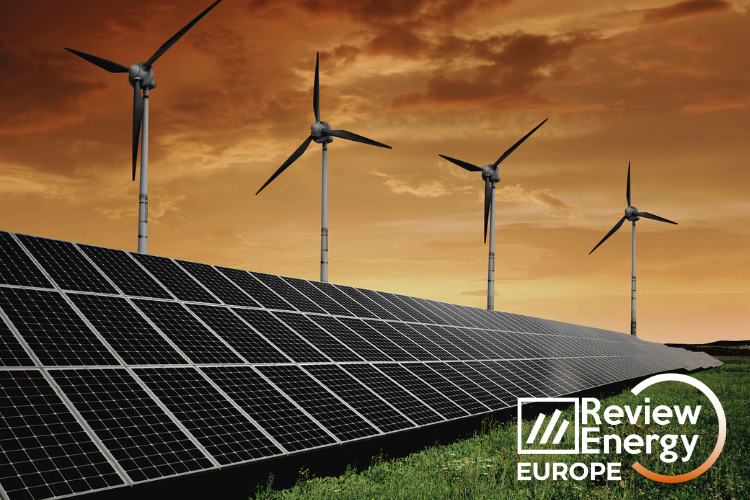


Germany will go beyond the 80% renewable energy goal by 2030
Germany's power market is undergoing a significant transformation. Despite stabilizing prices, demand continues to decline, and the phase-out of coal and nuclear plants has left the country increasingly reliant on energy imports from neighboring countries. However, the long-term outlook remains promising. According to Rystad Energy projections, Germany will surpass its goal of generating 80% of its electricity from renewable sources by 2030, thanks to the rapid expansion of solar and wind energy capacity.
Steady growth in renewable energy capacity
In recent years, Germany's renewable energy capacity has seen significant growth. By the end of 2023, the country will have reached 143 gigawatts of alternating current (GWac) installed, cementing its position as the leader in Europe. Last year, new solar and wind installations broke records, and 2024 is expected to surpass those milestones. Renewable energy auctions have been the primary driver behind these large-scale additions, and even more capacity is expected to be auctioned in the coming years.
Between 2024 and 2028, over 120 GWac will be auctioned, spread across solar photovoltaic (PV), offshore, and onshore wind energy. Onshore wind will see the largest increase, with 50 GWac planned for auction over the next five years. While it's unlikely that all targets will be met, recent progress shows a promising trend. Rystad Energy forecasts that by 2030, Germany could reach nearly 300 GWac in renewable energy capacity, more than doubling its total from early 2024.
Short-term challenges and reliance on imports
Despite the long-term optimism, Germany's energy sector faces immediate challenges. Net power demand has fallen by 0.7% in 2024, now sitting 8.1% below 2021 levels. Unless there is a surprising surge in demand in the coming months, Germany is likely to close 2024 with another year of declining or stagnant energy demand.
This significant drop in demand has also caused a sharp decrease in energy supply. However, the decline in supply has been even greater, leading to increased energy imports. In 2024, Germany has already imported more electricity than in all of 2023, with a net import balance of 15.3 terawatt-hours (TWh) through August. The country, once one of Europe’s largest energy exporters, has now become one of its largest importers.
The future of renewable energy in Germany
Despite the current challenges, Germany remains a fascinating case study in the global transition toward decarbonization and electrification. Fabian Ronningen, Vice President of Renewables & Power Research at Rystad Energy, notes that while there has been short-term pain, the long-term gains seem assured. "If policymakers stick to their current goals and strategies, Germany will likely continue dominating the European renewables landscape and reduce its reliance on imports in the near future," Ronningen said.
Although the rapid transition to renewable energy has helped offset the loss of coal and nuclear capacity, it has not been enough to meet demand. This has led to higher electricity prices compared to neighboring countries like France, which maintains stable nuclear energy generation. Nevertheless, Germany’s progress in clean energy promises a more sustainable and independent energy future within the European landscape.


Comentarios
Sé el primero en comentar...