


How much do grid constraints threaten Europe’s energy security and industrial growth?
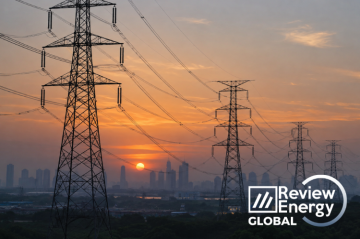
Europe’s ability to strengthen its energy security and reduce reliance on imported fossil fuels could be undermined by insufficient grid capacity, according to a new analysis by Ember.
According to the report, at least 120 GW of planned renewable energy projects across Europe are at risk of delays or cancellation due to grid constraints, with many projects stuck in connection queues.
Renewable expansion at risk
The findings highlight a growing mismatch between Europe’s clean energy ambitions and the readiness of its electricity networks. While the EU is accelerating the deployment of renewables to enhance energy independence and competitiveness, grid infrastructure is struggling to keep pace.
According to Ember, half of the countries that reported grid data lack sufficient capacity to connect new power generation. The most severe constraints are identified in Austria, Bulgaria, Latvia, the Netherlands, Poland, Portugal, Romania and Slovakia.
Impact on households and distributed solar
The limitations are not confined to large-scale projects. Ember estimates that up to 1.5 million households could face delays in connecting rooftop solar systems due to insufficient grid capacity.
Half of the reporting countries are unable to accommodate the expected growth in small-scale solar installations, raising concerns about the pace of electrification at the consumer level.
However, the situation is more mixed when it comes to new household electricity demand. At the distribution level, six of the eight countries analysed have enough capacity for up to one-third of households to install heat pumps or electric vehicle chargers. In contrast, households in Poland and Spain are expected to face significant constraints.
Grid capacity to support new industrial demand also varies widely across the bloc. Only four of the seven countries assessed have sufficient capacity to connect large industrial facilities, a key factor for Europe’s competitiveness as it seeks to electrify industry.
Solutions and urgent reforms
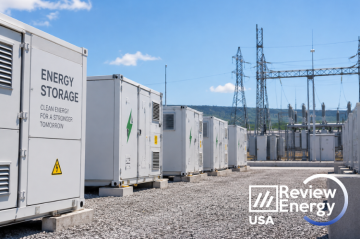
Ember points to “non-wire solutions”—such as demand flexibility, storage and digitalisation—as a way to unlock up to 185 GW of additional grid capacity without building new infrastructure.
The report calls for urgent action to address bottlenecks, including reforms to administrative procedures and faster deployment of these alternative solutions. This would help free up capacity for both new renewable generation and emerging sources of demand, such as data centres.
A critical moment for Europe’s energy transition
The analysis underscores that grid readiness is becoming a decisive factor in Europe’s energy transition. As Elisabeth Cremona, senior energy analyst at Ember and lead author of the report, notes, electricity networks are no longer a secondary technical issue but a central pillar of economic and energy policy.
Without rapid improvements in grid capacity and management, the report concludes, Europe risks slowing down its transition to clean energy and weakening its broader energy security strategy.




Comentarios
Sé el primero en comentar...