

Ian Hunter (RES): "Our ability to provide comprehensive solutions across different countries and technologies is what sets RES apart"
Renewable energy is advancing at an unprecedented pace, driven by global decarbonization goals, technological innovation, and evolving market dynamics. As the sector faces price volatility, regulatory changes, and increasing complexity in project development and operation, effective asset management has become more critical than ever.
RES, a global leader in wind, solar, and battery projects, managing over 45 GW across 24 countries, has positioned itself at the forefront of this transformation. Its approach combines engineering expertise, operational excellence, and digital innovation to maximize project performance and long-term value for clients worldwide.
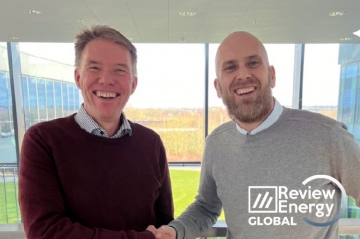
To explore how RES is navigating this rapidly changing landscape, Review Energy spoke with Ian Hunter, Global Head of Asset Management. Hunter shares insights into the company’s strategies for managing risk and opportunity, optimizing operational performance, integrating advanced technologies, and preparing for the growing wave of energy storage and hybrid projects. He also discusses the challenges of international expansion, stakeholder engagement, and how RES’s experience across multiple technologies and markets positions it to deliver end-to-end solutions for investors and infrastructure funds.
This interview offers a deep dive into the evolving role of asset management in renewables, highlighting how RES leverages experience, innovation, and a client-focused approach to support the energy transition on a global scale.
Review Energy (R.E.): Ian, you head up RES's global Asset Management division at a time of enormous transformation for the industry. Could you briefly tell us about your professional career and how your experience influences your current vision of renewable asset management on an international scale?
Ian Hunter (I.H.): I've been at RES for about 19 years, and I have an engineering background. Over the years, I've been very fortunate to move through the company. RES covers everything from greenfield development, M&A to operations and end-of-life planning, so I’ve been able to work across almost all of these areas
These experiences have given me a well-rounded view of the project lifecycle. I understand the engineering side but also the clients’ needs and requirements. I enjoy asset management because it offers exposure to all these aspects. No day is the same. Some projects have engineering challenges, some have commercial challenges, such as offtake arrangements or contractual structures, and there’s always stakeholder engagement—with clients, local authorities, or communities.
What I find personally satisfying is that, at the end of the day, there’s something tangible: a site you can see and touch,. That’s why I think asset management is a great area to work in, and I feel privileged to be on the operational side.
From an international perspective, many of our clients have grown alongside us. As they move into new markets, we adapt and grow with them. While there are country- or region-specific requirements, the core challenges—stakeholder management, commercial value, and engineering—are very similar. Our agnostic approach allows us to support clients across these markets. I’ve been very lucky in my career to experience a little bit of everything.
R.E.: The renewable sector is undergoing a period of global recalibration, marked by price volatility, regulatory changes, and pressure on supply chains. How is RES adapting its Asset Management strategy to maintain operational excellence in this context?
I.H.: Our strategy starts with compliance, risk, and opportunity management. That is the essence of asset management. As an industry, we sometimes focus too much on risk management, which is important, but we also make sure that opportunities aren’t overlooked.
We regularly sit down with clients to review portfolios, not just individual projects, and identify where we can add value. For example, price volatility and supply chain pressures, particularly among turbine manufacturers, require careful monitoring. We work with clients to identify risks and opportunities and ensure we understand their strategies and pain points so we can guide projects and portfolios effectively.
Some clients prioritize increasing net asset value for shareholders, while others focus on cash flow for distributions and dividend payments. If we don’t understand these priorities, we cannot maximize the relative value of projects. For clients sensitive to price volatility, we can support implementing long-term offtake agreements and corporate PPAs to minimize risk. Others focus on increasing energy production, so we explore technology enhancements and operational optimizations,.
Maintenance regimes are critical. The increasing sophistication of Independent Service Providers (ISPs) offers alternatives to traditional O&M models. We help clients define long-term strategies tailored to location, technology, and cost. If clients aim to extend the life of projects beyond design life, we develop proactive maintenance strategies from an early stage. Waiting until the project approaches the end of its lifetime is often too late.
Communication is key. We ensure clients understand market trends, price volatility, supply chain pressures, and geopolitical events. For example, during COVID, we managed spare parts logistics across borders. During the Russia-Ukraine conflict, we observed government interventions in energy markets. Our role is to understand clients’ positions andmake them aware of these issues to , support projects and portfolios strategically.
R.E.: How is RES applying advanced technologies and proprietary platforms to improve asset availability, reliability, and profitability? What role does Asset Management play in identifying optimization opportunities—from OPEX improvements to repowering or hybridization—to maximize long-term value?
I.H.: Improving client assets is at the core of our offering. RES invests in digital technologies to unlock site data, helping clients maximize performance. This approach is not one-size-fits-all; it depends on the project and opportunity. High-quality data allows us to leverage over 40 years of experience to identify risks and opportunities that might not be immediately apparent.
Our expertise spans development, grid engineering, O&M, and repowering across technologies. This experience, combined with our in-house teams, allows us to innovate and develop digital tools that enhance client project performance.
R.E.: With global trends indicating rapid growth in battery energy storage systems (BESS), how is RES preparing to manage these increasingly complex and critical assets
I.H.: Storage is a very exciting area. The pipeline of storage projects is enormous and growing. RES has over a decade of experience across the full lifecycle of batteries—development, design, construction, and operation. Storage is now a core technology for RES, and we aim to maintain a market-leading position by staying at the cutting edge.
These assets are complex, both technically and in terms of revenue and grid interactions. Unlike solar or wind, batteries have intricate interface risks between systems, inverters, control systems, and market interactions. We have developed proprietary control systems to manage these risks, providing significant value to clients.
Asset management also involves selecting strong partners for aggregation and offtake. Understanding client strategy is critical: we need to align operational approaches with revenue expectations, battery cycles, augmentation plans, and potential repowering. Our goal is to ensure the client’s investment model is realized over the operational lifetime.
R.E.: In 2025, RES was named Asset Manager of the Year at the Tamarindo Energy Storage Investment Awards. What does this recognition mean for your team, and how does it drive your future ambition in Asset Management?
I.H.: It’s fantastic recognition for the team, reflecting their hard work in battery technology. RES has had previous success in wind asset management awards, and this award further demonstrates our expertise across multiple technologies.
The award is particularly relevant as hybrid and co-located projects become more common. Having experience across wind, solar, and battery assets allows us to minimize interface risks and provide a one-stop shop of expertise, maximizing project value. Drawing on 40 years of global experience, we can support end-to-end operations across multiple technologies on a single site, which is increasingly important as these hybrid projects develop.
R.E.: With more than 45 GW managed in 24 countries and an increasingly digitalized and scalable model, what is your vision for the next phase of global Asset Management?
I.H.: The last two to three years at RES have been remarkable. We’ve increased scale with the integration of the Ingeteam service business, adding new ways of working and enhancing RES culture. This expansion has allowed us to enter new markets, such as Southern Europe and LATAM, where we had limited presence before.
From an asset management perspective, we see exciting opportunities in these new markets while continuing to support long-term clients as they expand internationally. Established markets may be saturated, so clients look to new regions for growth. For example we can leverage our teams in Spain, Chile, Mexico, and Romania to support clients’ portfolio expansion.
There’s growing demand for asset managers who can operate at a portfolio level across multiple countries and technologies, providing a standardized, digitally scalable model. Investors increasingly prefer platform or portfolio approaches over individual asset acquisitions. They seek a single partner to manage interface and operational risks while standardizing outputs. This represents a significant opportunity for RES, and the future is very exciting as we expand globally alongside our clients.
R.E.: Finally, are there specific regions where interest is higher or more relevant?
I.H.: Northern Europe remains a core area due to market stability. Many of our clients are financial institutions and infrastructure funds, drawn to regulated markets with predictable returns.
Emerging opportunities exist in Eastern Europe, where auctions and government-backed PPAs are increasing. In LATAM, Chile is particularly interesting. We already have a strong O&M presence, and European clients are seeking asset management support there. In the US and North America, we have a large presence, and both asset management and O&M growth remain key. These regions represent the primary focus for our growth and client support.

Comentarios
Sé el primero en comentar...