


In 2022, 39% of the EU's electricity was generated by renewables
The European Commission has released the 2023 State of the Energy Union Report, which examines the European Union's response to the unprecedented energy crisis of the past two years. This report provides an assessment of the progress made in the green transition at national, European, and global levels. It also outlines the challenges and opportunities that Europe faces as it continues to pursue its ambitious climate and energy goals for 2030 and 2050.
The Report shows how the EU responded collectively and effectively to Russia's aggression in Ukraine and weaponisation of its energy supplies, by accelerating the clean energy transition, diversifying supplies and saving energy.
Renewable energy key figures included on the State of the Energy Union reveal significant progress and transformation.
Renewable energy sources also witnessed remarkable growth in the EU. In 2022, the EU saw a record year for new solar photovoltaic (PV) capacity, with an addition of 41 gigawatts (GW), which is 60% more than in 2021. Additionally, new onshore and offshore wind capacity increased by 45% compared to the previous year.
A noteworthy achievement in 2022 was the fact that 39% of the EU's electricity was generated by renewables. In May, wind and solar power sources even surpassed fossil fuels for the first time in the generation of electricity in the EU, underlining the shifting energy landscape.
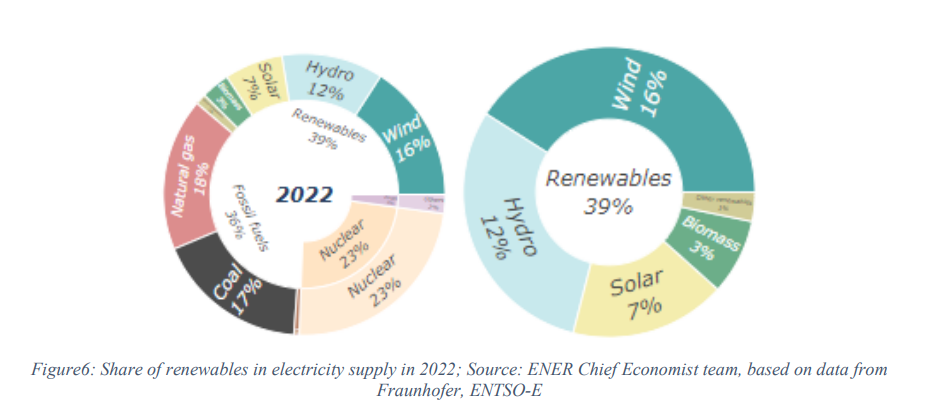
Source: 2023 State of the Energy Union Report
In terms of legislation, the EU took ambitious steps to address energy sustainability. Legislative targets were agreed upon, aiming for a minimum share of 42.5% of renewable energy in the EU by 2030, with a further aspiration to reach 45%. Energy efficiency targets were also elevated, with a goal to reduce final energy consumption by 11.7% by 2030, emphasizing the EU's commitment to a greener and more efficient energy future.
The report also shows that in 2022, the EU achieved a notable milestone as its net greenhouse gas emissions decreased by approximately 3%, leading to a total reduction of 32.5% compared to 1990 levels. This demonstrates a dedicated effort towards mitigating climate change.
In preparation for the winter of 2022-2023, gas storage facilities were filled to 95% of their capacity, and they currently stand at over 98% full, demonstrating the EU's commitment to energy security and stability. The EU Energy Platform organized three rounds of joint gas purchases, matching 44.75 bcm of demand with 52 bcm of supply offers, fostering collaboration and efficiency in the energy sector.
"This year’s State of the Energy Union Report underlines the commitment and determination shown last year by all Europeans to overcome the energy crisis together. Our actions – as individuals and collectively – helped avoid the worst impact of Putin’s war against Ukraine and the weaponization of energy. The findings of the report show that REPowerEU plan is delivering: Clean energy transition, diversification and energy efficiency are the answers to increasing our energy security and meeting our Green Deal targets," said Kadri Simson, Commissioner for Energy.

Comentarios
Sé el primero en comentar...