
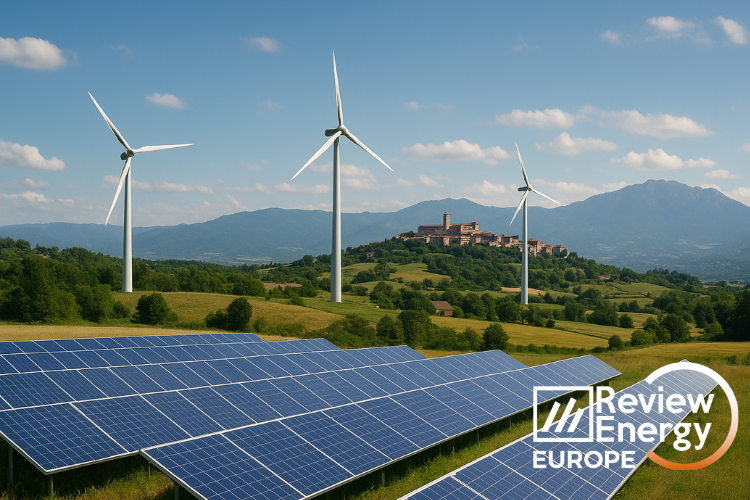


Italy: Aosta Valley regulates zones for renewable energy plants
In a significant move for Italy's energy transition, the Regional Council of the Aosta Valley has approved a new legal framework on renewable energy. Law 24/2025 “Suitable Areas”, published on 8 August in the Special Edition of the Regional Official Bulletin (BUR 44/2025), sets out clear criteria for identifying suitable and unsuitable areas for the installation of renewable energy plants, according to Italia Solare.
According to rapporteur Councillor Roberto Rosaire (Uv), the legislation represents “a fundamental stage in the implementation of Legislative Decree 199/2021 and the Ministry of the Environment’s decree of 21 June 2024, which assign regions an active role in identifying suitable areas and managing the related authorisation processes”.
The law is structured around three main pillars:
-
Definition of areas: categorising surfaces as suitable, unsuitable, ordinary or prohibited, with priority given to anthropised and low-impact areas.
-
Administrative procedures: regulating regimes for the construction, modification and management of renewable energy plants.
-
Governance and monitoring: introducing a system for monitoring and territorial promotion, including targeted incentives and the creation of a technical working group to ensure transparency and effectiveness in implementation.
The legislative text is considered a strategic tool for achieving both regional and national energy transition goals. Specifically, the Aosta Valley is expected to contribute 328 megawatts of new renewable capacity by 2030.
The law is the result of close cooperation between the Regional Department for Economic Development and the association Italia Solare ETS, whose experts played an active role in drafting the document.
With this initiative, Italy strengthens the role of its regions in energy planning and takes a significant step towards meeting its sustainability and decarbonisation commitments for the coming decade.



Comentarios
Sé el primero en comentar...