
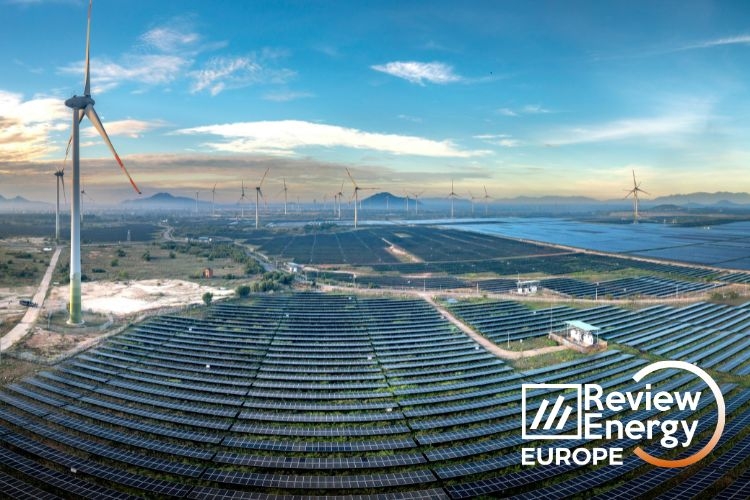


Italy’s wind and solar generation jumps 16% in January
Italy opened 2026 with a strong rebound in electricity consumption. According to data published by Terna, the national transmission system operator, electricity demand increased by 4.1% in January compared to the same month in 2025, reaching 28 billion kWh, the highest monthly level recorded since 2014.
The increase was largely driven by lower average temperatures and the ongoing recovery of industrial activity, confirming the upward trend in demand that has been in place since September 2025.
Although January 2026 had one fewer working day than the previous year (20 versus 21) and an average temperature 1.7°C lower, the adjusted demand figure — corrected for calendar and temperature effects — still shows a solid growth of 2.8% year-on-year. On a monthly basis, seasonally adjusted demand rose by 2.1% compared to December 2025, pointing to continued economic momentum.
Growth was evenly distributed across the country, with electricity demand rising 4.2% in northern Italy, 4.1% in the central regions, and 3.9% in the south and islands.
Industrial consumption strengthens
Industrial electricity use also showed a robust performance. Terna’s Monthly Industrial Electricity Consumption Index (IMCEI), which monitors consumption across approximately 1,000 energy-intensive industrial companies, recorded a 3.8% increase in January, marking the fifth consecutive month of growth.
Positive trends were reported in steel, cement, lime and gypsum, food processing, non-ferrous metals and transport, while mechanical engineering, paper and chemicals registered declines. Ceramics and glass production remained broadly stable.
The Monthly Services Index (IMSER), based on electricity consumption data from distribution operators and published with a two-month delay, showed a 4.2% year-on-year increase in November 2025, highlighting continued expansion in the services sector.
Wind and solar generation up 16%
Renewable energy output, particularly from wind and solar, played a key role in the national energy mix. In January, wind and solar generation increased by 16% year-on-year, helping to offset a sharp decline in electricity imports.
Overall, domestic generation covered 88.7% of total electricity demand, while the remaining 11.3% was met through cross-border exchanges. Net domestic production reached 25 billion kWh, up 13%, whereas net imports dropped by 33.2%.
The reduction in imports was mainly compensated by higher wind and solar output and a significant increase in thermoelectric generation, which rose by 16.6%.
In total, renewable sources accounted for 31.7% of electricity demand, slightly below the 32.3% recorded in January 2025, largely due to a 13.2% fall in hydroelectric production.
Among individual renewable technologies, wind generation rose by 16.2% to nearly 3 TWh, making it the largest renewable source for the month. Solar generation increased by 15.2%, adding 233 GWh, mainly driven by new installed capacity, which contributed an additional 261 GWh. In contrast, hydropower output fell by 11.4% and geothermal generation declined by 2.2%.
Installed renewable and storage capacity continues to expand
According to Terna, Italy added 474 MW of new renewable capacity in January 2026, bringing total installed renewable capacity to 84,003 MW. This includes 43,846 MW of solar power and 13,768 MW of wind capacity.
Energy storage also continued its rapid expansion. During the month, 893,092 new storage systems were installed nationwide, representing a total capacity of 18,038 MWh and a nominal power of 7,424 MW, further strengthening the country’s grid flexibility.




Comentarios
Sé el primero en comentar...