
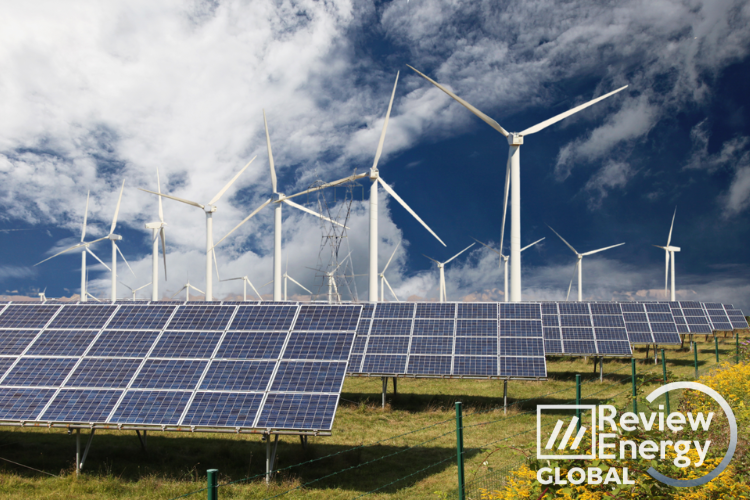


La activación del Clean Industrial Deal protagoniza el resumen de la semana
1. Bruselas activa el Clean Industrial Deal: energía asequible y más inversión para la industria europea
La Comisión Europea ha presentado hoy el esperado Clean Industrial Deal, una ambiciosa estrategia para garantizar la competitividad de la industria europea, reducir los costes energéticos y fomentar la descarbonización. El anuncio, realizado por la presidenta de la Comisión Europea, Ursula von der Leyen, marca un punto de inflexión en la política industrial del bloque.
El documento publicado por Bruselas se ha centrado en dos sectores estrechamente vinculados. "En primer lugar, las industrias intensivas en energía, que requieren un apoyo urgente para descarbonizarse, electrificarse, así como para enfrentar los altos costos de energía, la competencia global desleal y las regulaciones complejas, lo que perjudica su competitividad. En segundo lugar, el sector de las tecnologías limpias, necesario para la transformación industrial, la circularidad y la descarbonización".
2. Regulatory framework and investment in grid infrastructure, key to Portugal's energy transition
The fifth edition of Energyear Portugal, which brought together over 400 attendees, 50 speakers, and 40 partners, took place at a pivotal moment for Portugal's renewable energy industry. By the end of the year, renewable energies set records in the country, accounting for 71% of national electricity consumption. However, despite this optimism, there are still obstacles for the sector. At the event, panelists discussed how to accelerate the energy transition in Portugal to meet 2030 goals and addressed the main bottlenecks delaying renewable projects.
The first panel, titled "Accelerating Portugal's Energy Transition: The Path to 2030 Goals" and moderated by Miguel Ferreira, CEO of Megajoule, gathered prominent experts in the energy sector: Paulo Partidário, Director of Services at DGEG (Direção Geral de Energia e Geologia), Pedro Amaral Jorge, CEO of APREN, Teresa Ponce de Leão, President of the Governing Board of LNEG (Laboratório Nacional de Energia e Geologia), and Hugo Carvalho, President of EMER 2030.
3. Europe sees a 34% increase in battery-electric vehicle sales in January 2025
According to the latest report from the European Automobile Manufacturers' Association (ACEA), in January 2025, new vehicle registrations in the EU fell by -2.6%. Specifically, battery-electric vehicles accounted for 15% of the market share, compared to the low comparison level of 10.9% in January 2024.
Hybrid-electric vehicles took the lead, dominating nearly 34.9% of the market and once again becoming the top choice for car buyers in the EU. Meanwhile, the combined market share of gasoline and diesel cars fell to 39.4% in January 2025, down from 48.7% a year ago.
4. Engie Chile comienza las obras del Parque Eólico Pemuco de 194 MW
El Ministerio de Energía de Chile anunció el inicio de la construcción del Parque Eólico Pemuco, un proyecto desarrollado por ENGIE Chile que cuenta con una inversión de 230 millones de dólares. Esta iniciativa fomentará el empleo en la región y reducirá las emisiones de CO2 en 40 mil toneladas anuales.
El proyecto, que obtuvo la aprobación ambiental el 13 de marzo de 2024, está ubicado en Pemuco, provincia de Diguillín, región de Ñuble. Contará con la operación de hasta 27 aerogeneradores, permitiendo una potencia instalada máxima de 194,4 MW. Una vez en funcionamiento, se espera que el parque suministre energía renovable a aproximadamente 60 mil hogares del sur del país, lo que contribuirá significativamente a la reducción de la huella de carbono en Chile, con una disminución proyectada de 425 mil toneladas de CO2 al año.
5. Electrification: key to achieving decarbonization in the UK
The UK Climate Change Committee presents a new report with recommendations to achieve decarbonization in the UK by 2050. Electrification accounts for 60% of emission reductions by 2040. This includes the decarbonization of the grid and the replacement of fossil-fuel-powered cars and heating systems with electric alternatives (electric vehicles and heat pumps).
The UK Climate Change Committee (CCC) has presented a new report with recommendations to achieve decarbonization in the UK by 2050. The committee asserts that emissions need to be reduced by 87% compared to 1990 levels by 2040 and suggests pathways to achieve this goal.



Comentarios
Sé el primero en comentar...