
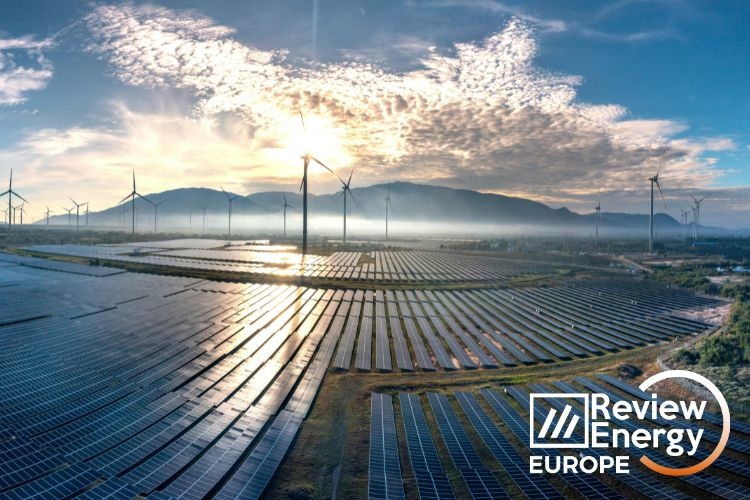


More capacity, more investment: Europe will need €1.5 trillion to boost renewables
Europe will require around €1.5 trillion in cumulative investment by 2050 to support the expansion of renewable energy, as installed capacity is expected to more than triple between 2026 and 2050. This is one of the main conclusions of the European Renewable Energy Market Overview Report 2026 (RESMOR), published by Aurora Energy Research.
According to the report, solar, onshore wind and offshore wind capacity has already grown by more than 150% over the past decade, laying the foundations for what Aurora describes as one of Europe’s largest long-term infrastructure investment cycles. However, the analysis also highlights persistent risks, including negative power prices, grid congestion and delays in permitting processes.
Aurora Energy Research estimates that almost €600 billion in investment will be required by 2030 alone, with spending expected to accelerate thereafter as European countries seek to meet climate targets and replace ageing thermal generation capacity. In the near term, subsidies and power purchase agreements (PPAs) are expected to remain the main routes to market, although their attractiveness varies significantly by country and technology.
Commenting on the findings, Rebecca McManus, Lead European Renewables Analyst at Aurora Energy Research, notes that Europe is approaching a major expansion phase. She explains that while renewable capacity is forecast to triple by 2050, “this investment wave will only deliver on its promise if policymakers and industry leaders address grid and development bottlenecks.” In this context, she points to the European Grid Package as a positive step aimed at accelerating permitting processes and unlocking stalled projects.
The report also underlines that bilateral contracts for difference (CfDs) will remain the primary support mechanism across most European markets. To date, 162 GW of renewable capacity has already been announced for subsidy auctions up to 2030. Nevertheless, Aurora warns that the success of these auctions depends heavily on design quality, competitive tension and policy certainty.
Challenges are particularly evident in the offshore wind sector, where auctions have faced increasing difficulties over the past year. Recent rounds in Germany, the Netherlands and Denmark failed to attract any bids, while Lithuania’s most recent auction secured only a single bidder. Aurora attributes this weak investor interest to supply chain pressures, policy uncertainty and shortcomings in auction design.
As an alternative route to market, PPAs continue to gain relevance, with Spain, Great Britain and Germany accounting for the largest share of announced PPA-backed capacity in Europe so far. At the same time, solar PPA prices have fallen to historic lows, dropping below €40 per megawatt hour in Germany and Spain, reflecting growing cannibalisation effects.
According to Jörn Richstein, Director of Pan-European Power, Policy and Renewables Research at Aurora Energy Research, PPAs are playing an increasingly important role, particularly in markets without viable subsidy schemes or where corporate demand is driving growth. He stresses that innovative and flexible PPA structures will be essential to meet the evolving needs of both corporate buyers and power producers as decarbonisation efforts intensify.
The report also identifies negative power prices as a growing risk. Aurora notes that hours with negative prices surged in 2025, exceeding 2024 levels across most European markets. Spain, the Netherlands and Germany each recorded more than 500 hours, followed by Belgium, France and Poland, with over 450 hours. At the same time, many countries are reducing subsidy protections against negative prices, increasing exposure for generators. Aurora expects this pressure to ease after 2035, as electricity demand rises, system flexibility improves and price-insensitive subsidies are phased out.
Grid constraints are also expected to intensify. Technical curtailment exceeded 10 TWh across Europe in 2024, and Aurora forecasts that it will reach nearly 22 TWh in Great Britain, Spain and Italy alone by 2030.
Development risks remain a key bottleneck. Despite EU rules requiring permitting decisions within two years, approval timelines extend to up to a decade in some markets. Currently, more than 1,000 GW of renewable capacity is awaiting grid connection approval across Europe, with Italy accounting for around 370 GW.
Concluding the report, Sameer Hussain, Senior Research Analyst at Aurora Energy Research, warns that record levels of negative prices and rising curtailment are putting significant pressure on renewable project profitability across Europe. To safeguard returns in an increasingly volatile market, he argues that developers will need to invest in technological innovation, diversify portfolios and integrate battery energy storage solutions.




Comentarios
Sé el primero en comentar...