


NREL optimises hybrid plant design to reduce hydrogen production costs
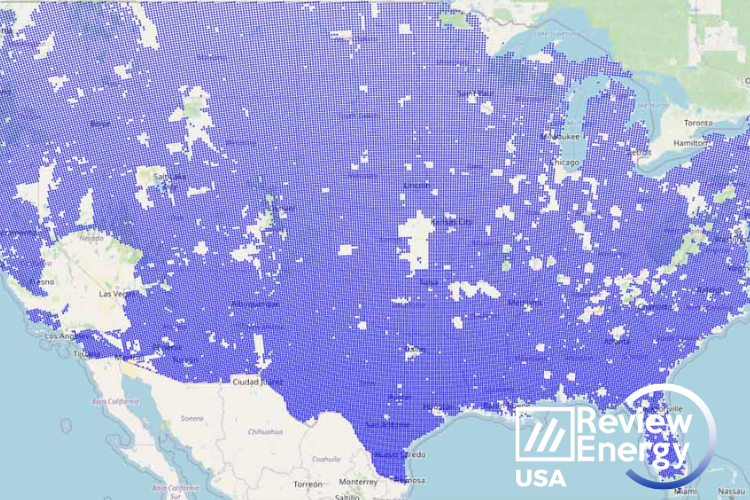
The National Renewable Energy Laboratory (NREL) is accelerating the assessment of hybrid plant feasibility in the United States, using high-performance computing (HPC) to improve analysis and scalability. This computationally efficient approach is being used to analyse large-scale, off-grid hybrid plants combining wind, solar and electrolyser assets at more than 50,000 potential locations across the country. In addition, researchers use HPC to model electric vehicle infrastructure, optimise battery design and improve charging efficiency in power grids, allowing them to assess the performance of sustainable technologies more effectively. In this way, advanced computing impacts their work with its remarkable computational speed, efficiency and performance.’.
A recent partnership between NREL’s Modeling, Simulation, and Optimization Capability (MSOC) team and the US Department of Energy's National Transmission Planning Study aimed to optimize the evaluation of hybrid plant performance. By utilizing NREL’s Hybrid Optimization and Performance Platform (HOPP), researchers can assess the feasibility and costs of building hybrid plants in regions with limited renewable resources.
Elenya Grant, a mechanical engineering researcher at NREL, highlighted the importance of HPC in speeding up the process. "Running 50,000 sites without HPC would've required external storage and enhanced security protocols. Even with 10 people running these simulations, it would've taken days to complete all the sites. MSOC utilized HPC to speed up the process and parallelize code and tasks," she said.
By applying HPC, NREL was able to reduce the time needed to process this vast amount of data—from 75 days on a laptop to just 42 minutes on 100 nodes of NREL’s Eagle HPC system. This rapid computing capability enabled the team to quickly identify cost-reduction strategies for hybrid plants, such as optimizing wind and solar resources and improving hydrogen production efficiency.
More efficient utilization of GreenHEART, the integrated code version that includes HOPP, allowed Grant and her team to explore and analyze cost-reduction strategies in off-grid, renewable-powered electrolysis. Those strategies include site selection with abundant wind resources, complementary wind and solar resources, and optimizing the sizing of wind and solar resources to hone the hybrid plant capacity factor. These strategies correlate with increased hydrogen production and reduced electrolyzer stack replacements, resulting in reduced overall costs of hydrogen.
Grant noted, "With efficient computing solutions, we were able to quickly analyze hybrid plants to demonstrate strategies for better hydrogen production benefitting areas of the United States where renewable energy resources may be limited. HPC also allowed us to observe more scenarios than we were able to previously because of the access to large datasets and higher-fidelity models."
This initiative demonstrates the transformative power of HPC in accelerating research and solving complex challenges in renewable energy, particularly in optimizing hybrid plants for sustainable hydrogen production.






Comentarios
Sé el primero en comentar...