
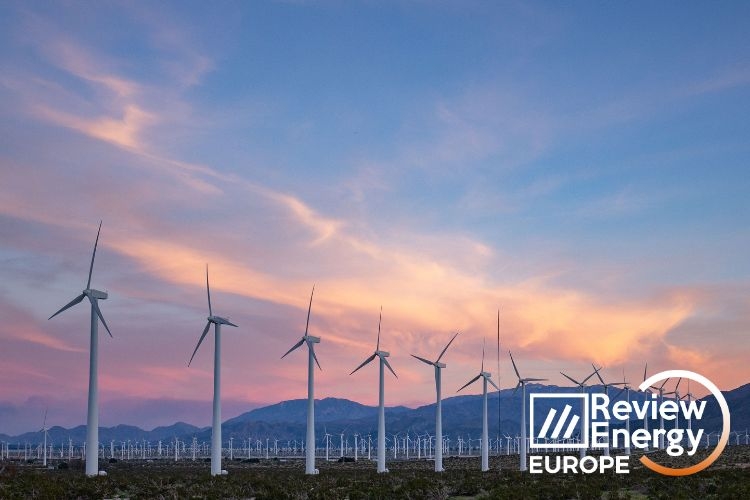


Renewables account for nearly 59% of Germany’s electricity generation in 2025
Electricity generation in Germany remained almost unchanged in 2025 and continued to be dominated by renewable energy sources, which supplied 257.5 terawatt hours (TWh), representing 58.8% of total generation, slightly above the 58.5% recorded in 2024. Overall electricity generation reached 437.6 TWh, virtually in line with the previous year’s level of 437.7 TWh, reinforcing the central role of renewables in the country’s power system.
Within the renewable mix, wind energy was the largest source of electricity generation. Offshore wind fed 26.1 TWh into the general supply grid, up from 25.7 TWh in 2024, while onshore wind contributed 106.5 TWh, although below the 112.6 TWh generated the previous year. Solar power reached 74.1 TWh, compared with 63.2 TWh in 2024, marking a significant increase driven mainly by above-average sunshine levels during the summer and by growth in installed capacity. Biomass generation stood at 36.0 TWh, broadly in line with the 36.2 TWh recorded in 2024.
Conventional power generation declined by 0.7% year on year, totalling 180.1 TWh. Within this segment, generation from hard coal rose by 3.0% to 28.2 TWh, while lignite-fired generation fell by 5.4% to 67.2 TWh. Natural gas generation increased by 6.4%, reaching 60.6 TWh, slightly raising its share of total generation to 13.8%, compared with 13.0% in 2024.
Wholesale electricity prices edge higher
The average daily wholesale electricity price in 2025 was €89.32 per megawatt hour (€/MWh), an increase of 13.8% compared with the 2024 average of €78.51/MWh.
Negative wholesale prices were recorded during 573 hours out of a total of 8,760 hours in 2025, up from 457 hours in 2024, which had 8,784 hours as a leap year. By contrast, prices exceeded €300/MWh in 40 hours in 2025, broadly in line with the 41 hours recorded the previous year.
In the futures market, the average price of the annual product for delivery in 2025 stood at around €88.70/MWh, almost identical to the average day-ahead price. By comparison, in 2023 the average annual futures price was €122.03/MWh, significantly higher than the actual wholesale day-ahead price that later materialised.
Net electricity imports decline
In terms of cross-border electricity trade, Germany imported a total of 76.2 TWh of electricity in 2025, slightly down from 77.2 TWh in 2024, while exports rose to 54.3 TWh, compared with 48.9 TWh the year before. As a result, net electricity imports fell by 22.6%, to 21.9 TWh.
Electricity is typically imported when domestic generation is more expensive, within a broader interaction of supply and demand across Europe. Power is produced within the interconnected European electricity system where it is cheapest, allowing Germany and other European countries to benefit from the most favourable generation conditions at any given time.



Comentarios
Sé el primero en comentar...