
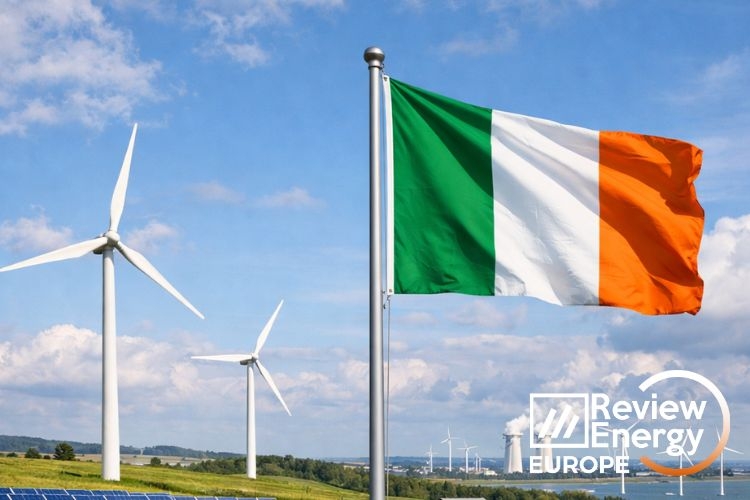


Renewables and smart grids can secure Ireland’s energy future
A new report by the International Energy Agency (IEA) shows that with strategic planning, Ireland can achieve its electrification ambitions while safeguarding energy security.
With many of Ireland’s policy priorities converging around secure electricity supplies, the robust development of the country’s power system will be central to achieving its energy and economic ambitions, according to the report Powering Ireland’s Energy Future: Approaches for a secure, renewables-led electricity system to 2035.
Ireland’s electricity demand is projected to grow strongly over the next decade. The IEA report explores how the country can build on recent progress to advance electrification while addressing emerging electricity security risks, ensuring system stability and affordability.
Ireland has emerged as a global frontrunner in integrating renewable energy sources such as wind and solar. Wind power supplied around a third of Ireland’s electricity in 2024—four times the global average and second only to Denmark among countries with gigawatt-scale systems. The report examines how Ireland can evolve its electricity sector to meet rising demand and long-term energy and climate objectives, while managing the challenges of a more variable power supply.
The report was launched during a meeting between Ireland’s Minister for Climate, Energy and the Environment, Darragh O’Brien, and IEA Executive Director Fatih Birol at the IEA headquarters in Paris.
“Ireland has shown that an island-based power system can successfully integrate very high shares of variable electricity generation while maintaining a focus on energy security,” said Birol. “As electricity demand grows strongly in the coming decade, this report highlights how coordinated planning, timely investment, and continued innovation in power grids can help Ireland progress on its electrification ambitions, energy security, affordability, and emissions reduction goals.”
Minister O’Brien added: “Ireland is delighted to have partnered with the IEA for this important and timely report, which contains key policy recommendations not just for Ireland but for all countries accelerating the green energy transition. Energy security is a global challenge that requires cooperation and dialogue. We look forward to discussing the report’s findings with our international partners as we face the shared challenge of building secure, sustainable, and affordable energy systems for future generations.”
Meeting rising demand with renewables and electrification
The report details how Ireland’s electricity supply could expand to meet growing demand driven by the electrification of heat and transport, alongside the expansion of housing and digital infrastructure such as data centres. According to the IEA, electrifying heat and transport could reduce Ireland’s annual fuel import bill by nearly €3 billion, though upfront costs, electricity pricing, and grid capacity constraints remain challenges. Efficient electrification will require aligning new demand with renewable generation and maintaining a strong focus on electricity security.
Grid investments and system flexibility
Achieving Ireland’s energy goals will require timely investment in grid infrastructure and operational modernization. The Adapted Transition Pathway, developed with EirGrid, illustrates how Ireland can meet a potential near doubling of electricity demand by 2035 while integrating higher shares of renewables. The pathway outlines the need for a diversified supply portfolio including thermal generation, batteries, and interconnectors, alongside smart demand management.
Wind and solar will become the dominant electricity sources, supplying up to 88% of demand by 2035, supported by storage and interconnectors. Thermal plants will transition from supplying bulk electricity to providing security and flexibility during peak demand or low renewable output periods, with utilization rates projected to fall from 46% in 2023 to 12% in 2035.
The report stresses that grid investment must keep pace with demand growth from households, data centres, and electrified heat and transport. Planned investments of €10–14 billion between 2026 and 2030 aim to expand capacity and enhance resilience, particularly in rural areas. Additional cross-border interconnectors may also help diversify supply and strengthen system security.
Policy recommendations for a secure transition
To deliver on energy, climate, and socio-economic goals, the IEA recommends:
-
Establishing a cross-sectoral energy security strategy for the 2030s, integrating housing, transport, and digital infrastructure with renewable expansion and system planning.
-
Accelerating grid and flexibility resource development, with faster permitting, proactive supply chain management, and incentives for demand-side flexibility.
-
Ensuring secure operations under high renewable penetration through advanced modelling, automation, and strengthened collaboration between operators, regulators, and policymakers.
-
Advancing workforce skills, partnerships, and policies that facilitate electrification, including tariff reforms and targeted infrastructure support.


Comentarios
Sé el primero en comentar...