
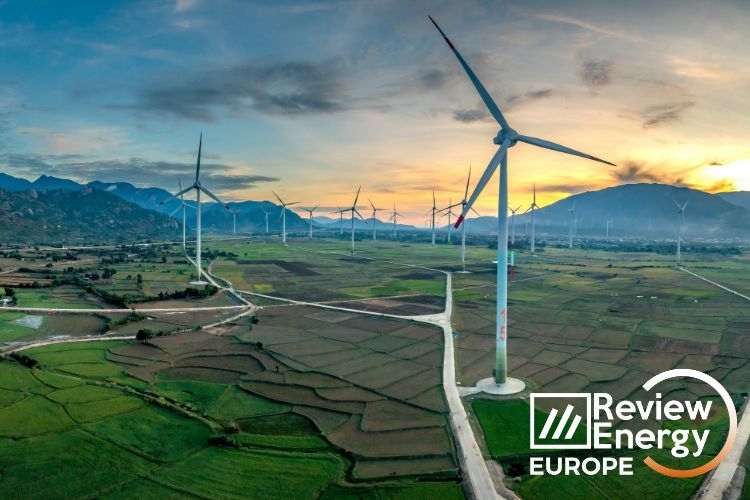


Renewables grow 27.8% in Italy in February, driven by wind
Italy’s electricity demand continued its upward trend in February, reaching 25.4 billion kWh, an increase of 2.1% compared to the same month in 2025. Industrial electricity consumption grew by 4.6%, marking the sixth consecutive month of expansion in this sector, according to data from Terna, the company managing the national electricity transmission grid under CEO Giuseppina Di Foggia.
Renewable energy production surged 27.8% in February, with wind power emerging as the main electricity source. Wind generation reached 2.8 billion kWh, surpassing both solar and hydroelectric output. Solar energy also increased, adding 526 GWh (+25.5%) thanks to expanded operational capacity, while hydroelectric output grew more modestly by 5.8%. In contrast, thermal (-12.1%) and geothermal (-2.7%) generation decreased.
By the end of February, Italy’s total installed electricity capacity reached 84,562 MW, with 44,390 MW from solar and 13,781 MW from wind. Storage systems include 906,082 registered plants, representing 18,539 MWh of storage capacity and 7,600 MW of nominal power.
Demand rose evenly across the country, with the North up 1.8%, the Center 2.2%, and the South and islands 2.8%. Adjusting for calendar effects and temperature (February was 1.1°C warmer than average), the increase in electricity demand was 2.4% compared to February 2025. However, seasonally and temperature-adjusted demand decreased by 1.8% compared to January 2026.
During the Milan-Cortina 2026 Winter Olympics (February 6–22), primary substations supplying the Olympic zones recorded a 38% increase in energy exchanges compared to the same period in 2025, peaking at 50% on the most viewed competition days. To meet these demands, Terna invested over €300 million in strengthening the electricity network in the regions involved, ensuring uninterrupted and high-quality service.
The IMCEI index, monitoring around 1,000 high-energy industrial users, highlighted growth in February, driven by steel, non-ferrous metals, ceramics, and glass sectors. Conversely, cement, lime, gypsum, paper, mechanical engineering, and chemical industries declined, while food and transport remained stable.
Service sector electricity consumption, measured by the IMSER index, increased 3.3% in December 2025, and is expected to rise 2.9% for the full year compared to 2024.
National electricity production covered 83.5% of demand, with the remaining 16.5% met through trade with foreign countries. Net national production rose 2.5%, while the trade balance increased 3.2%, reflecting stable imports and a 37.6% decrease in exports.





Comentarios
Sé el primero en comentar...