


Solar and wind power lead the EU’s clean energy transition as coal and gas slump
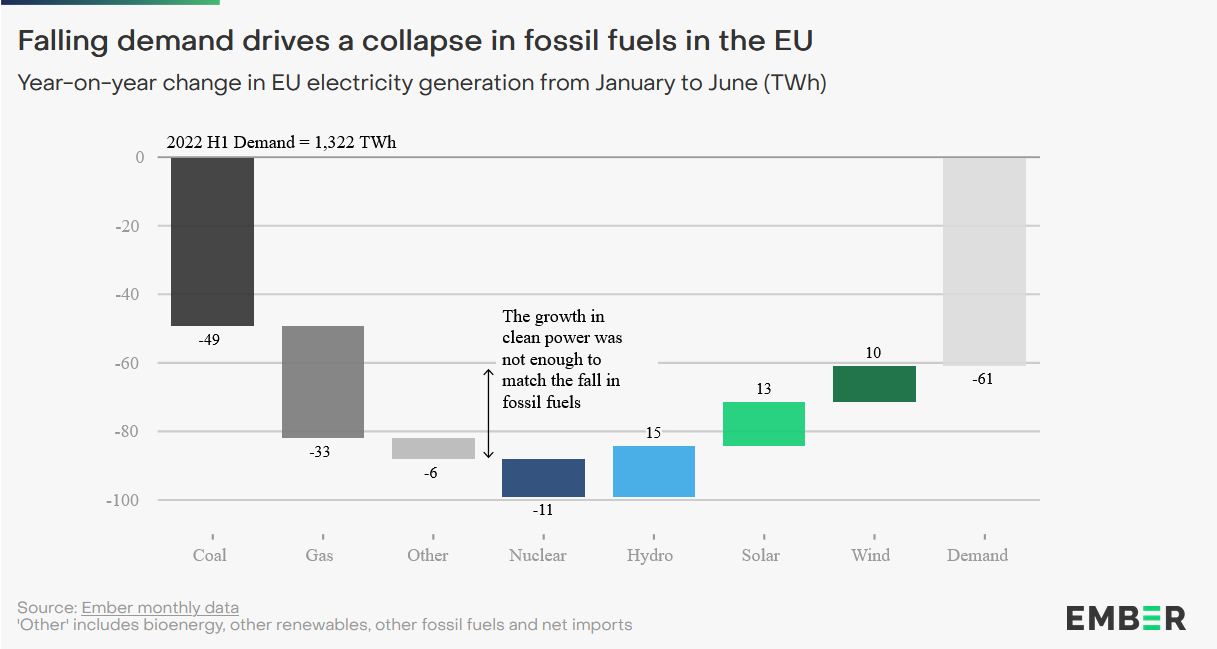
The first half of 2023 saw a collapse in EU fossil generation, leading to the lowest output on record. Wind and solar continued their growth, with solar generation increasing by 13% and wind by 5%. Hydro and nuclear are recovering from their historic lows in 2022, though their long term outlook is uncertain.
According to Ember, the fossil fall was predominantly driven by a significant drop in electricity demand, amid persistently high gas and power prices, a reduction in industrial output and emergency measures over winter. To accommodate demand recovery at the same time as ensuring the energy transition remains on track, the EU must accelerate the deployment of clean power, with particular focus on addressing the barriers to renewables integration.
Fossil fuel generation collapsed by 17% to lowest on record. Between January and June, fossil fuels generated 410 TWh in the EU, making up the lowest ever 33% of demand. This collapse was led by coal, which fell by a staggering 23% in the EU in the first half of the year, while gas decreased by 13% year-on-year. In May, coal set a record by generating less than 10% of the EU’s electricity generation for the first time ever.
In addition, electricity demand fell by 5% in the first half of 2023. Amid high energy prices and emergency measures, electricity demand fell substantially to a record low of 1261 TWh, below even 2020’s pandemic low of 1271 TWh and the lowest since at least 2008 for current Member States. This drop was responsible for the majority of the decrease in fossil generation in the EU.
Growth in solar power continued in the first half of the year, with generation up 13% compared to the same period in 2022. Wind generation rose by 5%, while hydro recovered towards average levels (+11%). Nuclear fell (-4%) but is set to improve as the year continues. From January to June, 17 countries generated record shares of power from renewables, with Greece and Romania passing 50% for the first time and Denmark and Portugal both breaking 75%.
The first half of 2023 shows evidence of the significant effort the EU has made to accelerate the deployment of renewables, with solar capacity additions booming in particular. After record-breaking additions of 33 GW in 2022, the pace has continued in 2023. In the first six months of the year Germany added 6.5 GW (+10%) of new solar capacity, while Poland added over 2 GW (+17%) and Belgium added at least 1.2 GW (+19%). Italy installed 2.5 GW of solar in the first six months of 2023 compared to a total of 3 GW for the whole of 2022, while France added at least 600 MW in the first quarter of 2023, slightly above its deployment in the same period last year. Spain is expected to accelerate its deployment from 4.5 GW in 2022 to 7 GW this year.
Wind generation rose by 4.8% (+10 TWh) compared to the first six months of 2022, a modest increase. Installation rates are a mixed picture in the face of various barriers, despite countries’ increased ambitions. Despite these challenges, however, industry enthusiasm for wind remains. And with both industry and policymakers ringing alarm bells on the barriers to wind, there are some signs that the slowdown is being taken seriously, including policy changes in Poland and a concerted effort by the European Commission to address permitting delays.
“The decline in fossil fuels is a sign of the times. Coal and gas are too expensive, too risky, and the EU is cutting them out. But we need to see clean power replacing fossil fuels faster. A massive push, especially on solar and wind, is urgently needed to underpin a resilient economy across Europe,” said Matt Ewen Europe data analyst, Ember.



Comentarios
Sé el primero en comentar...