
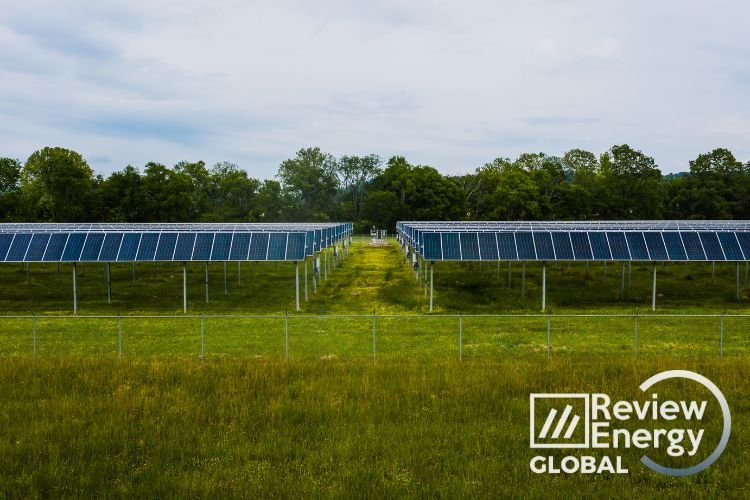


Statkraft forecasts renewable dominance in global energy mix by 2035
Statkraft’s latest Green Transition Scenarios report analyzes the pace of the global energy transition under three scenarios, including a green optimistic path, a delayed transition scenario, and a scenario marked by global unrest. While the study considers multiple possibilities, the report highlights the outcomes under the green optimistic scenario, where renewables lead the way in limiting global warming.
According to Torjus Folsland Bolkesjø, Head of Global Energy Drivers at Statkraft, “Competitive renewable technologies such as solar, wind, and batteries are significantly driving the shift away from fossil fuels to renewables. Our analysis shows that the development of renewables continues at a rapid pace, with solar as a leading technology, even in a scenario of global unrest.”
In the green scenario, global warming can be limited to 1.9 C, in line with the Paris Agreement’s 2 C target, though still above the 1.5 C goal. Bolkesjø adds, “Our scenarios show that it is still possible to reach the 2-degree target of the Paris Agreement, but this requires a significantly faster pace of emission cuts than we see today. Rapid cost reductions for mature technologies such as solar, wind, and batteries mean that the bulk of global CO2 emission cuts are still within reach.”
Renewables leading the transition
The report emphasizes that solar and wind energy are set to grow rapidly. Statkraft projects that solar generation will increase 3-6 times from 2024 to 2035 and 6-12 times by 2050. Globally, renewables are expected to account for over 50% of the power mix by 2035, rising to 66-80% by 2050.
Mari Grooss Viddal, Statkraft’s Head Analyst and lead author of the report, states: “Renewable energy is the key to success, not only to replace coal and gas power, but also to accelerate electrification in transportation and heating. Future growth depends on adopting flexibility solutions to integrate more renewable power, and Statkraft can play a crucial role through our expertise in balancing energy markets and investing in flexible technologies.”
Economic and european impacts
In 2024, investments in clean energy nearly doubled those in fossil fuels, according to IEA and Ember. In Europe, renewable electricity replacing fossil gas in industry can increase industrial competitiveness. The EU has already reduced greenhouse gas emissions by more than a third since 1990, while the economy grew by two-thirds, demonstrating that emissions reductions can coincide with economic growth.
Key Trends Highlighted in the Optimistic Scenario:
-
Solar and wind are projected to become the world’s largest energy sources by 2035.
-
Falling battery costs provide critical flexibility for integrating more renewables.
-
Electricity consumption will rise sharply, while total energy consumption declines as fossil fuels are phased out.
-
Gas will remain part of the energy mix longer than expected, as hydrogen faces scaling challenges.
The report concludes that under an optimistic trajectory, renewable energy technologies can drive a rapid, low-carbon energy transition, delivering both climate benefits and energy security while supporting economic growth.


Comentarios
Sé el primero en comentar...