


The private sector, key to the success of the European Green Deal: WEF
In 2019, the European Commission launched the European Green Deal (EGD), an ambitious set of measures to achieve climate neutrality in the European Union (EU) by 2050, communicating in its most recent report, the private sector perspective for the European Green Deal Compliance in which it highlights the multiple challenges to adapt to this new vision of the European economy and achieve the implementation of this deal.
Despite various obstacles, such as fiscal challenges, companies remain committed to green goals. They recognize that the transition to clean sources not only meets climate objectives, but also ensures competitiveness and resilience in a changing market.
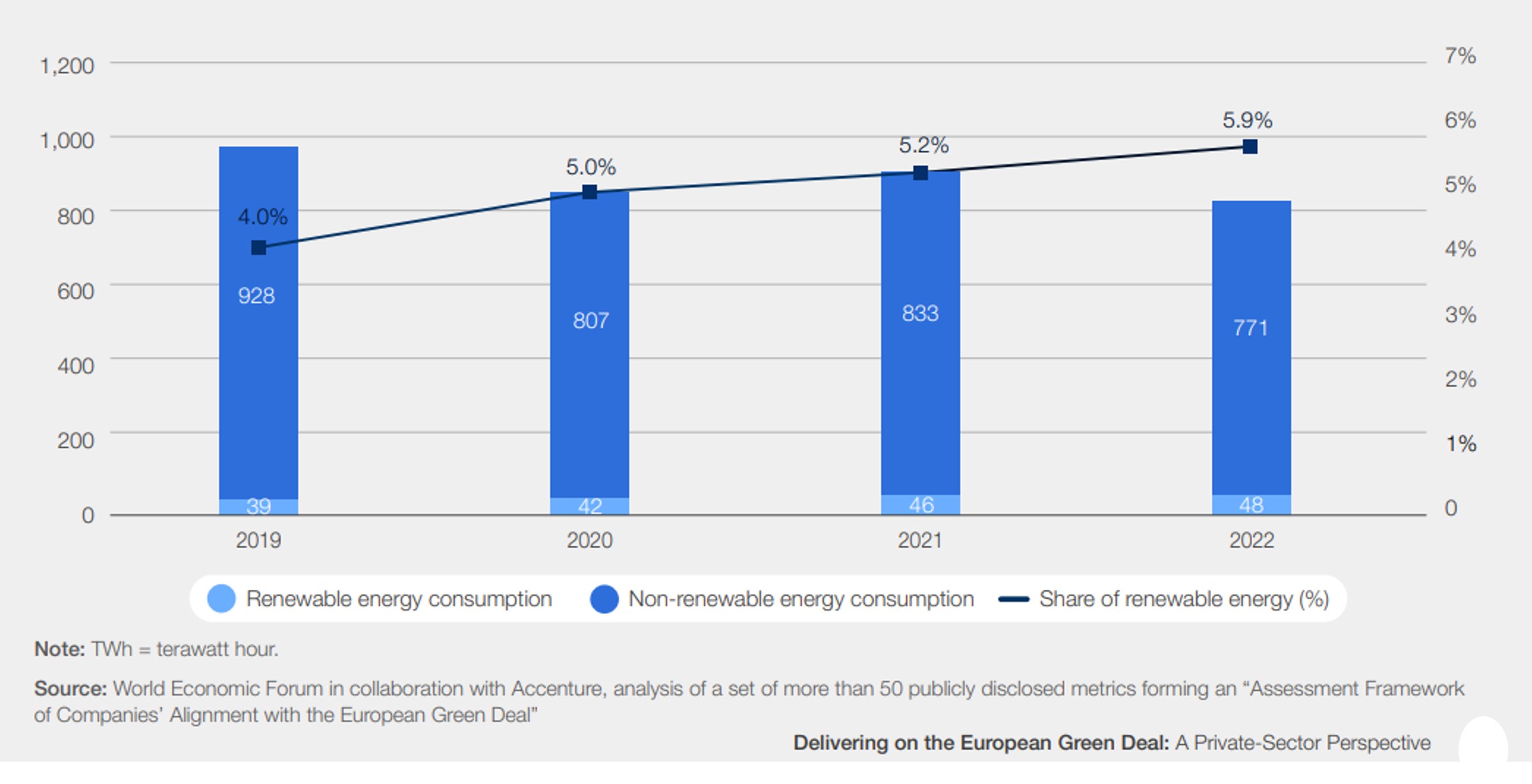
In the midst of the transition to a greener economy, the private sector in the European Union recognizes the critical importance of renewable energy in driving sustainability and maintaining competitiveness. According to data compiled by The CEO Action Group for the European Green Deal, dependence on fossil fuels remains a challenge, accounting for nearly 75% of primary energy consumed in the EU.
Progress in Energy Taxation and Current Challenges
The EU, through the Fit-for-55 directive and package, seeks to increase the taxation of fossil fuel energy and extend its scope to sectors such as aviation and shipping. However, progress in these discussions has been hampered by political resistance to across-the-board tax increases that would affect businesses and consumers.
To this end, the directive proposes to increase taxes on fossil fuel energy and to include new sectors. Given the EU's dependence on fossil fuels, the availability of affordable renewable energy is critical. Failure to rapidly increase renewable capacity raises the need for incentives for companies to adopt green alternatives. Unlike the U.S., which offers tax credits, the EU proposes subsidies and relaxation of criteria for state aid.
Source: World Economic Forum
Renewable Energy as a Critical Solution
In the face of persistent dependence on fossil fuels, the availability of affordable renewable energy sources emerges as a critical solution. CEO Action Group companies have already demonstrated significant commitment to the transition to sustainability, with 97% of them setting measurable targets in areas of climate and energy.
As the EU considers options to boost the adoption of renewable energy, the importance of incentives for companies to increase their renewable capacity is highlighted. Relaxing criteria for state aid and proposing subsidies are strategies under consideration, as opposed to the US approach, which offers tax credits for green investments.
Impact on Business Competitiveness and Sustainability
The private sector, aware of the need to move towards a green economy, sees renewable energy as a pillar to improve competitiveness and ensure long-term sustainability. The massive adoption of clean energy sources will not only contribute to climate objectives, but will also position European companies as leaders in innovation and resilience in the face of changes in energy prices. In this context, the private sector is expected to continue to lead the charge towards a more sustainable and climate-neutral future.


Comentarios
Sé el primero en comentar...