
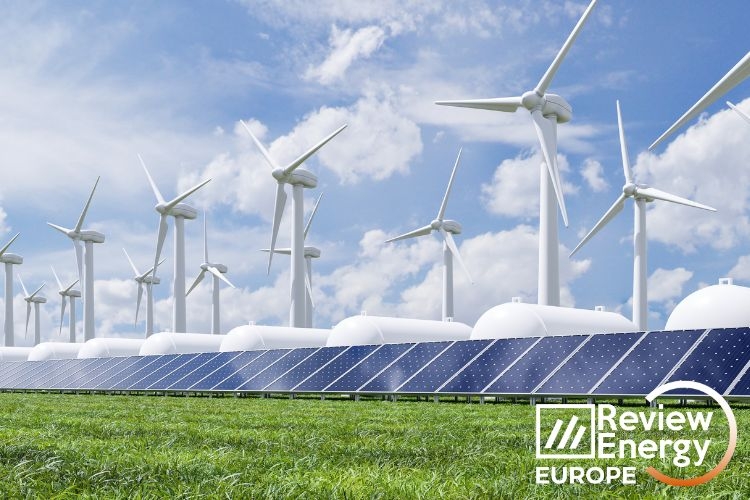


Top markets for renewable and co-location: Germany, GB, Ireland, and Poland
A recent report published by Aurora Energy Research identifies Germany, Great Britain, Ireland I-SEM, and Poland as the leading markets for co-location of renewable energy sources (RES) and battery storage systems in Europe. Aurora forecasts an additional 421 GW of intermittent RES capacity by 2030, which presents significant challenges to RES assets, such as cannibalisation of capture prices, increased curtailment, and rising imbalance costs.
The markets most affected by these challenges —Germany, Greece, the Netherlands, and Ireland — are encouraged to co-locate RES with battery storage to mitigate these issues. In Germany, despite recent less attractive innovation auctions, co-location provides appealing revenue stacking opportunities, low grid fees, and mitigation of significant cannibalisation risk for RES.
Great Britain is notable for its favourable regulation, granting co-located assets access to multiple markets and offering faster grid access for co-located RES projects. Ireland is highly rated for co-locating RES and battery storage due to high curtailment risks and beneficial legislation that facilitates quicker grid access. Poland offers a robust subsidy environment with cable pooling and access to long-term capacity market contracts.
Regulatory variations exist across EU markets
The report highlights that many European markets lack comprehensive co-location policy schemes. In Germany, requirements placed on battery assets under the innovation auction scheme significantly reduce commercial viability. Spain’s draft National Energy and Climate Plan (NECP) aims to increase battery energy storage system (BESS) targets to at least 2.5 GW by 2030, with substantial government grants allocated for co-located storage projects. However, little capacity has been procured on a subsidy basis in recent years.
The five markets deemed most favourable in terms of policy and regulation are Poland, Hungary, Ireland, Great Britain, and France. Poland stands out for its access to long-term capacity market revenues and innovative cable pooling regulation. Hungary has introduced mandatory co-location for solar PV assets above a certain size. Ireland I-SEM and Great Britain are notable for their variety of available revenue streams for projects and potential benefits in terms of grid access and curtailment risks. France is attractive for co-locating solar PV and BESS assets, as co-located solar PV can participate in French Contract for Differences (CfD) auctions, which have historically cleared at high strike prices.
Emerging markets
Recent developments in Spain regarding potential Capital Expenditure (CapEx) support for co-located batteries could significantly enhance business cases. Similarly, ongoing discussions in the Netherlands about battery storage obligations and potential reductions in grid fees could boost business cases and project pipelines.
Rebecca McManus, Senior Research Associate at Aurora Energy Research, noted that as intermittent renewables become increasingly important in the European energy landscape and the adoption of batteries grows, co-located projects will soon become essential for developers. However, she pointed out that managing both asset types together presents challenges.
Jannik Carl, Research Associate at Aurora Energy Research, observed that interest in co-locating intermittent renewables and battery assets has surged across Europe, with Great Britain leading the way. Nevertheless, many policy frameworks are still lagging, often focusing on individual aspects of co-located business models. Carl emphasized that addressing the full complexity, including grid integration and market access, will be crucial for successful projects in the coming years.


Comentarios
Sé el primero en comentar...