
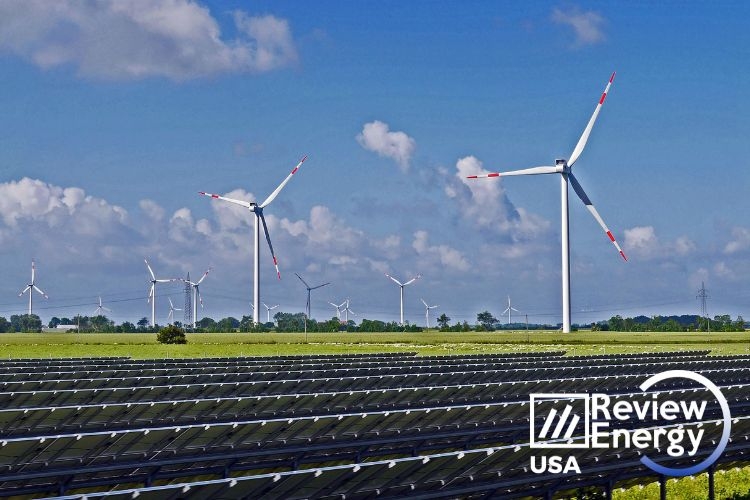


U.S. Interior Department imposes stricter reviews on wind and solar projects
The U.S. Department of the Interior has enacted sweeping policy changes that dramatically reshape how federal agencies handle wind and solar energy development. In a July 15 memorandum, the Department imposed a broad mandate requiring top-level political review for nearly every federal decision related to renewable energy projects and eliminated longstanding subsidies, sparking sharp backlash from the clean energy industry.
The move stems from President Donald J. Trump’s “Energy Dominance” agenda and follows the signing of Executive Order 14315, titled Ending Market Distorting Subsidies for Unreliable, Foreign-Controlled Energy Sources, as well as the passage of the One Big Beautiful Bill Act.
According to the Department, the new directive requires all decisions, consultations, permits, plans, and environmental reviews related to wind and solar energy to be submitted to the Office of the Executive Secretariat and Regulatory Affairs, reviewed by the Office of the Deputy Secretary, and receive final approval from the Secretary of the Interior.“Today’s actions further deliver on President Trump’s promise to tackle the Green New Scam and protect the American taxpayers’ dollars,” said Adam Suess, Acting Assistant Secretary for Lands and Minerals Management. “American Energy Dominance is driven by U.S.-based production of reliable baseload energy, not regulatory favoritism towards unreliable energy projects that are solely dependent on taxpayer subsidies and foreign-sourced equipment.”
An Extensive and Unprecedented Review Framework
The July 15 memo lists 69 categories of actions—from lease sales and construction approvals to environmental assessments and tribal consultations—that now require top-level signoff. The directive affects every stage of development for wind and solar facilities on federal lands, including:
- Environmental impact statements (EIS, EA, FONSI, etc.)
- Lease sales and rights-of-way (ROW) applications and grants
- Tribal consultations and compliance with historic preservation laws
- Wildlife and ecological assessments
- Construction and operation plans (COPs)
- Visual impact, oil spill, and cable burial reports
- Permitting under the Endangered Species Act and other conservation laws
The Department asserts that these changes are meant to ensure “thorough and deliberative” oversight of projects previously fast-tracked or subsidized under earlier administrations.
Additionally, the One Big Beautiful Bill Act directs the Department to eliminate fee discounts for wind and solar developers, ending reduced charges for rights-of-way and project capacity that had previously made such projects more economically viable.
Industry Response: “This Isn’t Oversight. It’s Obstruction.”
The announcement was met with fierce criticism from clean energy advocates. The American Clean Power Association (ACP) denounced the changes as a deliberate attempt to slow down U.S. renewable energy deployment at a critical moment of rising energy demand.
“This isn’t oversight. It’s obstruction that will needlessly harm the fastest growing sources of electric power,” said ACP CEO Jason Grumet in a July 17 statement.
“The Secretary of the Interior will now be personally reviewing thousands of documents and permit applications—everything from the location and types of fences to grading access roads. It’s a bewildering departure from promises to reduce bureaucracy and compete with China in the global energy race.”
Grumet noted that electricity demand in the U.S. is projected to rise 35–50% by 2040, driven largely by the rapid expansion of AI technologies and data centers, which alone could require over 100 GW of new capacity.
He also emphasized that 93% of new power capacity added in 2024 came from clean energy sources, which remain the “fastest and most affordable” options for immediate grid expansion. ACP warned that restricting these sources could lead to higher energy prices for families and businesses, while weakening U.S. competitiveness.
A Shift Toward Fossil Fuels and ‘Dispatchable’ Power
The Department of the Interior maintains that the policy represents a return to “common-sense permitting standards” and a more secure energy strategy focused on “dispatchable” sources such as domestic natural gas, clean coal, and potentially nuclear energy.
The administration argues that subsidizing solar and wind projects—many of which rely on equipment from China—undermines national energy security, grid stability, and American jobs.
While proponents of fossil fuels have welcomed the policy, critics say it risks derailing the U.S. energy transition and undermines bipartisan efforts in Congress to streamline permitting across all energy sectors, including geothermal and nuclear.



Comentarios
Sé el primero en comentar...