
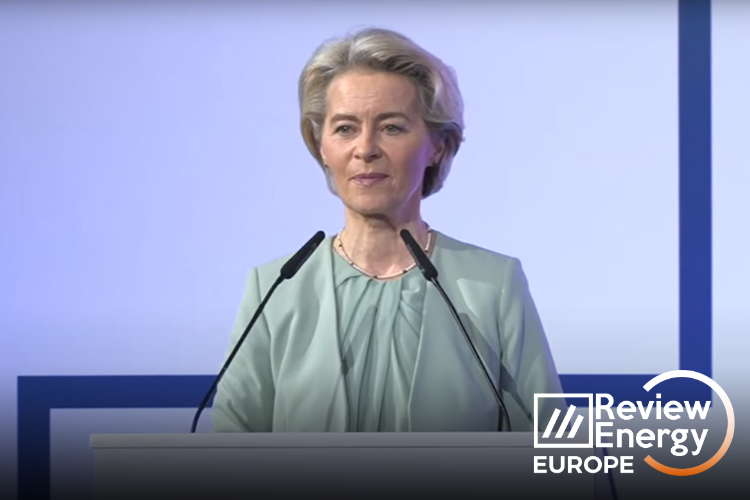


Von der Leyen urges ongoing reduction in energy prices
In a speech at the Hamburg Climate Summit, the President of the European Commission, Ursula von der Leyen, stressed the importance of Europe's continued progress in energy infrastructure to ensure the efficiency of the supergrids that stretch across the continent, forming the backbone of the economy of the future and thus continuing to drive energy prices down.
Von der Leyen emphasized that "energy prices must continue to fall. To achieve this, we must make the right investment decisions today. In Brussels we gave the green light to 166 new energy infrastructure projects. This ranges from onshore and offshore power grids to hydrogen electrolyzers and the transport and storage of CO2. This also applies to so-called supergrids. Extensive and secure grids that extend across our continent. They are controlled with the help of artificial intelligence and direct cheap energy to where it is needed most. This is how we create the energy backbone of tomorrow's economy."
The president also highlighted the importance of diversifying energy sources, noting the strategic shift brought about by the Russian invasion of Ukraine in 2022. The resulting energy crisis led Germany to break free from its dependence on Russian gas, diversifying sources of supply and increasing investments in renewable energies. "Today it is clear to us: renewables are not only good for the climate. They are also good for our independence," she said. In 2023, for the first time, more power will be generated from renewable sources than from gas, marking a milestone in the transition to a more sustainable energy matrix.
"When I took office four years ago, the idea that hydrogen could replace fossil fuels in shipping or even in heavy industry was no longer a dream of the future. One crucial factor was missing to trigger major investments: investors needed planning certainty." Said von der Leyen. In addition, he highlighted that, thanks to efforts driven by the European Green Pact, Hamburg is about to become one of the first ports in the world to import hydrogen on a large scale. The terminal will convert ammonia into renewable hydrogen, making a significant contribution to the decarbonization of one of Germany's largest industrial areas.
The speech also highlighted the renewable energy boom, with a 50% increase in solar capacity by 2022 and an additional 40% by 2023. Germany accelerated the approval process for onshore wind farms, approving three times as many projects last year as in 2022.
Finally, von der Leyen announced ambitious targets for clean hydrogen production, with a goal of producing 10 million tons annually from 2030, as well as importing another 10 million tons.

Comentarios
Sé el primero en comentar...