


Wind and solar overtake fossil fuels in the EU for the first time
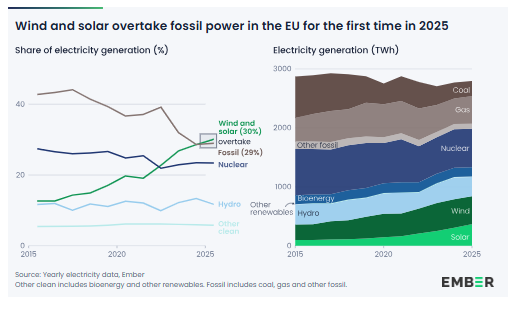
The European Union reached a historic milestone in its energy transition in 2025, as wind and solar power generated more electricity than fossil fuels for the first time, according to a new report by energy think tank Ember. The shift marks a major step towards a clean power system based on homegrown renewables, with wind and solar together supplying 30.1% of EU electricity, compared with 29.0% from all fossil fuels.
Just five years ago, wind and solar accounted for less than 20% of the EU’s power mix. In 2025, they produced 841 TWh, overtaking fossil generation at 809 TWh, underlining the speed at which Europe’s electricity system is changing.
Solar leads record renewable growth
Solar power was the main driver behind the milestone. EU solar generation reached a record 369 TWh in 2025, growing by more than 20% year on year for the fourth consecutive year. Solar now accounts for over 13% of EU electricity, surpassing both coal and hydropower.
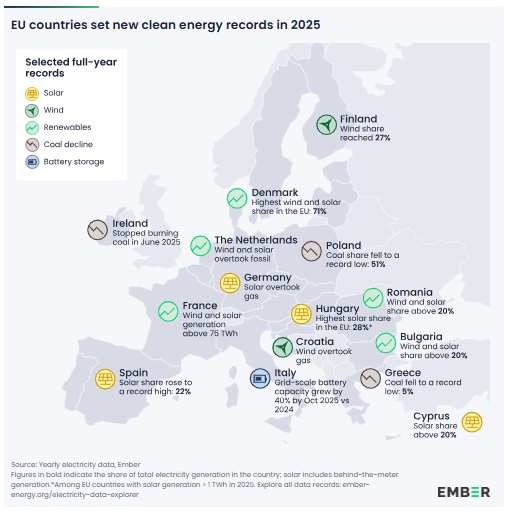
Growth was widespread across the bloc, with solar generation increasing in every EU country. In Hungary, Cyprus, Greece, Spain and the Netherlands, solar provided more than a fifth of national electricity, placing the EU well above the global average.
Despite challenging weather conditions early in the year, renewables remained resilient. While lower wind speeds and reduced rainfall cut wind and hydro output, sunnier conditions boosted solar generation, allowing renewables to supply nearly half of EU electricity (48%) in 2025. Wind remained the EU’s second-largest power source at 17%, ahead of gas.
Gas dependence keeps prices high
Ember warns that the EU remains significantly exposed to fossil gas. Gas generation rose by 8% in 2025, largely due to lower hydro output, pushing the EU’s gas import bill up to €32 billion, a 16% increase compared to the previous year. Price spikes during peak gas-use hours contributed to higher wholesale electricity prices in 21 EU countries.
Coal, by contrast, continued its terminal decline. Coal generation fell to a new historic low of 9.2% of EU electricity, with 19 member states now relying on coal for less than 5% of their power. Over the past decade, the decline of coal has not been matched by a corresponding rise in other fossil fuels.
The report highlights that expanding battery storage, strengthening grids and scaling up demand-side flexibility will be critical to reducing Europe’s reliance on imported gas. According to Ember, accelerating investment in these areas would not only improve energy security, but also help stabilise electricity prices and fully unlock the potential of Europe’s rapidly growing wind and solar capacity.
“This milestone moment shows just how quickly things are changing in the EU’s power sector,” said Dr Beatrice Petrovich, Senior Energy Analyst at Ember. “The next challenge is to significantly cut Europe’s reliance on expensive, imported gas. By investing in batteries, grids and electrified technologies, the EU can stabilise prices and protect itself against energy blackmail.”


Comentarios
Sé el primero en comentar...